How a Japanese rate hike could affect markets

Add Axios as your preferred source to
see more of our stories on Google.
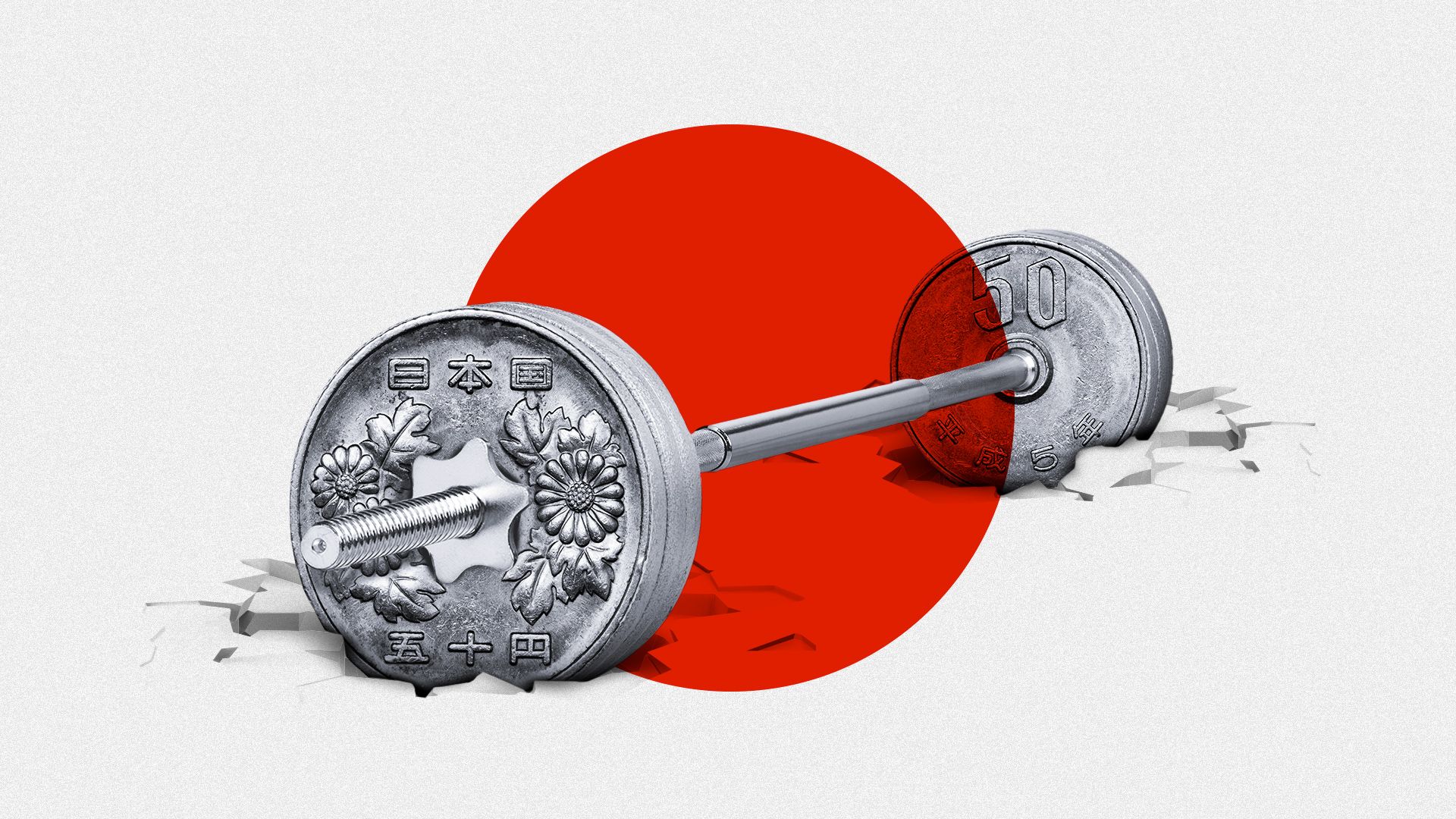
Illustration: Aïda Amer/Axios
A potential increase in interest rates from the Bank of Japan is weighing on one of the most popular trades on Wall Street: the yen carry trade.
Why it matters: A rise in Japanese rates while the Federal Reserve cuts rates would thwart a borrowing strategy long used to buy risky assets like bitcoin and tech stocks.
What they're saying: The Japanese carry trade will become a "thing of the past" within the next few years, Nic Puckrin, an investment analyst and cofounder of Coin Bureau, a crypto information platform, tells Axios.
How it works: For decades, investors have borrowed cheap Japanese yen and used it to buy higher-yielding assets abroad, pocketing the difference.
- It works as long as the yen stays weak and Japanese rates stay low.
- That is changing, with the Bank of Japan considering higher rates just as the Fed is expected to make another cut, bringing the interest rates of the two nations closer together.
Driving the news: Bank of Japan governor Kazuo Ueda teased a potential rate hike yesterday, saying the central bank would weigh the "pros and cons" at its next policy meeting later this month, Reuters reported.
- His comments led two-year Japanese yields to spike to their highest level since 2008 as traders priced in a 76% chance of an interest rate increase.
- In response, traders sold off assets to pay back the yen they borrowed.
- Bitcoin tumbled overnight, triggering about $1 billion in liquidations.
Zoom out: This is not the first time a Bank of Japan shift has rattled markets.
- In August 2024, an unexpected hawkish turn by the central bank triggered a much more violent unwind of yen-funded positions.
- Bitcoin plunged about 18% in a matter of days, and currency markets, emerging markets and U.S. stocks were all swept up in the shock.
- Today's turbulence is smaller since much of the trade was flushed out last year, and a possible Japanese rate hike has been more widely anticipated.
What to watch: Where the yen carry trade goes from here.
- As Japan normalizes its interest rates, the markets are adjusting to a world where one of the biggest behind-the-scenes drivers of global risk appetite is no longer guaranteed for investors.
- Short term, that shift is weighing on crypto and other more speculative investments. Longer term, it could be the end of an era when ultra-loose Japanese monetary policy reliably underwrote risk-taking worldwide.
