Why Trump wants to nuke the filibuster and what it takes to make it happen

Add Axios as your preferred source to
see more of our stories on Google.
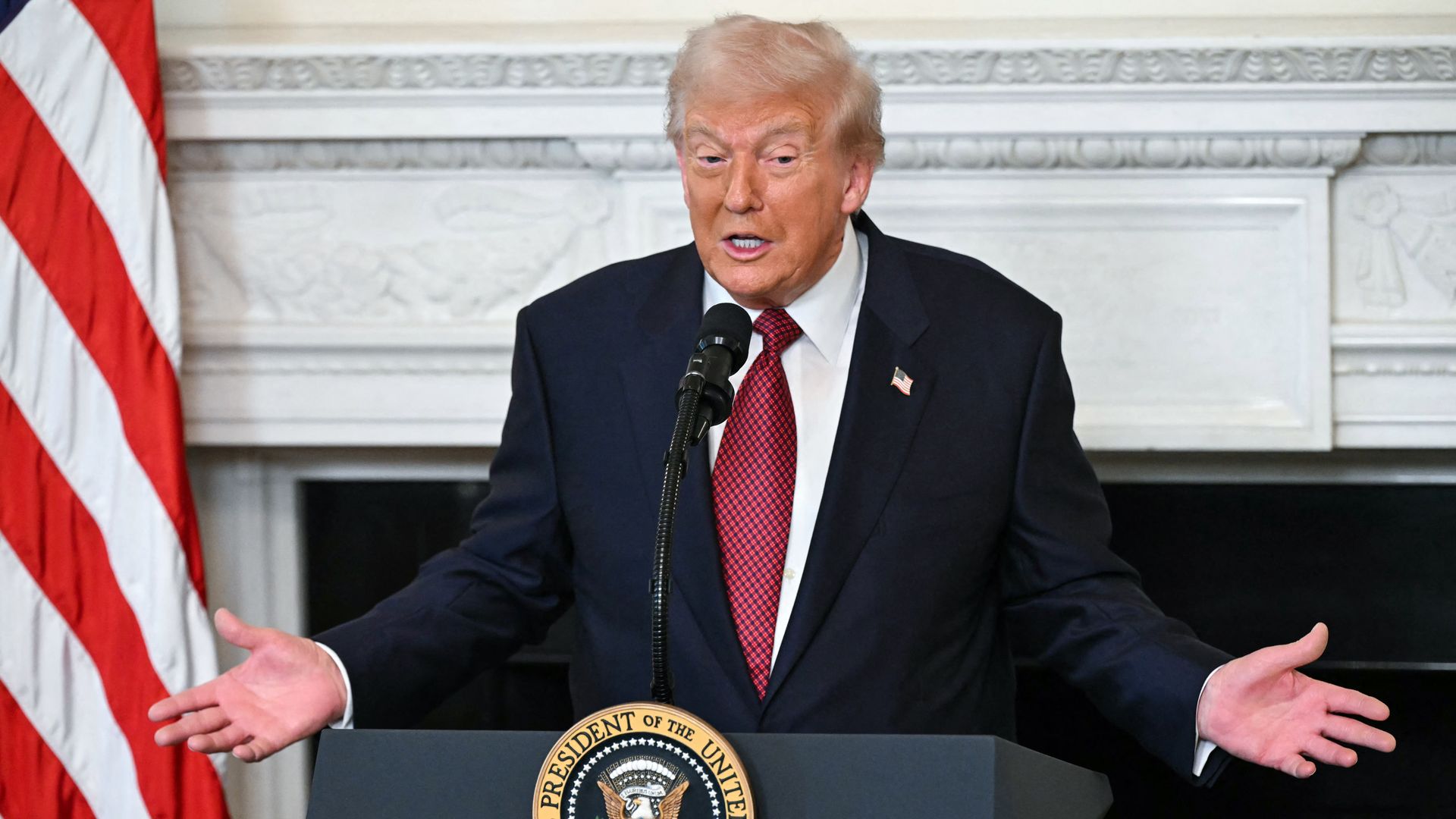
President Trump speaks to Senate Republicans at the White House on Nov. 5. Photo: Saul Loeb/AFP via Getty Images
President Trump wants to kill the filibuster in order to break the deadlock over the record-breaking government shutdown.
The big picture: Removing the filibuster would upend a Senate tradition that dates back to the 1800s and potentially haunt both parties for years to come.
Driving the news: Trump has recently put pressure on Republicans to change the filibuster, arguing it gives Democrats leverage.
- "We have to get the country open," he told Republican senators on Wednesday. "And the way we're going to do it this afternoon is to terminate the filibuster."
- Trump advisers told Axios that the president is planning to make life a "living hell" for Republicans and push to end the filibuster.
Context: Politicians, like Trump and former President Biden, have called to end the filibuster before. But senators have hesitated over fears of the long-term impact.
Here's what to know about the filibuster and how it could end.
What is the filibuster?
How it works: The filibuster is a loosely defined term to describe a Senate tradition allowing unlimited debate to prevent or delay a bill, resolution, amendment or question.
- The Senate can end the debate on a bill with a three-fifths majority vote, or 60 of 100 senators.
- That's often a rarity given how thin the margins are between the two parties. Right now, Republicans hold 53 seats.
- Ending the filibuster would allow a simple majority of senators — or the vice president, if there's a tie — to pass bills without the unending debate.
Of note: Senators don't stand up and speak on the debate floor for the filibuster (like Jimmy Stewart and Patton Oswalt have done in popular TV and movies).
What does the "nuclear option" mean?
The Senate does have the choice — an extreme one, which is why it's dubbed the "nuclear option" — to abolish the filibuster.
- For it to happen, a majority of senators would need to establish a new interpretation of Senate rules. This would not require a formal rule change.
- Nuking the filibuster would allow Republicans to end the government shutdown or advance other GOP priorities without Democratic votes.
How does the "nuclear option" happen?
For the "nuclear option" — also called "reform by ruling" — to happen, a senator would need to raise a point of order, or declare that a Senate rule is being violated.
- If the Senate's parliamentarian agrees, their decision creates a new rule for how the Senate works, killing the filibuster.
- If the parliamentarian disagrees, another senator can challenge that call. If a majority of senators vote to overturn the ruling, then that vote sets the new rule instead, ending the filibuster.
Worthy of your time: The Senate could also abolish the filibuster by changing Senate Rule 22, which calls for 60 votes to invoke "cloture" — the end of the debate on a bill.
- However, since there isn't a two-thirds majority in the Senate, such a rule change is unlikely.
What happens if the filibuster is eliminated?
Flashback: Removing the filibuster has been known to have a widespread impact.
- In fact, it used to apply to both judicial and political nominations. But in 2013, Democrats voted to eliminate it for most executive branch nominations (except for Supreme Court justices).
- This opened the gate for some of Trump's more controversial nominees during his first term, including former Secretary of Education Betsy DeVos, who was confirmed for the job after a tie-breaking vote from former Vice President Mike Pence.
- Republicans later voted to eliminate it for Supreme Court justice nominations in 2017 — paving the way for the GOP to push conservative justices like Neil Gorsuch and Brett Kavanaugh onto the court.
- President Biden sought to remove the filibuster when Democrats had the majority in 2022 in order to codify abortion rights. But they didn't have the necessary votes.
What does the filibuster have to do with the shutdown?
Republicans need help from Democrats to clear the 60-vote hurdle in the Senate to pass a government funding bill.
- Right now, the two sides are deadlocked. Democrats have been pushing for an extension of subsidies for those who get health insurance under the Affordable Care Act — which Republicans see as a nonstarter.
- In response, some Republicans, including Trump, are considering ending the filibuster to take leverage away from Democrats.
Reality check: Many Senate Republicans want to keep the filibuster since it's been around since the 1800s and could haunt them later if they lose the majority.
- Senate Majority Leader John Thune (R-S.D.) said the rule "forces discussion and compromise."
- "The filibuster forces us to find common ground in the Senate," Sen. John Curtis (R-Utah) wrote on X in October. "Power changes hands, but principles shouldn't. I'm a firm no on eliminating it."
Go deeper: Why Trump's push to kill the filibuster could haunt Republicans
