Despite shutdown, SNAP work requirements go into effect this week. What to know

Add Axios as your preferred source to
see more of our stories on Google.
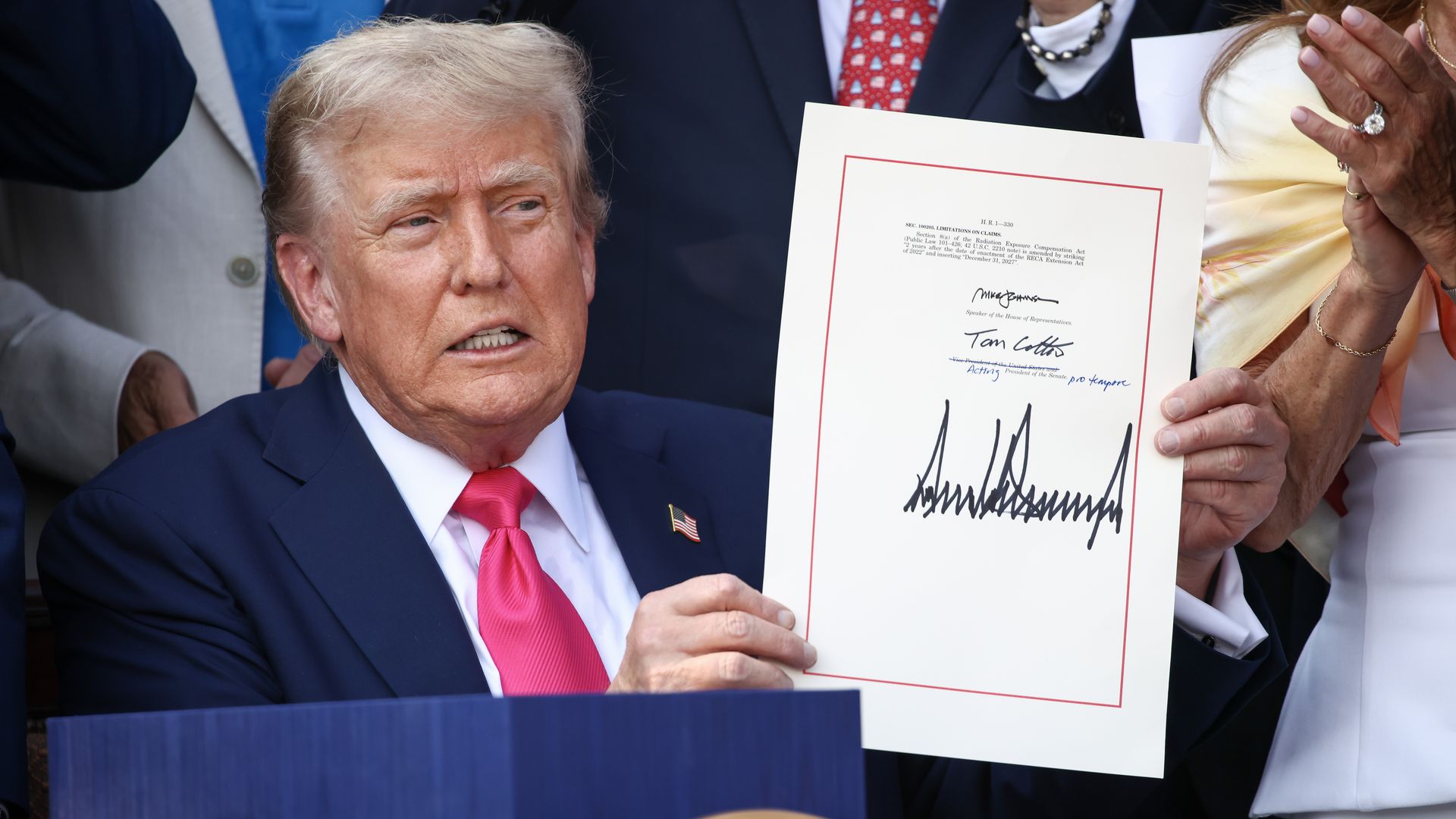
President Trump signing the One, Big Beautiful Bill Act into law on July 4. Photo: Samuel Corum/Getty Images
SNAP benefits are likely to run out this week due to the federal government shutdown, but major changes are still set to take effect for enrollees.
The big picture: The changes to the program outlined in President Trump's One Big Beautiful Bill Act (OBBA) mark a historic cut to the social safety net, which experts say could leave more people hungry and uninsured.
Driving the news: Even if SNAP payments go dark on Saturday for 42 million Americans, the SNAP enrollment process will reflect the new work requirements and other changes required by the law.
- Several states have confirmed to Axios that they will still accept and review applications as normal.
Here's what to know about changes to the program:
The new requirements
Zoom in: Under the new rules, "able-bodied adults without dependents" (ABAWD) must prove that they are working at least 80 hours a month, enrolled at least half the time in an educational program or some combination of the two adding up to 80 hours.
- The OBBA also bumps the work requirement for ABAWD up from 18-55 years of age to 18-65.
- Previously, the work requirement included more exemptions, such as one for parents or adults in households with children. Now, parents of children aged 14 or older will also have to meet work requirements.
The new rules also require "homeless individuals, veterans and certain foster care individuals to meet these work requirements."
- The law defines foster care individuals as those who are "24 years old or younger and were in foster care on the date of attaining 18 years of age or a higher age."
Yes, but: The law adds exemptions for "Indians, also referred to as Native Americans, Alaska Natives, Indigenous Peoples and Tribal Members."
In areas where it is difficult to obtain a job, the work requirement may be waived.
- States may receive a waiver "based on an area having an unemployment rate of over 10% or an insufficient number of jobs."
Other changes coming to SNAP
The OBBBA eliminates future funding for SNAP's Nutrition Education and Obesity Prevention Grant Program, which helped expand access to healthy food.
The USDA will pay less money to state agencies to cover the administrative costs of SNAP, beginning in 2027.
The federal government will also deduct funding from states that make errors, starting in 2028.
- SNAP benefits will only be fully funded for states that make mistakes in less than 6% of their payments to recipients.
- States with error rates of more than 6% will have to cover 5% to 15% of the cost of SNAP benefits.
When SNAP benefits resume
- Benefits will go back online if lawmakers in Washington strike a deal to end the shutdown or find a stopgap measure to extend the benefits. Several states told Axios that they will work quickly to resume benefits the moment either happens.
- A number of states, including New York, Delaware, Rhode Island, Virginia and California, have greenlit millions of dollars in funding to partially assist SNAP enrollees during the lapse.
