Rethinking the drug talk

Add Axios as your preferred source to
see more of our stories on Google.
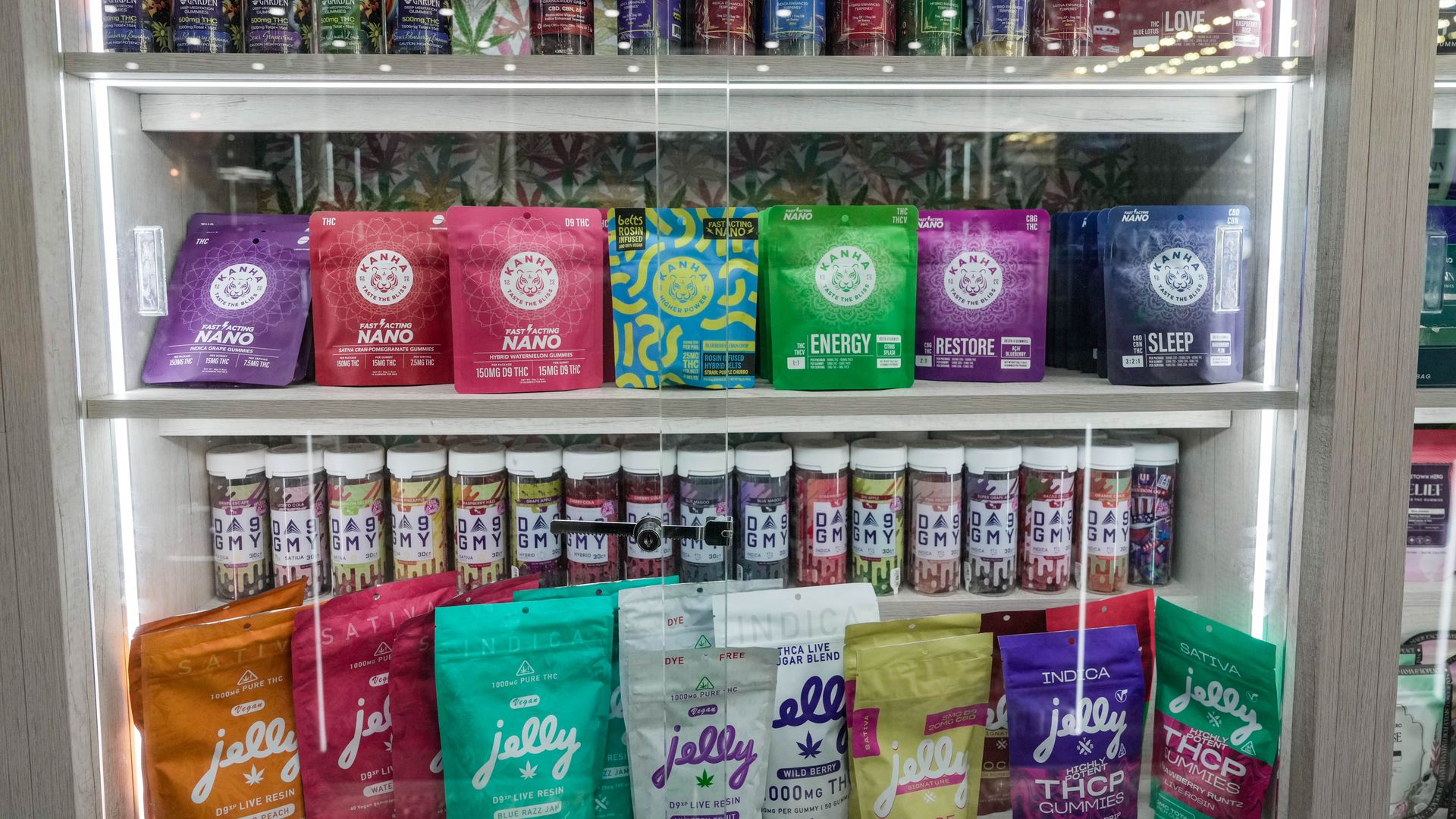
THC products at a smoke shop in Houston. Photo: Raquel Natalicchio/Houston Chronicle via Getty Images
The collision of new laws, new products, and a child and teen mental health crisis is creating a perfect storm for America’s young people.
- Parents are scrambling to navigate this new landscape — and what they know and say could be the key to keeping kids safe.
Why it matters: “Every year you can delay that first try, the safer your kids are going to be,” says Pam Jenkins, CEO of Shatterproof, a nonprofit focused on addiction prevention and education.
Consider marijuana. It’s legal to use recreationally in 24 states, and there are also other intoxicating hemp products that are unregulated or more loosely regulated on the market. A popular one is delta-8, which 1 in 8 high school seniors has tried, Jenkins says.
- “Kids can get addictive, psychoactive substances at a gas station or convenience store, and it’s marketed as a wellness product,” she says.
- These products often mimic candy — brightly colored, dusted with sugar and packed with sweet, fruity flavor.
- On top of that, many of these substances, including regular marijuana, are more potent today than parents might remember from their own youth.
The new world of weed is just one part of the complex reality parents face today.
- “It’s hard to figure out the right times to have certain types of conversations when it’s hard to even figure out what’s going on,” says Jenkins.
Zoom in: Jenkins, who has led public health campaigns at the CDC and NIH, is an expert at cutting through noise to deliver clear, actionable health information. We asked for her top 5 tips for parents talking to kids about drugs in today's landscape.
- It's not one conversation. "Single events — one film, one speaker, one dramatic moment — create zero lasting change," she notes. Bring these tough topics up more often, like in the car or at dinner. Ask questions when you see behavior changes, and be as specific as possible, Jenkins says. It might look like this: "I've noticed you're sleeping until 2 p.m. every day, your grades dropped from Bs to Ds, and you're avoiding family dinners. I'm concerned because I care about you. Can we talk about what's going on?"
- Ditch the scare tactics. "Exaggerated horror stories backfire spectacularly. Kids dismiss them as 'that can't happen to me' and tune you out entirely." Share the data, but skip the theatrics.
- Don't info dump. "Pamphlets and lectures do almost nothing." What does work are conversations at relevant moments in kids' and teens' lives, like before a big high school party or when you're moving them into college dorms.
- Learn the landscape. "Your mental model is probably wrong," Jenkins tells parents. "You think, 'My kid can't buy alcohol or cigarettes easily, so I have time before they're exposed to drugs.'" But psychoactive, over-the-counter substances are easier to buy than a six-pack. It's important to learn what's going on and then teach kids to recognize unregulated products, she says.
- It's not just about drugs. "This is about mental health, stress management and life skills. ... Prevention isn't anti-drug education — it's building resilience so they never need the drugs in the first place."
