Here's how the White House has changed over the decades

Add Axios as your preferred source to
see more of our stories on Google.
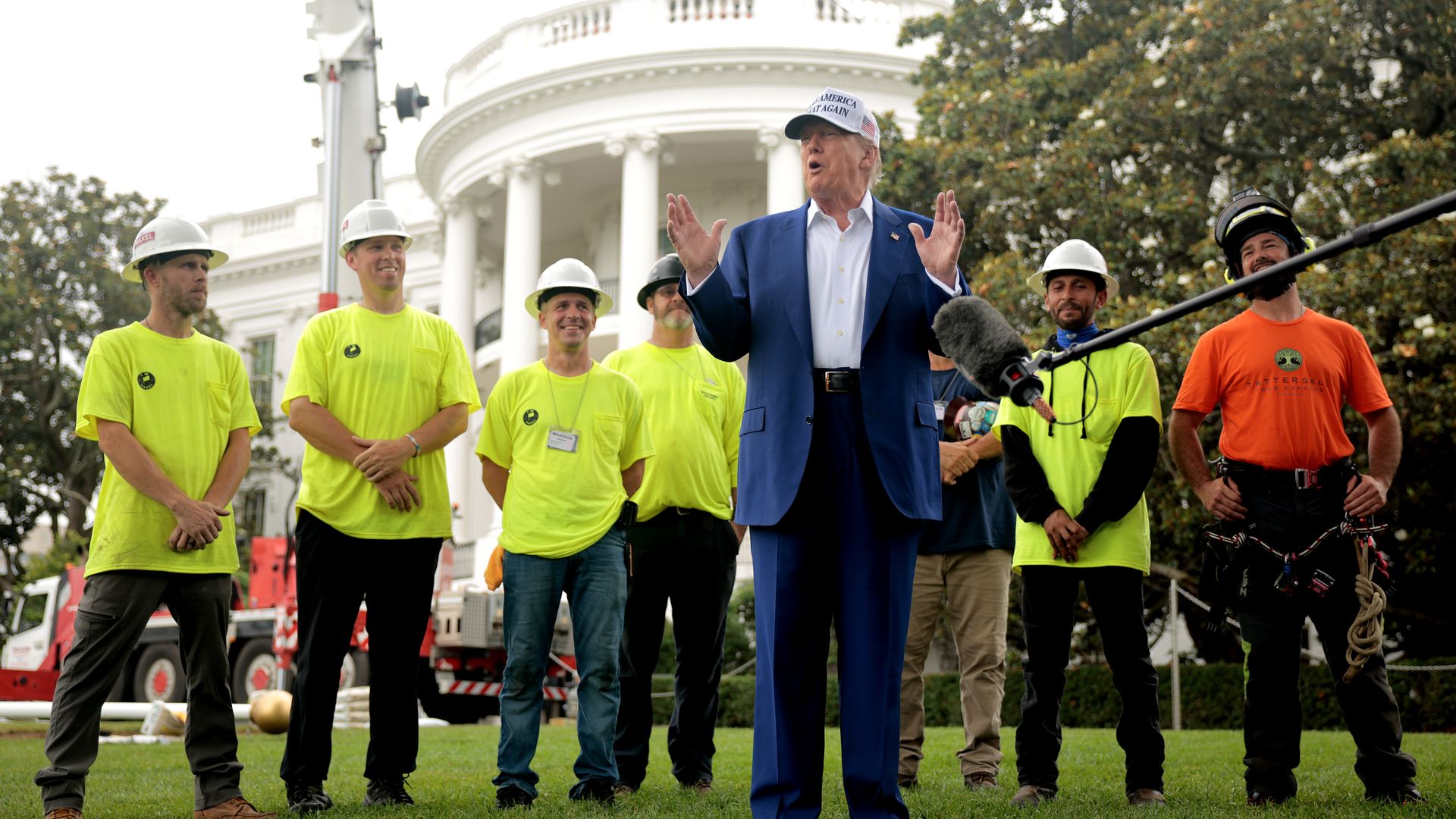
President Trump talks as new flag poles are installed on the White House Lawn. Photo: Chip Somodevilla/Getty Images
President Trump, long a fan of gold and ornate decorations, has decided to give the White House a grand Mar-a-Lago makeover, complete with a new palatial ballroom with a price tag north of $200 million.
Why it matters: As the White House faces backlash for remodeling the Executive Mansion in Trump's image, its worth noting that the Residence has been a work in progress for over 200 years.
Driving the news: Photos of the partially-demolished East Wing went viral on Monday as the renovations began.
- The administration has also reportedly asked federal workers not to share images of the renovations online, citing potential security concerns or unintentionally revealing "confidential structural details," according to the Wall Street Journal.
What they're saying: "In the latest instance of manufactured outrage, unhinged leftists and their Fake News allies are clutching their pearls over President Donald J. Trump's visionary addition of a grand, privately funded ballroom to the White House" the White House said in a Tuesday news release.
- The White House also noted that Trump is joining a long line of presidents who have been renovating the White House for over a century.
By the numbers: There are 132 rooms, 412 doors, six levels and three elevators in the Residence, according to the official website.
State of play: Construction of the ballroom, funded by Trump and private donors, has faced backlash over concerns wealthy donors may be funneling money into the president's pet project to curry favor with Trump, potentially eroding ethical guidelines.
- Trump has also paved over the iconic Rose Garden, decked out the Oval Office in gold ornaments and has hung mirrors and portraits all over the grounds.
Here's a brief timeline of the White House's renovation history:
1791: A place for the president
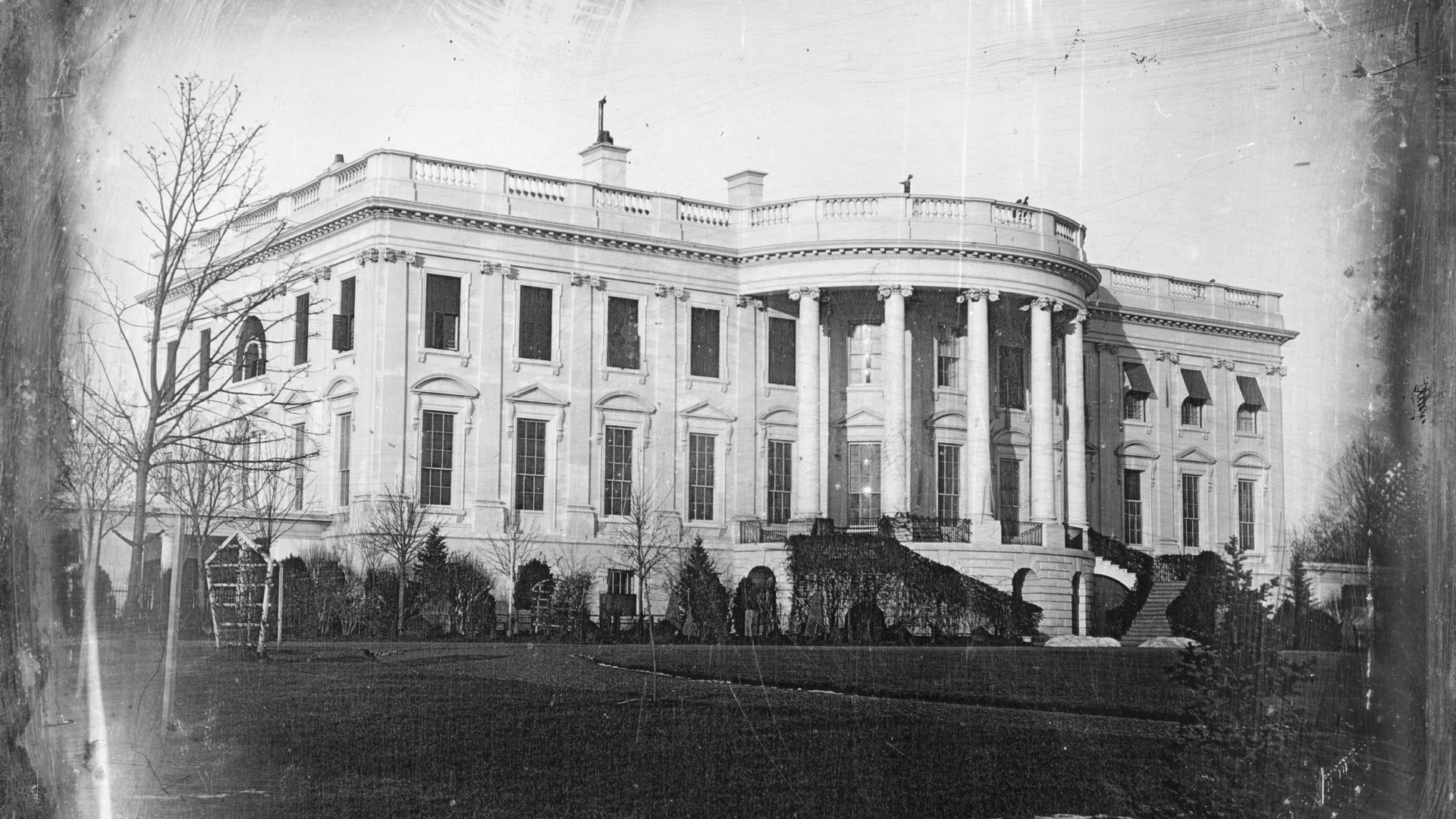
President George Washington chose the site for the White House in 1791, and after eight years of construction, John Adams became the first president to reside in the then-unfinished building, according to the official website.
1814: Soot-stained reconstruction
The White House and parts of the Capitol building were set on fire by British forces during the War of 1812.
- The Residence was repaired and fully reopened to the public in 1818.
Fun fact: There's a common misconception that the White House got its name from having to repaint its walls to cover burn marks from this battle, but that's untrue.
- The White House received its first coat in 1798 to protect it from the elements during D.C.'s harsh winters, according to the White House Historical Association.
1902: West Wing added and Oval Office debuts
President Theodore Roosevelt's six kids needed more space than the residential quarters offered in 1901, so construction of the West Wing began, permanently transforming the White House grounds.
Of note: President William Howard Taft expanded the Wing to create the building's most recognizable room, the Oval Office, in 1909.
1927: Third floor added
Construction of a new roof and a third floor to the Residence began in 1927, in addition to eighteen new guest and service rooms.
- The White House Historical Association notes that the rooftop upgrades included a Solarium, or a "Sky Parlor," frequently used as a private therapeutic space for the First Family.
Fire proofing and a full renovation
President Truman completely gutted the White House in the 1950s, leaving only the exterior walls behind.
- When the dust settled, the newly-fireproofed building reopened with a two story basement, and walls reinforced with concrete and 660 tons of steel, according to the White House Historical Association.
A little something from everyone
The bottom line: Every president since 1952 has added a new touch to the White House, from President Nixon adding a one-lane bowling alley in 1973 to President Obama upgrading the tennis court so that it could also be used as a basketball court in 2009.
Go deeper: Don the Builder: Inside Trump's White House makeover
