Your typical No Kings attendee in D.C., according to data

Add Axios as your preferred source to
see more of our stories on Google.
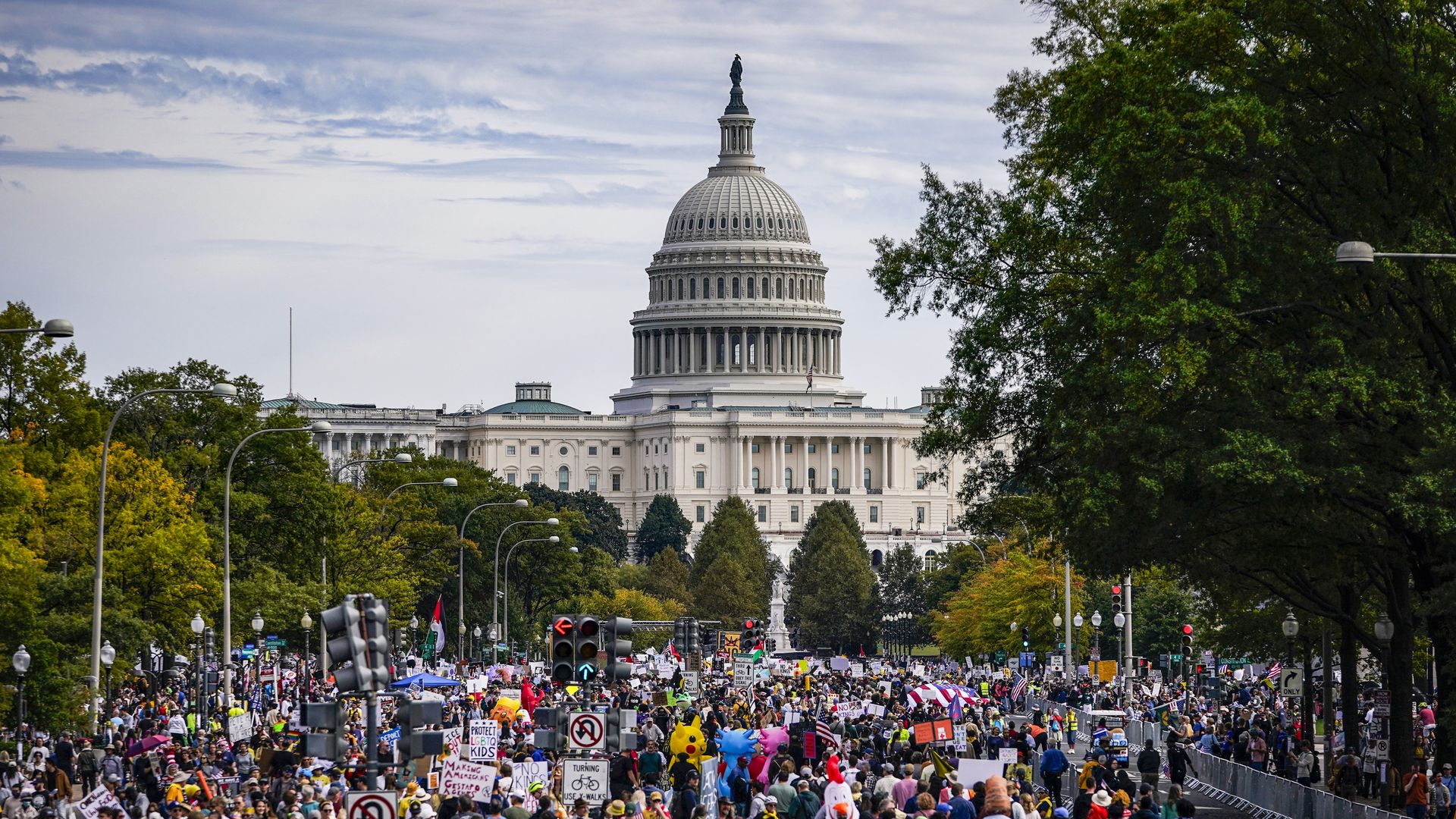
Protesters march along Pennsylvania Avenue during the second "No Kings" protest on Oct. 18 in Washington, D.C. Photo: Nathan Howard/Getty Images
A survey of Washington, D.C.'s No Kings protesters provides a snapshot of President Trump's critics as the backlash to his administration grows.
The big picture: The typical attendee at the D.C. protest was an educated white woman in her 40s who heard about the event either through friends or via Instagram, according to preliminary data collected by American University researchers who track protest movements.
- That data gives an insight into who is joining the protest movement and which issues are motivating them, Dana Fisher, a professor at American University's School of International Service, tells Axios.
Catch up quick: Nearly 7 million people protested nationwide on Saturday as part of the "No Kings" rallies — one of the largest single-day demonstrations in U.S. history.
- Protests in 2025 have reached a wider swath of the U.S. than at any other point on record, according to a Thursday report from the Harvard Kennedy School.
State of play: 86% of surveyed protesters in D.C. were white, and 57% were women.
- "It makes sense that we're not seeing people of color in the streets because people of color are being disappeared," Fisher said.
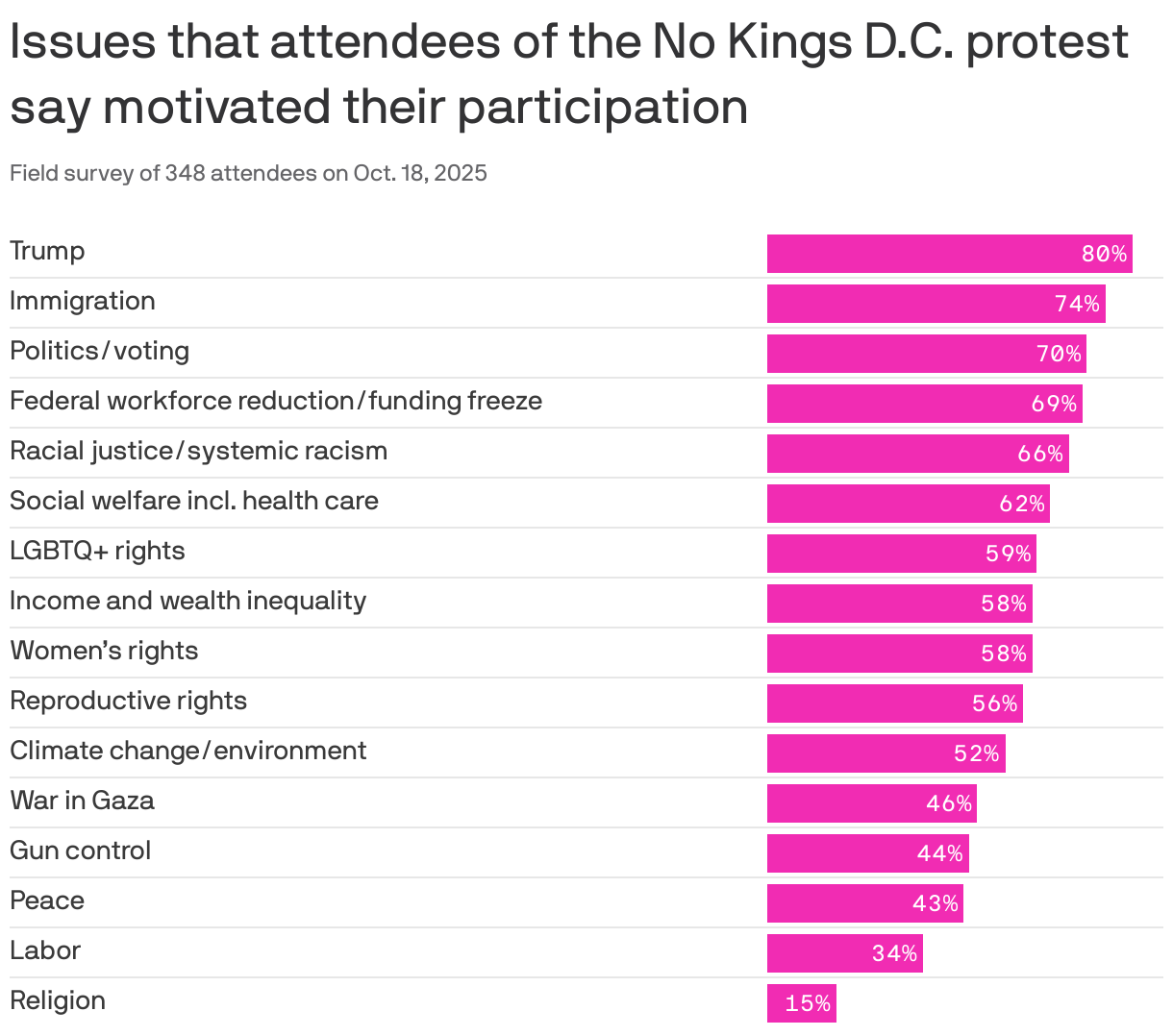
- She said she's surprised, though, that women's rights and reproductive rights are no longer leading factors the way they were during Trump's first term.
Zoom out: Nearly 90% of participants identified with the political left (29% very left, 47% left, 13% slightly left).
- 47% of participants reported hearing about the rally from friends or family members, followed by 26% who heard it from Instagram.
- Trump (80%) and immigration (74%) were protesters' top motivations for participating — consistent with previous protests.
- An overwhelming majority of respondents said they felt anger, anxiety and sadness about "politics and everything they associate with it."
Between the lines: The median age of participants of Saturday's protest in D.C. was 44.
- "What we're basically seeing now is repercussions of young people feeling completely disenfranchised from our politics and our democracy," Fisher said.
- Younger activists may also feel hesitant after the often-violent backlash to pro-Palestinian protests and encampments last year on college campuses, she said.
The intrigue: Fewer respondents agreed that "Americans may have to resort to violence in order to save our country" than in previous protests this year.
- At "No Kings" in D.C. on Saturday, 23% of people agreed with the statement — down from 40% at "No Kings" in Philadelphia in June, 35% at "Hands Off!" protests in April, and 33% at the "People's March" in January.
Go deeper: "No Kings" protests draw huge crowds across U.S.
Methodology: A research team of 10 people attended the rally. They sampled every fifth person as they assembled and listened to speeches. In total, 348 people participated in the survey, representing a 75% response rate for tablets and 76% for QR codes.
