Supreme Court will consider law barring drug users from having guns

Add Axios as your preferred source to
see more of our stories on Google.
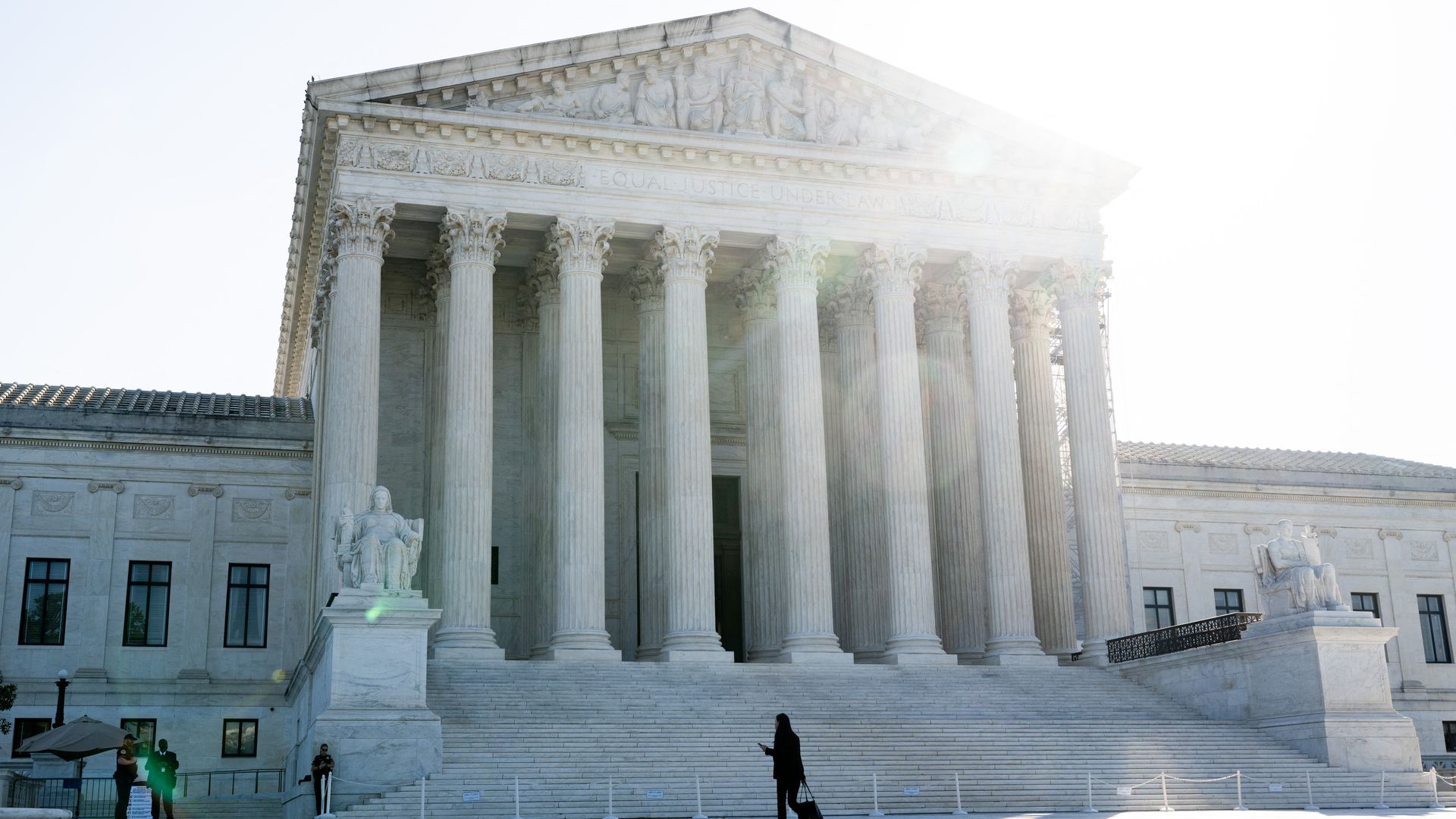
The Supreme Court in Washington, DC, on October 7, 2024. Photo: Saul Loeb/AFP via Getty Images.
The Supreme Court on Monday agreed to review whether a federal statute that bars drug users and addicts from possessing a gun violates the Second Amendment.
The big picture: The case will weigh the provision on which former President Joe Biden's son, Hunter Biden, was convicted, and could provide the high court's conservative majority an opportunity to expand the right to bear arms.
Driving the news: The high court agreed in a Monday order list to consider the challenge, which concerns a section of federal law that states anyone who is "an unlawful user of or addicted to any controlled substance" from having a firearm.
- The case centers around Ali Danial Hemani, a dual citizen of the U.S. and Pakistan who drew the attention of the FBI. During a search of his family home, investigators found a pistol, marijuana and cocaine, per the government's petition to the high court.
- He allegedly told the FBI he used the marijuana around every other day and that the cocaine also belonged to him. After being indicted, Hemani moved to dismiss and ultimately won his appeal at the Fifth Circuit.
The intrigue: Hunter Biden was convicted on felony gun charges in June 2024 after being accused of illegally purchasing and possessing a firearm in October 2018 while using a narcotic.
- His father later pardoned him, saying he was singled out.
What they're saying: The DOJ argued that the provision targets "a category of persons who pose a clear danger of misusing firearms: habitual users of unlawful drugs."
- One can lift the restriction and resume possessing a gun "at any time," they note, if they stop habitually using illegal drugs.
The other side: Hemani's legal team argued that the government's request "misrepresents the facts" of his case.
- "Rather than grapple with vital fact, the government instead levies allegations made during a bond hearing before the district court which are nongermane to the legal issue before this Court," they wrote, adding Hemani's prosecution is "based solely on his use of marijuana."
- In their response, they repeatedly cited the 5th Circuit's previous conclusion that "our history and tradition may support some limits on a presently intoxicated person's right to carry a weapon" but not "disarming a sober person based solely on past substance usage."
Context: Under the high court's 2022 decision in the Bruen case, the court set a "historical tradition" standard to determine whether courts can uphold limits on the right to bear arms, per an opinion penned by Justice Clarence Thomas.
- In Hemani's case, the government argued the provision banning gun possession for habitual drug users fits into regulatory tradition and compared it to what it said were more-restrictive "founding-era laws restricting the rights of 'drunkards.'"
Zoom out: This is the second gun rights case the court has agreed to take up this month. Earlier in October, it said the justices would consider Hawaii's law that places strict regulations on where people can carry guns.
- The high court upheld a law last year preventing people who are subject to a restraining order for domestic violence from possessing firearms, arguing there was a strong historical tradition of disarming those who pose an immediate threat to someone else's safety.
- Thomas, the author of the Bruen decision, was the lone dissenter.
