SCOTUS upholds limits on domestic abusers' gun rights

Add Axios as your preferred source to
see more of our stories on Google.
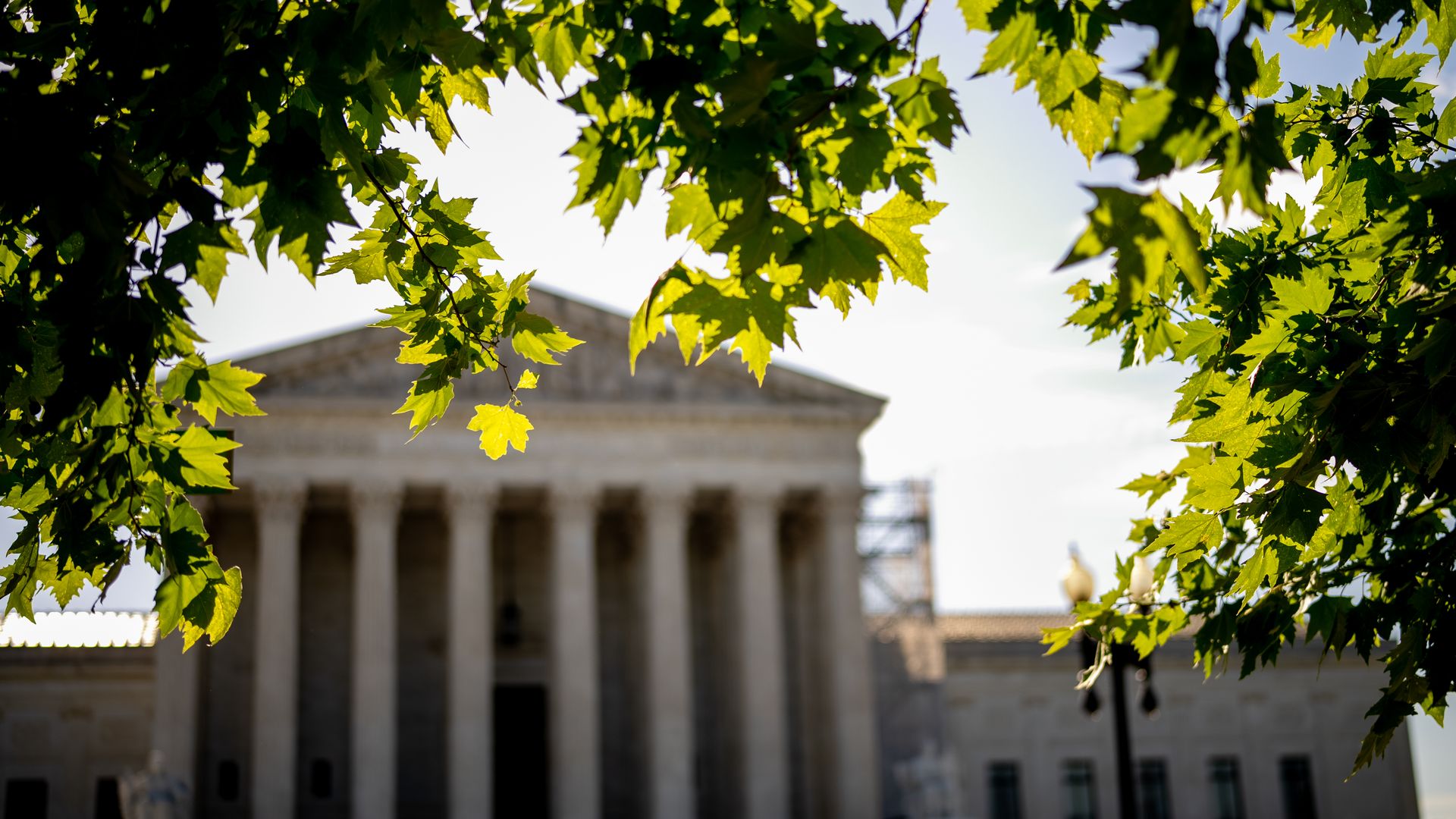
Photo: Andrew Harnik/Getty Images
The Supreme Court on Friday upheld a law that prevents people who are subject to a restraining order for domestic violence from possessing firearms.
The big picture: The court said there's a solid historical tradition of disarming people because they pose an immediate threat to someone else's safety — one of the few limits on gun ownership to survive at the Supreme Court.
Zoom in: According to court documents, the plaintiff in this case, Zackey Rahimi, assaulted his girlfriend, then threatened to shoot her if she told anyone.
- A court granted her a restraining order, which meant that Rahimi was prohibited from possessing firearms.
- He was later suspected of multiple unrelated shootings, and a search of his home turned up two guns. He was arrested and sued.
The intrigue: The 5th Circuit Court of Appeals — the most conservative appeals court in the country — initially ruled against Rahimi and upheld the firearms ban.
- But then the Supreme Court handed down a major Second Amendment decision, striking down New York's gun-control laws because, the court said, there was not a long enough tradition to support them.
- After that ruling, the 5th Circuit withdrew its decision in Rahimi's case and wrote a new one.
- That time, Rahimi won on the grounds that there wasn't a sufficiently long tradition of suspending Second Amendment rights due to domestic violence restraining orders.
Yes there is, the Supreme Court said Friday in an 8-1 ruling.
- "Since the founding, our Nation's firearm laws have included provisions preventing individuals who threaten physical harm to others from misusing firearms," Chief Justice John Roberts wrote in the majority opinion.
The other side: Justice Clarence Thomas dissented. The government should only be able to disarm people after they've been convicted of a crime, he argued, not on the basis of a restraining order.
