15 million workers vs. Big Tech's AI rush

Add Axios as your preferred source to
see more of our stories on Google.
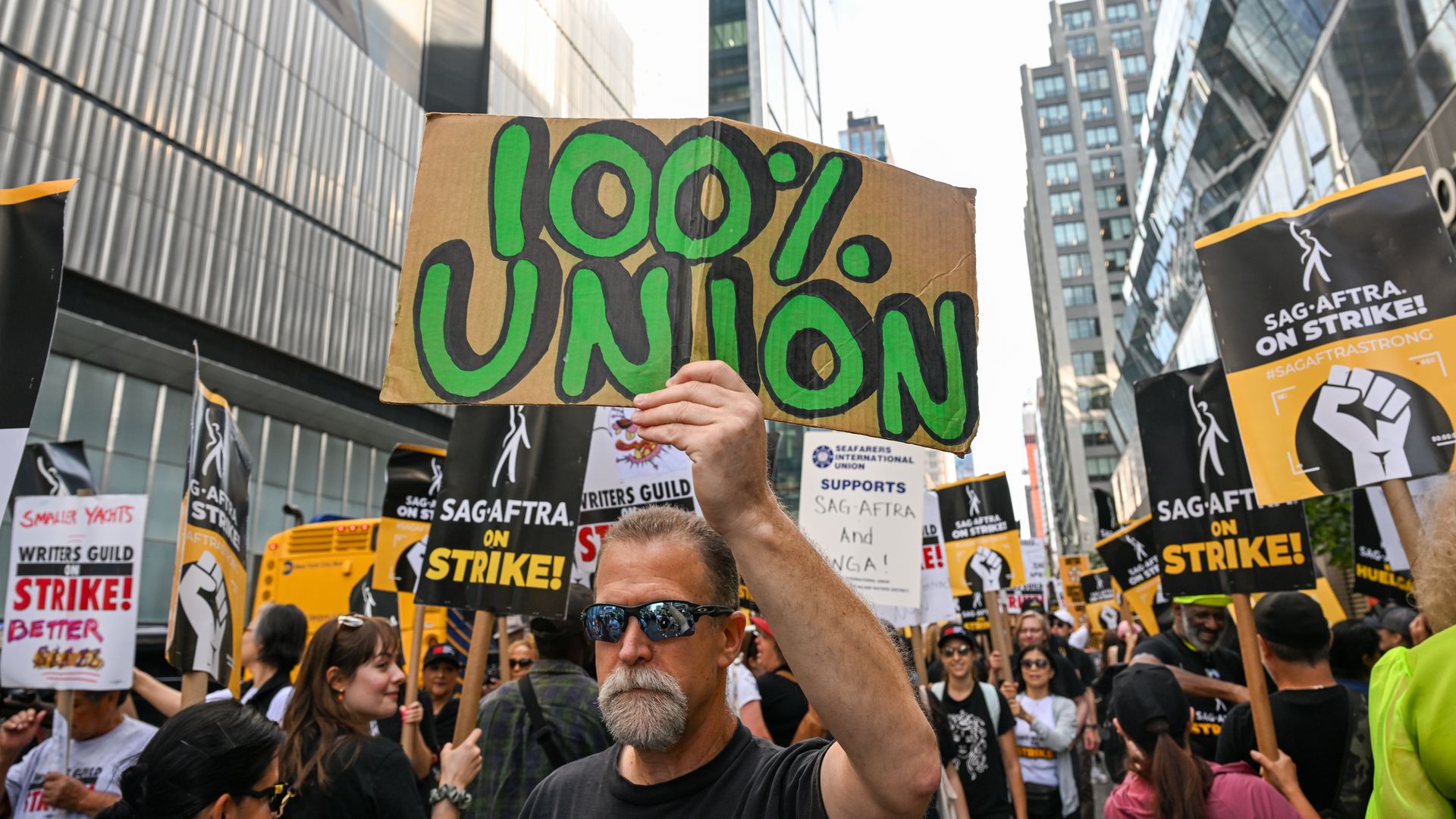
Members of the AFL-CIO, representing multiple unions, on August 22, 2023. Photo: Alexi Rosenfeld/Getty Images.
The largest federation of labor unions representing nearly 15 million Americans launched the first comprehensive agenda for a future fueled by "worker-centered" artificial intelligence on Wednesday, promoting what they say are benefits for everyone, "not just tech billionaires and corporate shareholders."
Why it matters: Deemed the "Workers First Initiative on AI," the federation warns of the looming worker bloodbath many leaders in AI have predicted, and proposes a list of principles that would protect workers rights if implemented.
The big picture: President Trump's recently unveiled AI Action Plan essentially took a deregulatory stance on AI policy, directing the federal government to remove "burdensome" red tape slowing down innovation.
What they're saying: "We reject the false choice between American competitiveness on the world stage and respecting workers' rights and dignity," American Federation of Labor and Congress of Industrial Organizations President Liz Shuler said in a news release announcing the intiative.
- The 63 unions that make up the federation wrote that there's a "path where new technology makes work better and safer" but the changes "must never be shoved down the throats of a workforce or used to undermine the labor rights that built the middle class."
- "Harmful AI is not inevitable – the choices we make today will determine the future … and doing nothing … is a choice – the wrong choice," they wrote.
What's inside: The federation calls for transparency in data collection, human reviews of automated decision making and the prohibition of AI as a surveillance tool that could participate in union-busting or penalize workers.
- They request the government disclose where and how AI is being used in federal systems, and increase regulations against AI abuses such as spreading misinformation or deepfakes, which "undermines" American democracy and civil rights.
- The federation also demands companies explore retraining opportunities to ensure workers know how to use AI instead of applying a "low-quality band-aid" that doesn't meaningfully help workers transition to new technologies.
- The report also calls for intellectual property rights for creative employees already seeing their job opportunities "stolen" by AI models trained on "their works, their voices, and their likenesses."
Threat level: There's widespread concern that AI could trigger broad layoffs, including estimations of up to half of entry-level white-collar jobs being wiped out in the next 5 years.
- Older, more experienced workers are not affected en masse yet, but a lack of new talent gaining experience in key industries could lead to a talent shortage in the future.
Yes, but: In the nearly three years since ChatGPT launched, researchers have found no clear interruption to the labor market, according to nonpartisan policy researchers at the Yale Budget Lab.
- Additionally, many employers still skeptical of AI want to see a human somewhere involved with the production process, supervising what the models do, according to Upwork data reviewed by Axios' Megan Morrone.
- That research found that AI was replacing low-complexity, repetitive work, but also fueling the market for employees capable of using the technology to supplement their abilities.
Zoom out: Policymakers aren't blind to the disruption that AI could have on the job market, but concerns about staying ahead of China in the AI race have aligned regulators with Big Tech's "move fast and break things" philosophy.
- A group of lawmakers scuttled a moratorium on state-level AI regulations from the one big, beautiful bill earlier this year due to pushback from state leaders and other consumer-advocate groups.
Go deeper: AI job market impact: Layoffs driven by economy, not automation
