Scoop: Rothschild family to sell full 27% ownership stake in The Economist

Add Axios as your preferred source to
see more of our stories on Google.
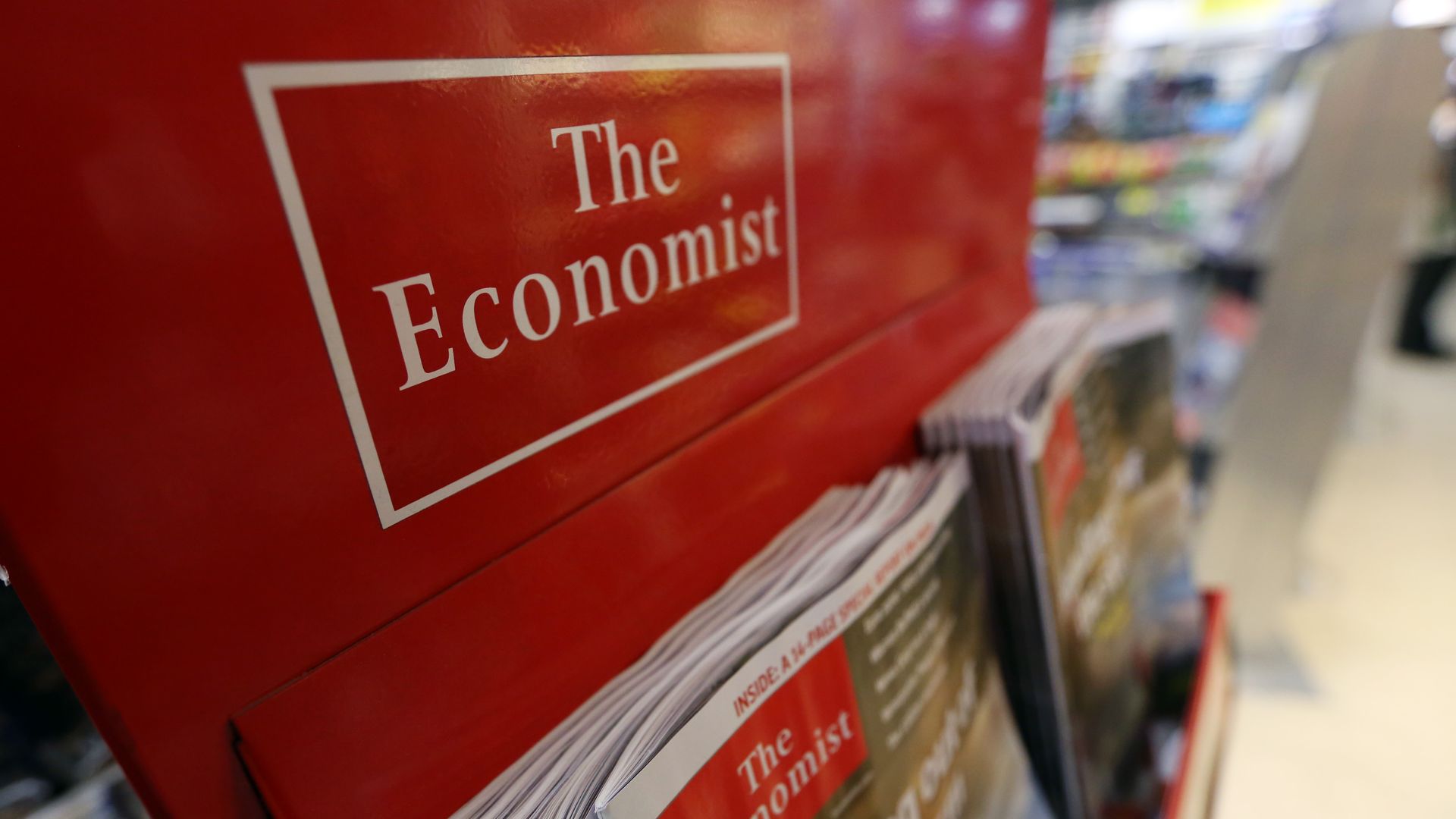
Photo: Chris Ratcliffe/Bloomberg via Getty Images
British philanthropist and investor Lynn Forester de Rothschild has put her family's entire 26.7% stake in The Economist up for sale, a source familiar with the transaction process told Axios.
Why it matters: A sale would mark the biggest ownership shake-up for the 182-year-old publication in a decade.
- Previous reports suggested she planned to only sell her part of the stake, around 20% of the company.
Catch up quick: Pearson, a British education publisher, sold the majority of its 50% stake in the publication in 2015 to Exor, the holding group of the wealthy Italian Agnelli family, for £469 million, or $531 million.
- The Economist reacquired the rest of Pearson's shares for £182 million, or $206 million.
- Today, Exor holds a roughly 43.4% stake in the company. Other shareholders, including The Economist Group itself, own 29.9%.
Zoom in: Rothschild's stake includes around 20% in voting shares, which is the cap for any single owner in the business.
- The sellers anticipate the family's full stake to be valued at up to £400 million, or $537 million, according to people familiar with the deal.
- At the high end, the stake sale could value the entire Economist Group at roughly £800 million, or around $1.1 billion, a source said.
- The last major transaction involving The Economist in 2015 valued the entire company at roughly £1.1 billion, or around $1.5 billion.
Between the lines: The sale process officially kicked off in London Monday night, a source tied to the transaction said.
- The process is being led by the financial advisory and asset management firm Lazard, which was previously reported by Bloomberg.
- The sellers hope to complete the sale this year.
- The Rothschild family's advisers are already engaged in conversations with U.S.- and U.K.-based buyers, mostly family offices, high-net-worth individuals or strategic investors that Rothschild believes would want to invest in the publication and maintain its editorial independence.
- The sale is part of a broader strategic review of Rothschild's investment portfolio, which also includes stakes in real estate, wealth management and agriculture companies.
What they're saying: A spokesperson for The Economist Group said, "E.L. Rothschild and The ERANDA Foundation are long-term investors, as well as generous supporters of the Economist Educational Foundation."
- "They regularly conduct strategic assessments of their portfolio and evaluate potential opportunities. They are working constructively with the Company on the eventual outcome."
Zoom out: Founded in 1843, The Economist Group has remained a crown jewel of independent business publishing throughout decades of digital disruption.
- The company now has 1.25 million subscribers, 66% of which are digital only. That's up from 1.1 million subscribers in 2021, but at that time, only 44% were digital only.
- In its latest public earnings report, the company reported annual revenue of roughly £369 million, or $495 million, and a profit margin of roughly 17%.
What to watch: The asset represents rare access for an investor interested in a publication with global reach.
- Around 20% of the publication's revenue comes from the U.K., according to public earnings reports. The remainder comes from greater Europe (21%), North America (40%), Asia (14%) and other regions (5%).
The big picture: In recent years, foreign buyers — particularly in the East — have expressed interest in Western business publications that hold authority for their editorial independence.
- Fortune was bought by Thai businessman Chatchaval Jiaravanon for $150 million in 2018.
- The Financial Times was sold by Pearson, around the same time it sold its stake in The Economist Group, to Japanese media giant Nikkei for $1.3 billion in 2015.
- Forbes was bought by a Hong Kong-based investment group called Integrated Whale Media in 2014.
