"Heartbreaking" and "cruel": Mothers decry Trump's Tylenol-autism claims

Add Axios as your preferred source to
see more of our stories on Google.
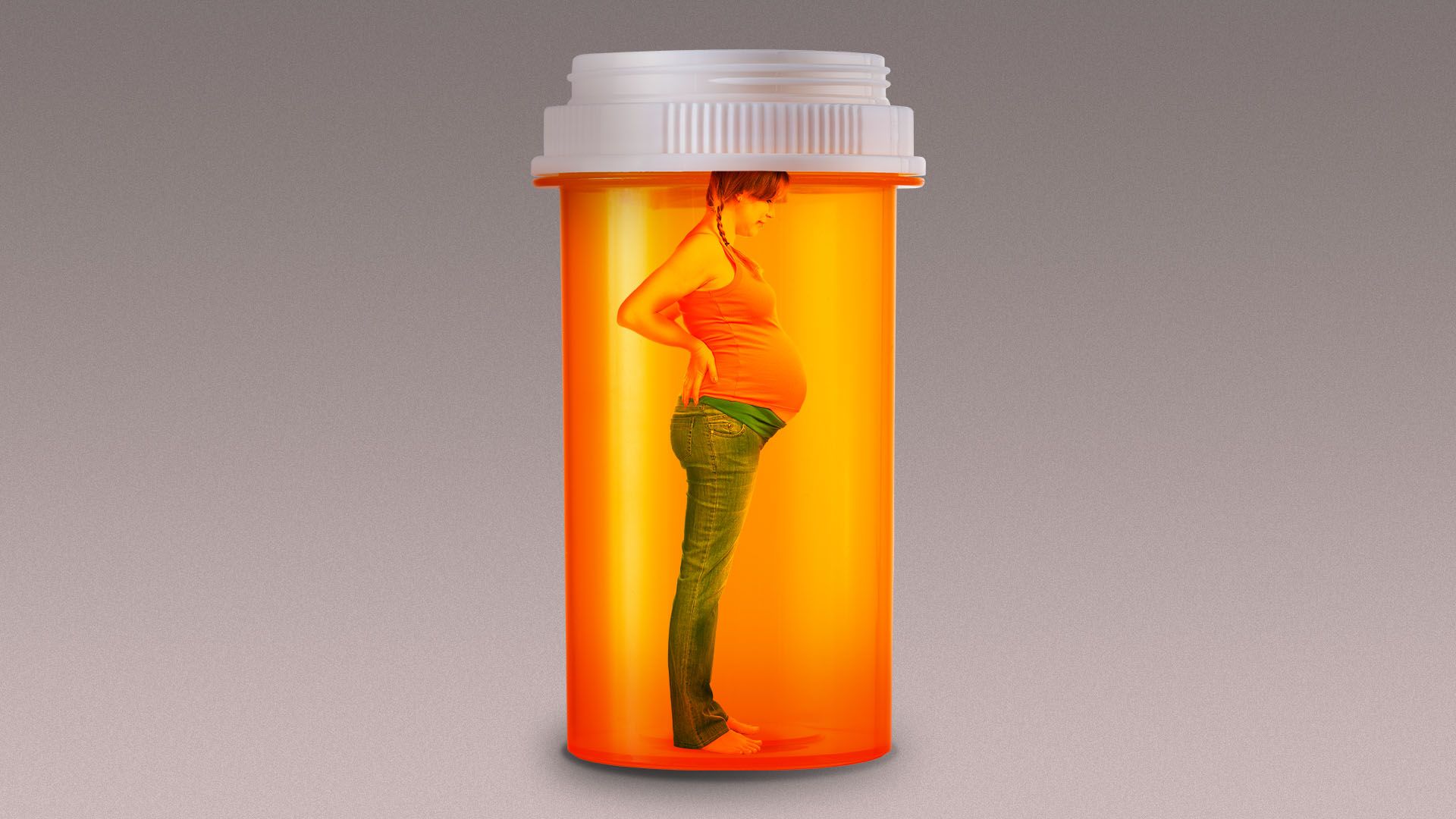
Illustration: Sarah Grillo/Axios
Advocates and parents of people with autism say they're frustrated and disheartened after the Trump administration publicly linked taking Tylenol while pregnant as a cause for the condition.
Why it matters: The push from President Trump and Health Secretary Robert F. Kennedy Jr. has generated a cycle of guilt for mothers and women, while spreading misinformation about a complex condition that is largely linked to genetic mutations.
- Tylenol's maker rebutted Trump's warning, saying there is "no credible evidence linking acetaminophen to autism," and The American College of Obstetricians and Gynecologists says acetaminophen is safe to take during pregnancy.
State of play: People with autism and their advocates said the Trump administration's handling of disability rights has further stigmatized the community.
- "It's just a very ugly situation to listen to the leader of our country and his administration purport to know and to tell mothers, 'don't take Tylenol,'" said Laura Kennedy, whose 43-year-old daughter, Julia, is autistic. "It's like living in 'The Twilight Zone.'"
- She said advanced genetic testing recently demonstrated that a non-inherited gene deletion caused her daughter's autism.
- "For 42 years, we did not know what caused Julia's disability," Kennedy said. "And there was always that doubt, that guilt: What did I eat? What did I do? And not knowing the answers."
Zoom in: Every time Lindsay Althaus' 11-year-old son Whitman, who has autism, receives a new diagnosis, she wonders if it was caused by complications she had during pregnancy or in the aftermath of his birth.
- She said it's "cruel" for the Trump administration to exacerbate parents' concerns by spreading misinformation.
- "It's so hard not to blame yourself..." she said, though she's certain she didn't take Tylenol during her pregnancy. "But when you have the administration coming at you as a mom saying, 'well, you took Tylenol and therefore because you took Tylenol, you deserve this life,' is a little heartbreaking."
Zoom out: "We still have a lot of that blame game toward mothers, specifically, and parents," Theresa Miskimen Rivera, president of the American Psychiatric Association, said.
- Resources would be better served, she said, toward supporting people with autism and long-term research.
- "It's very disheartening to have that message be out there — one, when it's not accurate, and two, when it's just one more time where we're blaming mothers for something they can't influence and can't control and isn't connected to real science," said Katy Neas, chief executive officer of The Arc, which serves people with intellectual and developmental disabilities.
The other side: "The blame is on incompetent politicians and government officials who stood idly by as autism rates skyrocketed by nearly 400 percent over the past two decades," White House spokesperson Abigail Jackson said in a statement.
- "The Administration is committed to addressing the concerns of parents," she said.
By the numbers: An April 2025 report from the Centers for Disease Control and Prevention found that 1 in 31 children aged 8 or younger are now diagnosed with autism.
- The report attributed the increase to improved screening for the condition, but noted that cases are on the rise — in 2000, 1 in 150 children were diagnosed.
Threat level: Tylenol is often recommended to treat fevers, which could be a symptom of an underlying infection or a sign that something else is medically wrong, Miskimen said.
- During Monday's announcement, Trump urged pregnant women to "tough it out" if they have a fever.
- Suffering through a fever or serious infection during a pregnancy could increase the risk for autism well above the level of risk posed by Tylenol, autism researcher Helen Tager-Flusberg told NPR.
The bottom line: "We need the science to work the way science does," Neas said. "And it's not necessarily a quick solution, but it needs to be thorough."
- "At the end of the day, we want people to have answers that are real and not answers that are made up or half-baked."
Go deeper:
