Judge says court can't block migrants' deportations despite torture risk

Add Axios as your preferred source to
see more of our stories on Google.
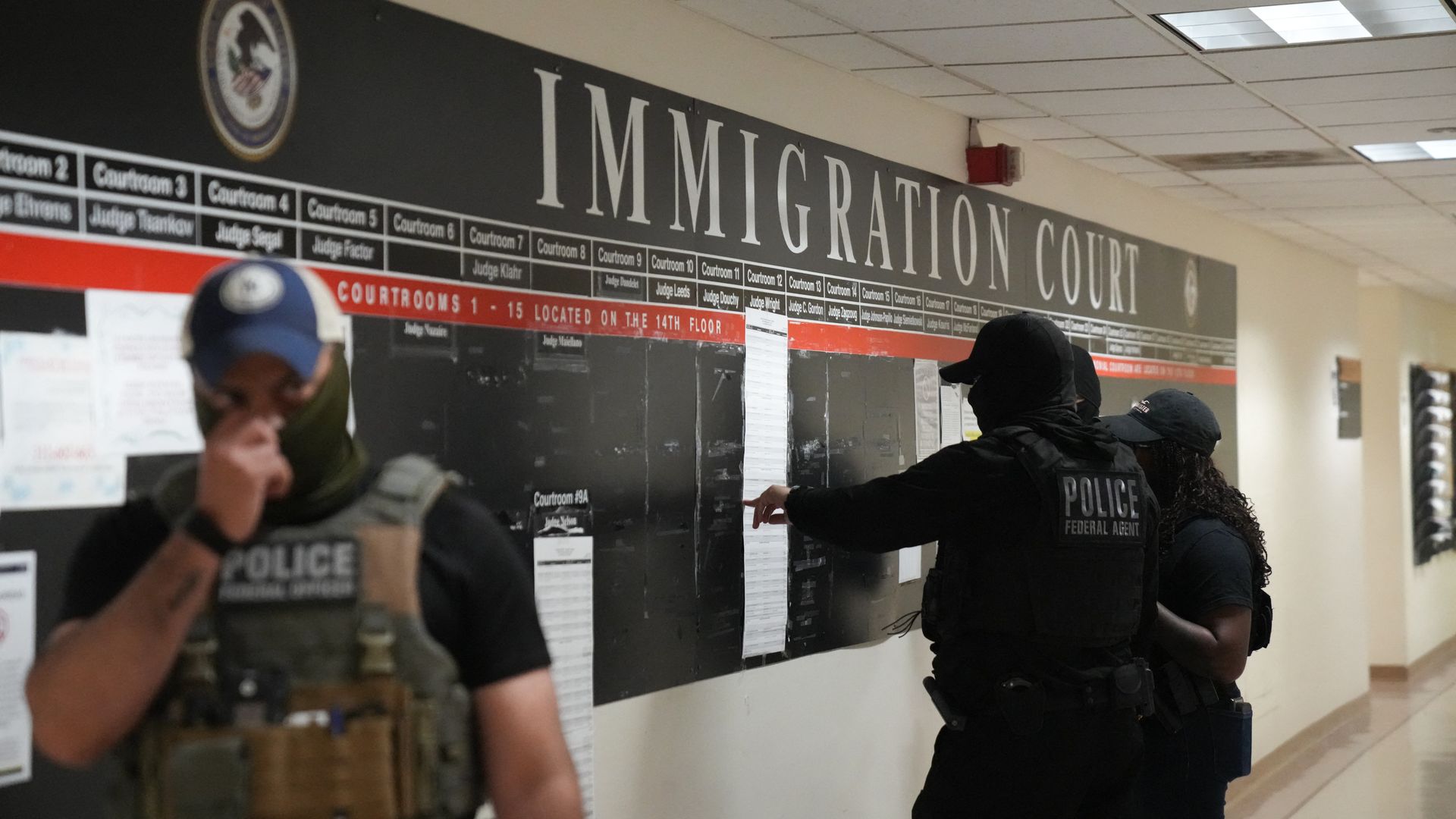
Immigration and Customs Enforcement agents look over lists of names on June 27, 2025. Photo: Bryan R. Smith/AFP via Getty Images.
A federal judge said Monday evening that she could not prevent a group of migrants that the Trump administration deported to Ghana from being sent back to their home countries, despite their credible fears of torture.
Why it matters: The ruling represents a win for the Trump administration as it seeks to ramp up removals through all possible avenues, including through third-party deportations, which send immigrants to countries they have no ties to.
Catch up quick: The plaintiffs are five citizens of Nigeria and Gambia who were granted deportation protections after a U.S. immigration judge found that they were likely to face persecution, torture or death if they were sent back to their home countries.
- The plaintiffs allege the U.S. is sidestepping immigration law by illegally facilitating their removals to their countries of origin.
What they're saying: "The court does not reach this conclusion lightly. It is aware of the dire consequences Plaintiffs face if they are repatriated," U.S. District Judge Tanya Chutkan wrote in her Monday evening filing.
- "And it is alarmed and dismayed by the circumstances under which these removals are being carried out, especially in light of the government's cavalier acceptance of Plaintiffs' ultimate transfer to countries where they face torture and persecution. But its hands are tied."
- "These actions also appear to be part of a pattern and widespread effort to evade the government's legal obligations by doing indirectly what it cannot do directly," she wrote.
The other side: The Trump administration claims Ghana promised not to deport the migrants to places where they might face torture, but acknowledged in the court filing that it appears the country is walking back those commitments.
- The U.S. government asserts that it can't prevent the migrants' removals because the U.S. government "does not have the power to tell Ghana what to do."
Zoom in: Homeland Security Assistant Secretary Tricia McLaughlin told Axios in an emailed statement that the department was "pleased" to see Chutkan rule in its favor.
- "The fact of the matter is those who are in our country illegally have a choice—they can leave the country voluntarily or be arrested and deported. If you're a dangerous criminal here illegally, you could end up in CECOT or in any number of third countries like, in this case, Ghana."
- The White House and the State Department did not immediately respond to Axios' request for comment.
Zoom out: The Trump administration has sent several flights to third countries since the Supreme Court ruled in June that migrants could be sent to countries that are not their place of origin.
- DHS also announced that a group of immigrants from Cuba, Jamaica, Laos, Vietnam and Yemen were being sent to the tiny African nation Eswatini, formerly known as Swaziland, in July.
Go deeper: Third countries where Trump administration is deporting migrants: Locations
