Where fall is warming the most

Add Axios as your preferred source to
see more of our stories on Google.
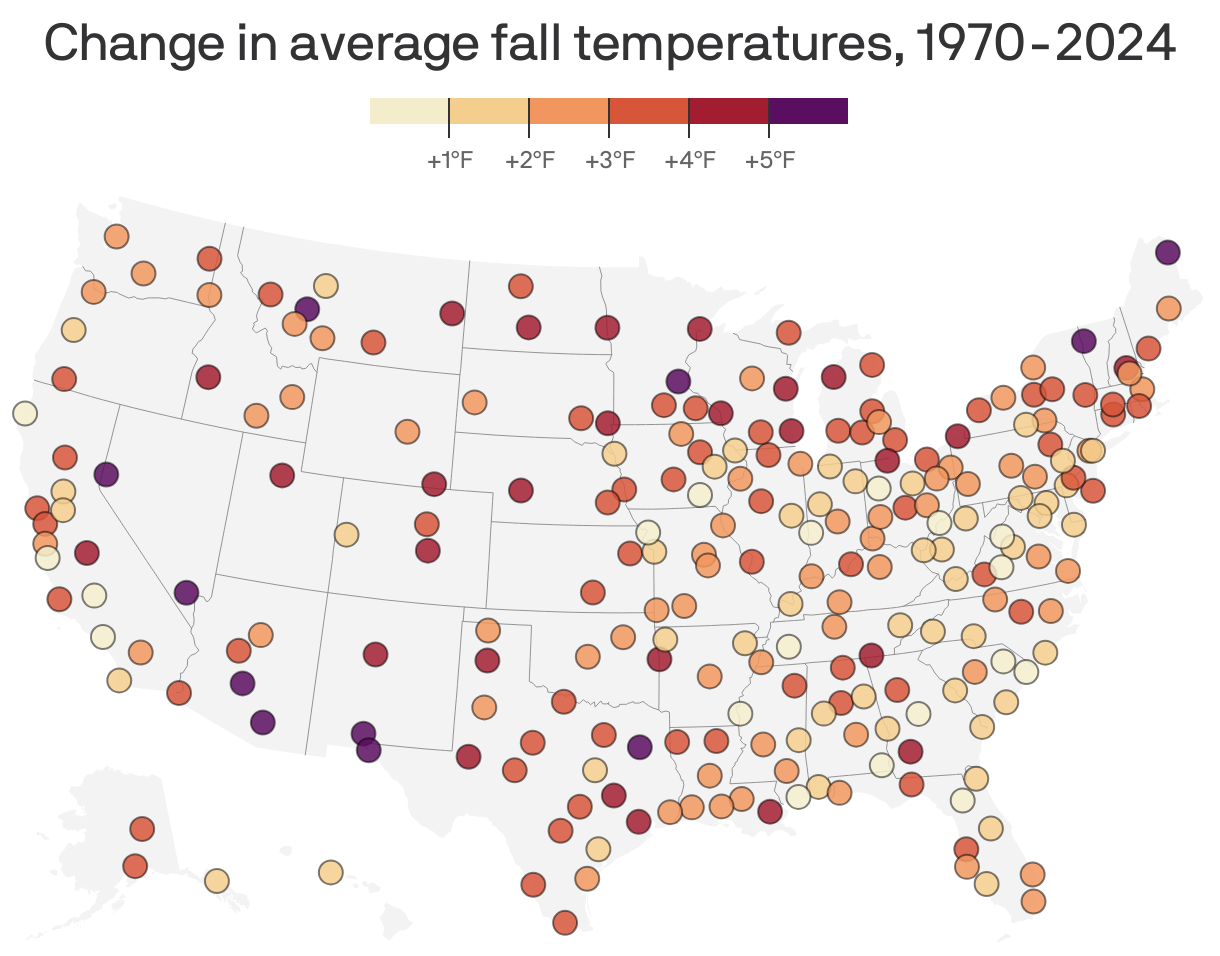
Average fall temperatures are rising almost universally nationwide, a new analysis finds.
Why it matters: Warmer falls could increase cooling demand (and cause bigger bills and more strain on the electric grid), affect growing and allergy seasons, and have health impacts for vulnerable groups.
Driving the news: Between 1970 and 2024, average fall temperatures rose in 98% of the 243 cities analyzed in a new report from Climate Central, a climate research group.
- Among cities with an increase, temperatures rose an average of 2.8°F.
Zoom in: Reno, Nev (+7.7°F); El Paso, Texas (+6.5°F) and Las Vegas, Nev. (+6.2°F) saw the biggest increases over the covered period.
- Only three of the examined cities had a decrease: Gainesville, Fla.; Macon, Ga. and Harrisonburg, Va., all dropping by -0.2°F.
How it works: Climate Central's report is based on NOAA data, and defines "fall" as the entirety of September, October and November (meteorological fall).
- Astronomical fall, on the other hand, doesn't start 'til Sept. 22 this year.
What's next: The Climate Prediction Center's latest seasonal outlook for fall forecasts above-normal temperatures for most of the country, especially in the Southwest and Northeast.
