Trump's energy moves could chill U.S. infrastructure investment

Add Axios as your preferred source to
see more of our stories on Google.
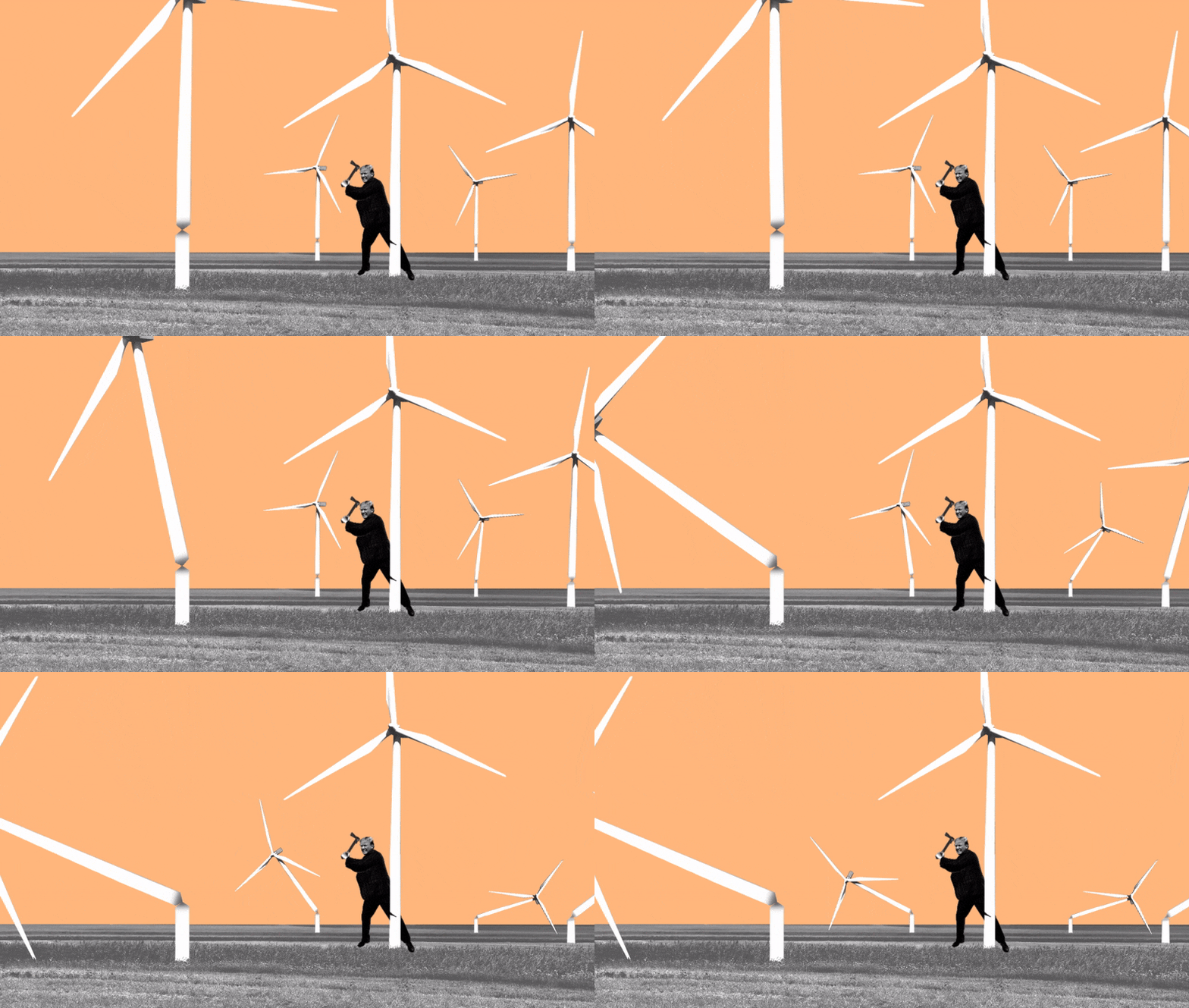
Lazaro Gamio / Axios
U.S. infrastructure investing is becoming unstable, particularly when it comes to renewable energy projects.
Driving the news: The Trump administration last week ordered a stop to work on an offshore wind farm in Rhode Island, even though 65 of the 85 turbines already are installed.
- No direct federal funds are being used for "Revolution Wind," which instead is a joint venture between Denmark's Ørsted and a portfolio company of Global Infrastructure Partners (now owned by BlackRock). It's designed to provide power to around 350,000 homes, and was fully permitted.
- A letter from the U.S. Interior Department cited vague national security concerns, and could result in litigation if not rescinded.
- Ørsted is still calculating its economic damages, but a similar Trump action in New York cost that operator at least $50 million per week.
Elsewhere: Trump also plans to pull existing permits for a planned wind project in Maryland, which is partially owned by Apollo Global Management and expected to power over 700,000 homes.
The big picture: All of this could have a chilling effect on private equity investment in U.S. infrastructure projects, and thus on the U.S. economy and global competitiveness.
- Firms won't put big money into ground that can shift so capriciously.
- Not just for wind projects — which Trump has loudly opposed since turbines were permitted near his Scotland golf course — but also for solar, EV charging, and even more traditional infrastructure like bridges and roads. And that goes double for any project that includes federal funds.
By the numbers: Global investing in renewable energy hit a new record in the first half of 2025, but fell by 36% in the U.S., as Axios' Ben Geman recently reported.
The bottom line: Infrastructure investing is long-term by nature, and investors must be able to trust government promises.
- Can you even begin a new nuclear or fossil fuel project today when the next president might oppose it, and view Trump's actions as precedent?
- An "all-in" energy policy is impossible to implement when the money is moving out.
