Exclusive: Azerbaijan wants deeper U.S. ties after Armenia peace deal

Add Axios as your preferred source to
see more of our stories on Google.
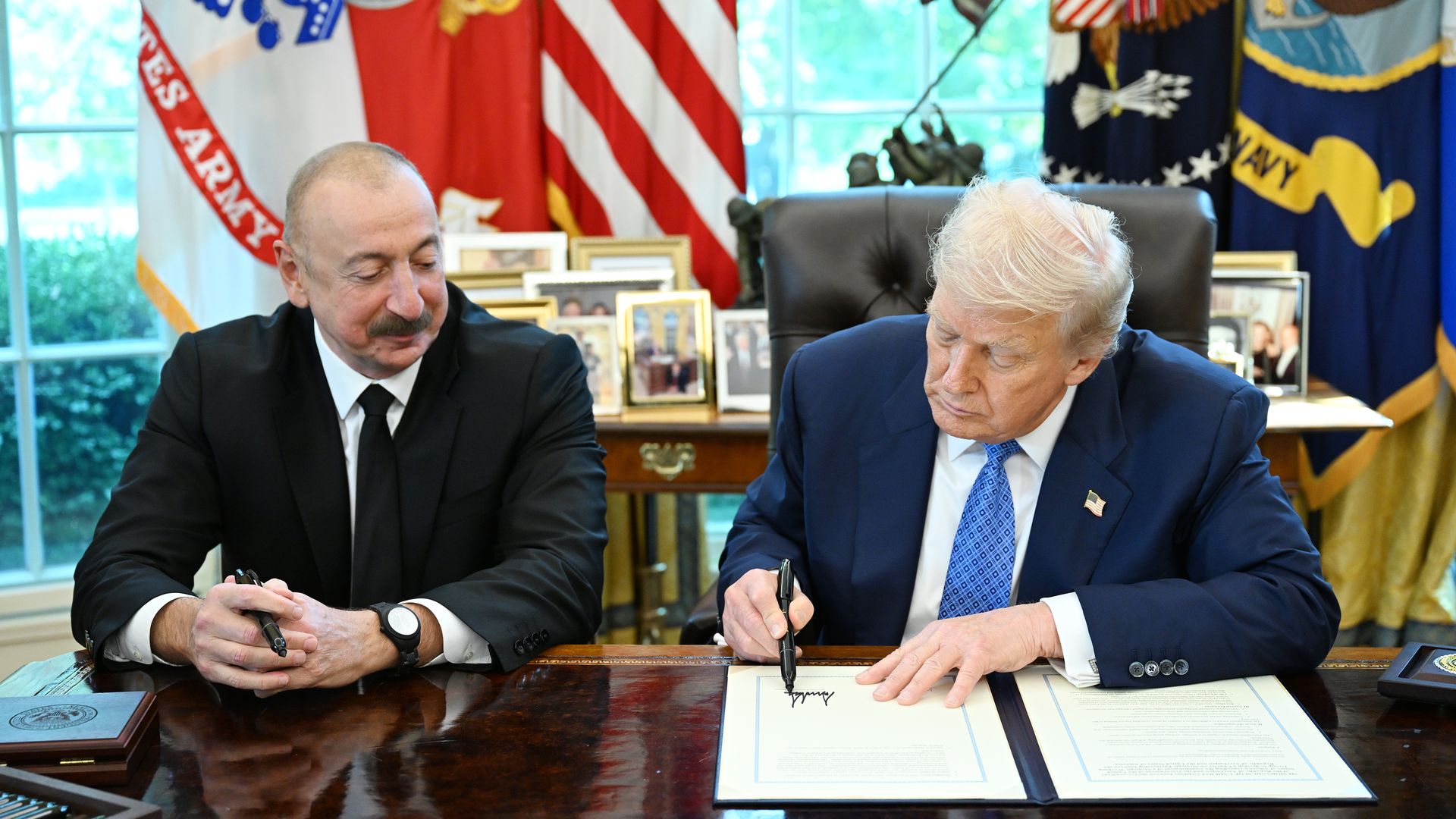
Presidents Ilham Aliyev and Donald Trump at the White House on Aug. 8. Photo: Azerbaijan Presidency/Anadolu via Getty Images
Azerbaijan is seeking closer national-security and technology ties to the U.S. on the heels of a peace declaration brokered by the Trump administration.
Why it matters: Azerbaijan is sandwiched between Russia and Iran, two of the sharpest thorns in Washington's side. It's also a major oil and gas exporter with a well-equipped military.
- The country has a track record of cooperation with America, including overflight and refueling rights during the global war on terror.
- But Azerbaijan's long history of conflicts with neighboring Armenia, which has an influential diaspora in the U.S., has cast a pall on stateside relations.
Driving the news: In an interview at the Azerbaijan embassy, ambassador Khazar Ibrahim told Axios his government will now "work on setting up working groups and developing relations in every direction: economy, energy, defense, political, education. You name it. Technology, AI."
- "Let's open a new page," Ibrahim said. "Let's work together, and not only Armenia-Azerbaijan, but also let's have Azerbaijan-U.S. relations develop."
Context: Armenia and Azerbaijan have feuded over territory ever since the collapse of the USSR, when both gained independence.
- Wars between the two have killed thousands; many more have been displaced. Previous ceasefires and interventions have proven fleeting. And Armenia accused Azerbaijan of ethnic cleansing in Nagorno-Karabakh following the latter's 2023 military offensive.
- Fighting over that mountainous enclave is also cited as the birthplace of contemporary drone warfare.
The intrigue: Ibrahim credited President Trump with advancing the peace process and said he "101%" deserves a Nobel Peace Prize.
- "Within this very short period of time — like six months — he managed to do what others couldn't do for more than 30 years."
- The ambassador also recognized Steve Witkoff, the White House's special envoy whose role "cannot be ignored." Witkoff visited the country in March, the same month it was said peace was within reach.
- "It's always critical, in any negotiations, especially in very difficult peace negotiations, to have very strong political will by a very strong global leader," Ibrahim said. "That's what we got this time."
Between the lines: One U.S. official told Axios a desire to get into the Trump administration's good graces appeared to be Azerbaijan's primary motivation for signing the peace pact.
What we're watching: How and where defense-tech common ground is found. And whether peace sticks.
Go deeper: What's really going on with the "6 wars" Trump says he ended
