Trump demands a new census that excludes unauthorized residents

Add Axios as your preferred source to
see more of our stories on Google.
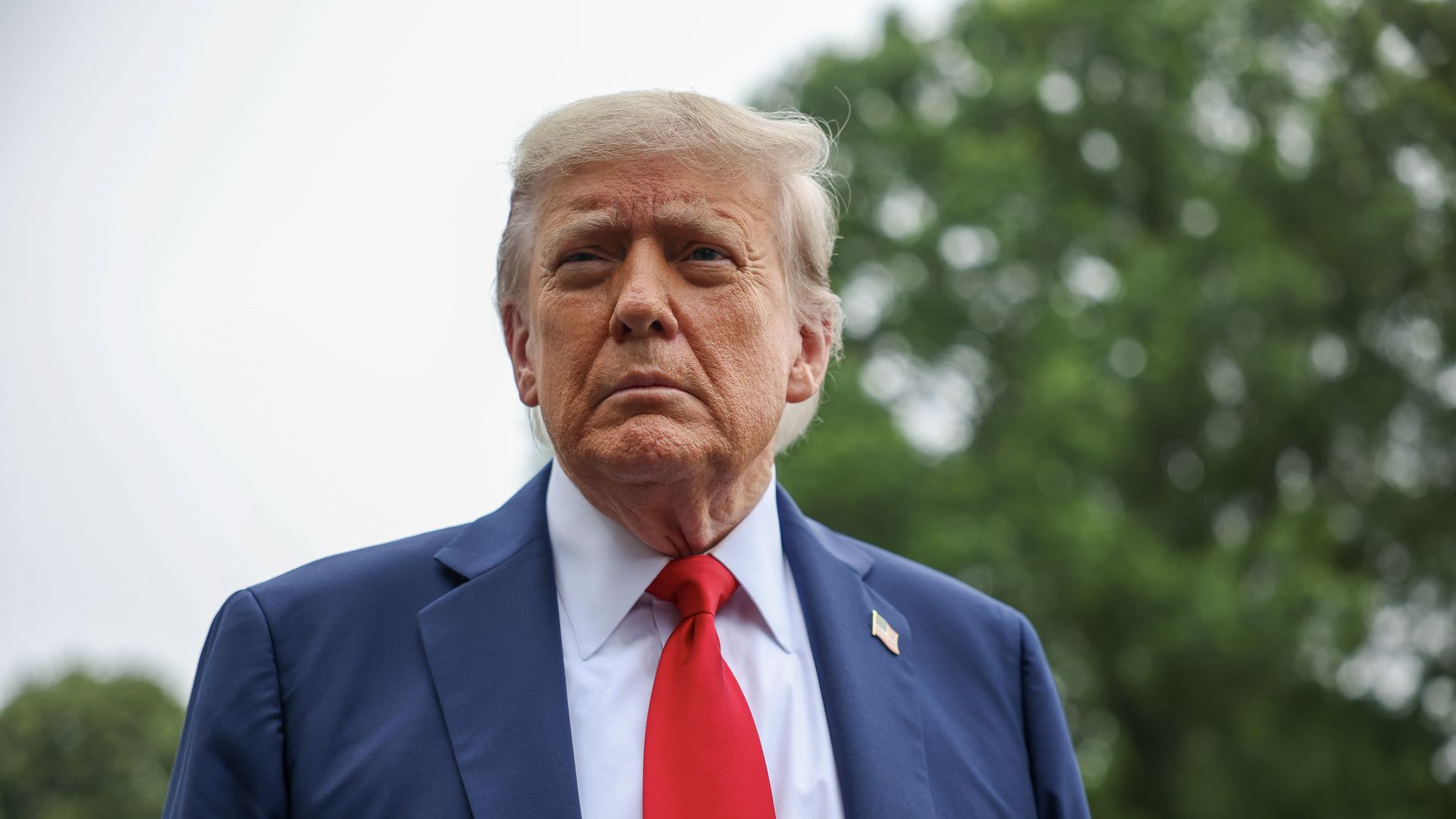
President Trump stops and talks to the media before he boards Marine One on the South Lawn at the White House on June 15. Photo: Tasos Katopodis/Getty Images
President Trump on Thursday announced he had instructed the Commerce Department to "immediately" begin working on a new census.
The big picture: The development comes as the White House is pushing red states to draw new congressional maps more favorable to Republicans ahead of the 2026 midterms. The Constitution requires the census every 10 years to apportion congressional districts.
Driving the news: Trump, in a Thursday Truth Social post, called for a "new and highly accurate" census "based on modern day facts and figures and, importantly, using the results and information gained from the Presidential Election of 2024."
- He added that "[p]eople who are in our Country illegally WILL NOT BE COUNTED IN THE CENSUS."
- Per the Census website, the Decennial U.S. Census is designed to count every resident in the United States and is mandated by Article I, Section 2 of the U.S. Constitution.
Zoom out: The next census is set to take place in 2030.
- Preparing for the count is a complex process that takes several years of planning.
- The Commerce Department, run by Secretary Howard Lutnick, oversees the Census Bureau.
- "The Census Bureau will immediately adopt modern technology tools for use in the Census to better understand our robust Census data. We will accurately analyze the data to reflect the number of legal residents in the United States," the Commerce Department said in a statement.
Zoom in: All people, both citizens and noncitizens, with a "usual residence" in the U.S. are counted in the resident population for the census.
- A Pew Research Center analysis found that if unauthorized immigrants were excluded from the 2020 apportionment count, three states could have each lost a congressional seat they otherwise would have had.
Flashback: Trump in his first term similarly tried to omit unauthorized immigrants from population counts and attempted to add a citizenship question to the census (an effort ultimately blocked by the Supreme Court).
- In 2020, Trump signed a memo stating that "[f]or the purpose of the reapportionment of Representatives following the 2020 census, it is the policy of the United States to exclude from the apportionment base aliens who are not in a lawful immigration status."
- The policy was deemed unlawful by lower court judges, but the Supreme Court ultimately dismissed a lawsuit challenging the administration's plan as premature.
Go deeper: House report ties Trump citizenship question to political goals
Editor's note: This story has been updated with comment from the Commerce Department.
