Investors celebrate trade deals inking higher tariffs

Add Axios as your preferred source to
see more of our stories on Google.
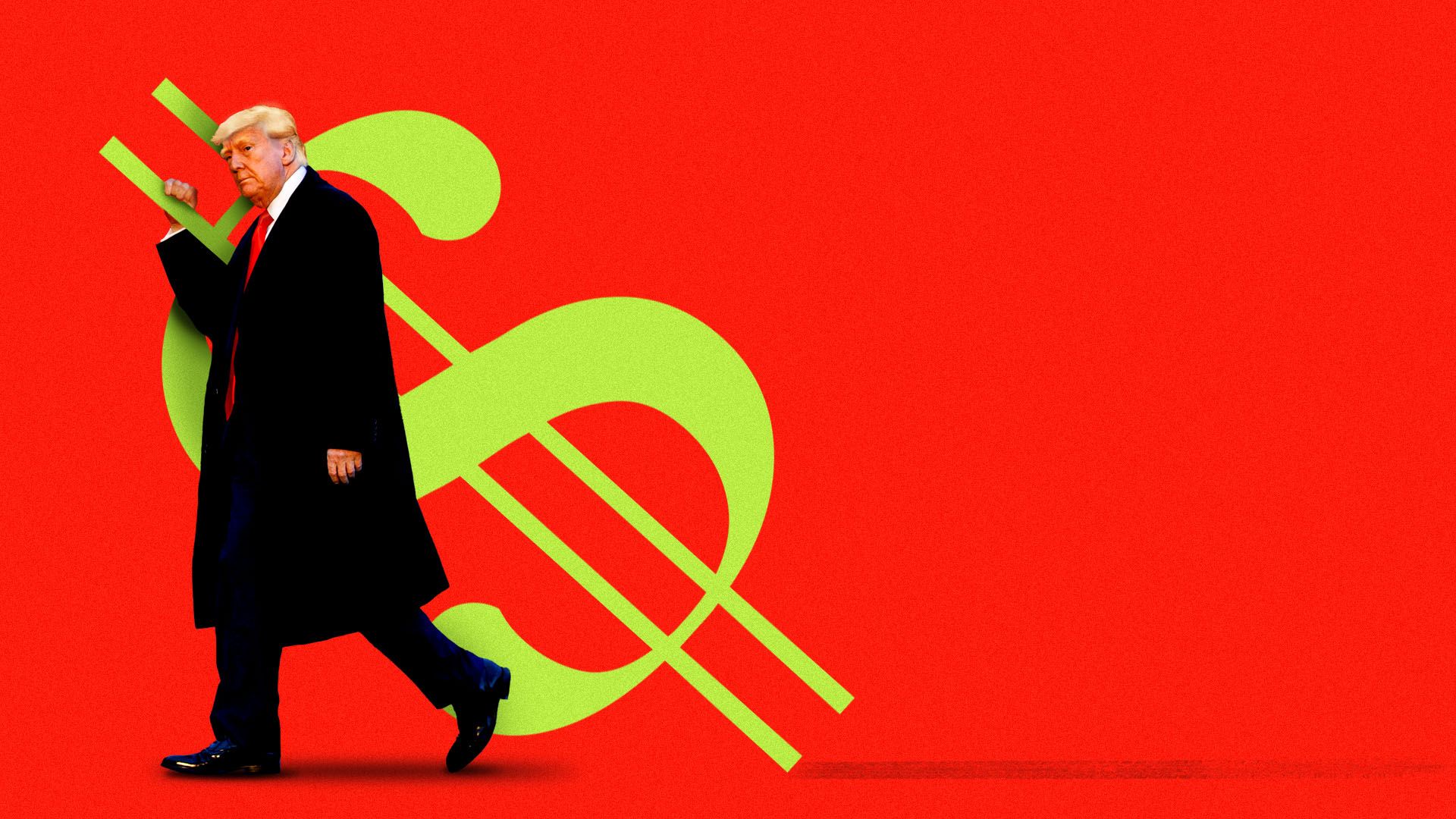
Photo illustration: Sarah Grillo/Axios. Photo: Samuel Corum/Politico/Bloomberg via Getty Images
President Trump announced a 15% tariff on the European Union on Sunday. Stocks edged higher on the news, as investors see the deal easing the risk of even steeper tariffs.
Why it matters: While investors cheer the short-term clarity, they could be underestimating the long-term drag of higher tariffs on corporate earnings.
Driving the news: The 15% tariff on E.U. goods comes alongside a 0% tariff rate on American exports to Europe.
- The deal also includes pledges from the E.U. to buy over $750 billion in U.S. energy, invest $600 billion more in the U.S. economy, and open markets to American manufacturers and defense firms.
- Meanwhile, Commerce Secretary Howard Lutnick said tariff deadlines more broadly are firm, which means they will go into effect August 1.
Zoom in: The euro rallied against the dollar in response to the trade deal news, and risk assets such as bitcoin rallied as well.
- Safe-haven assets like gold and the dollar strengthened early Monday.
What they're saying: "The biggest piece in the trade deal puzzle still remains, and the Chinese are unlikely to be as willing to fold," Jamie Cox, a managing partner at Harris Financial Group, wrote in a note.
- China is now the biggest focus for investors, as Axios Markets reported.
- Public companies rely on China for access to lower priced goods and labor.
- Chinese consumers also prop up U.S. companies, with 7% of the S&P 500's annual revenue coming from China, according to Apollo chief economist Torsten Slok.
Be smart: While tariff rates on China are the biggest country-specific tariff risk for investors, sector-specific levies are also of concern.
- Lutnick said sector tariffs would become clear over roughly the next two weeks. Any clarity on sector tariffs could move stocks in those baskets.
The bottom line: All eyes may be on the China trade deal, but in the interim, investors are learning that deals are better than no deals, and the removal of a larger risk is enough to rally on.
