Pioneering Latino sci-fi novelist wins inaugural literary award

Add Axios as your preferred source to
see more of our stories on Google.
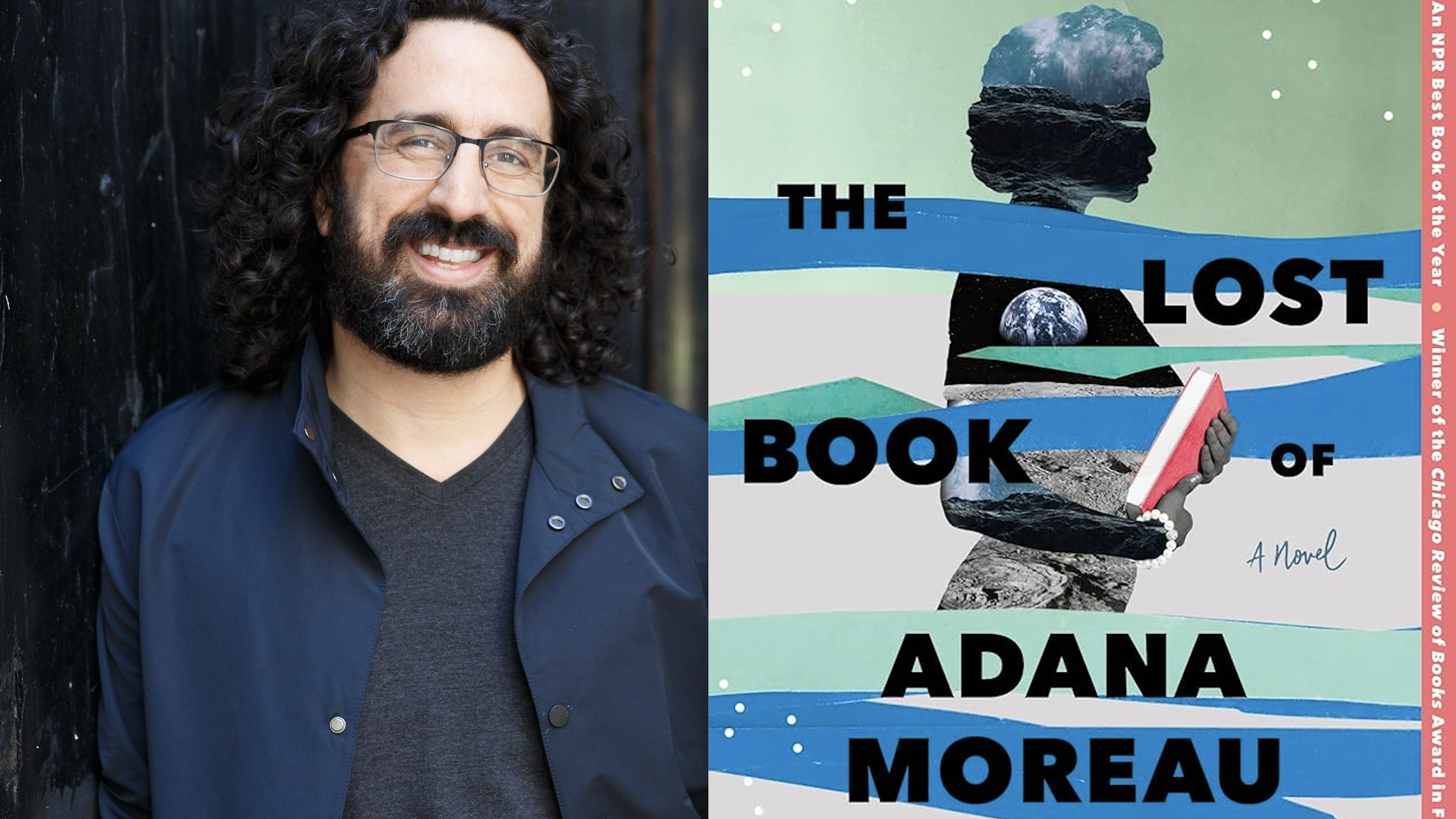
Novelist Michael Zapata and his book "The Lost Book of Adana Moreau." Photo: Courtesty of Michael Zapata.
Michael Zapata, whose 2020 novel "The Lost Book of Adana Moreau" was praised as a crucial work in the growing Latinofuturism movement, has won the inaugural DAG Prize for Literature.
The big picture: The prize was given by musicians Alyssa and Douglas Graham to help "an early-career prose writer whose work expands the possibilities for American writing."
Zoom in: Zapata was awarded the $20,000 prize as he works on his second book, a speculative love noir story set in Chicago's future, and follows the life of a Quechua entomologist and a census taker.
- He was selected from five finalists and 166 applicants.
- The prize funds can be used for research, writing, editing, workshops, residencies, or other activities that facilitate.
State of play: Migrant and refugee crackdowns worldwide amid war, violence, climate change, technological surveillance and the rise of authoritarian rulers are giving fuel to a Latinofuturism and the dystopian immigration novel.
- Dystopian fiction around climate chaos and neo-fascist, theocratic regimes has boomed since the 2010s, but in recent years, more writers have tackled dystopian visions around human migration that serve as warnings.
- Some Latino writers are also being influenced by an artistic movement known as Afrofuturism — speculative and science fiction written by Black writers.
In an interview with Axios, Zapata said that all those movements have shaped him as a novelist, and he's continuing to explore those themes, along with exile and migration.
- "I've grown up with so much science fiction, and Afrofuturism is really sort of like a guiding light."
- That's because the experiences of Black Americans and Latinos in the U.S. are so similar, and writers are exploring what it means to be a person of color in the future, he said.
- "I firmly believe that speculative works and science fiction address the heart of challenging empire and a world that feels unstable."
The intrigue: As the son of an Ecuadorian immigrant father and a Jewish mother, Zapata said he's writing at a time of anti-Latino immigration sentiment and rising antisemitism.
- Fiction is the way he seeks to address themes of the future, while history is being censured or rewritten.
- Zapata teaches at StoryStudio Chicago and Northwestern University.
Flashback: "The Lost Book of Adana Moreau" was released just before the pandemic and became a popular book while people were confined to their homes.
- It follows a Dominican immigrant in New Orleans who writes science fiction at the turn of the century and destroys her last novel before she dies. A manuscript in her name is discovered later.
- It was one of the strongest pieces of Latino science fiction writing created and was seen as a model for other writers.
Of note: The DAG foundation also awarded Ziba Rajabi the DAG Prize for Visual Art, and Elizabeth Ziman the DAG Prize for Music.
Go deeper: The rise of the dystopian immigration novel
