U.S. blames Hamas for crisis in ceasefire talks, eyes "alternative" hostage plans

Add Axios as your preferred source to
see more of our stories on Google.
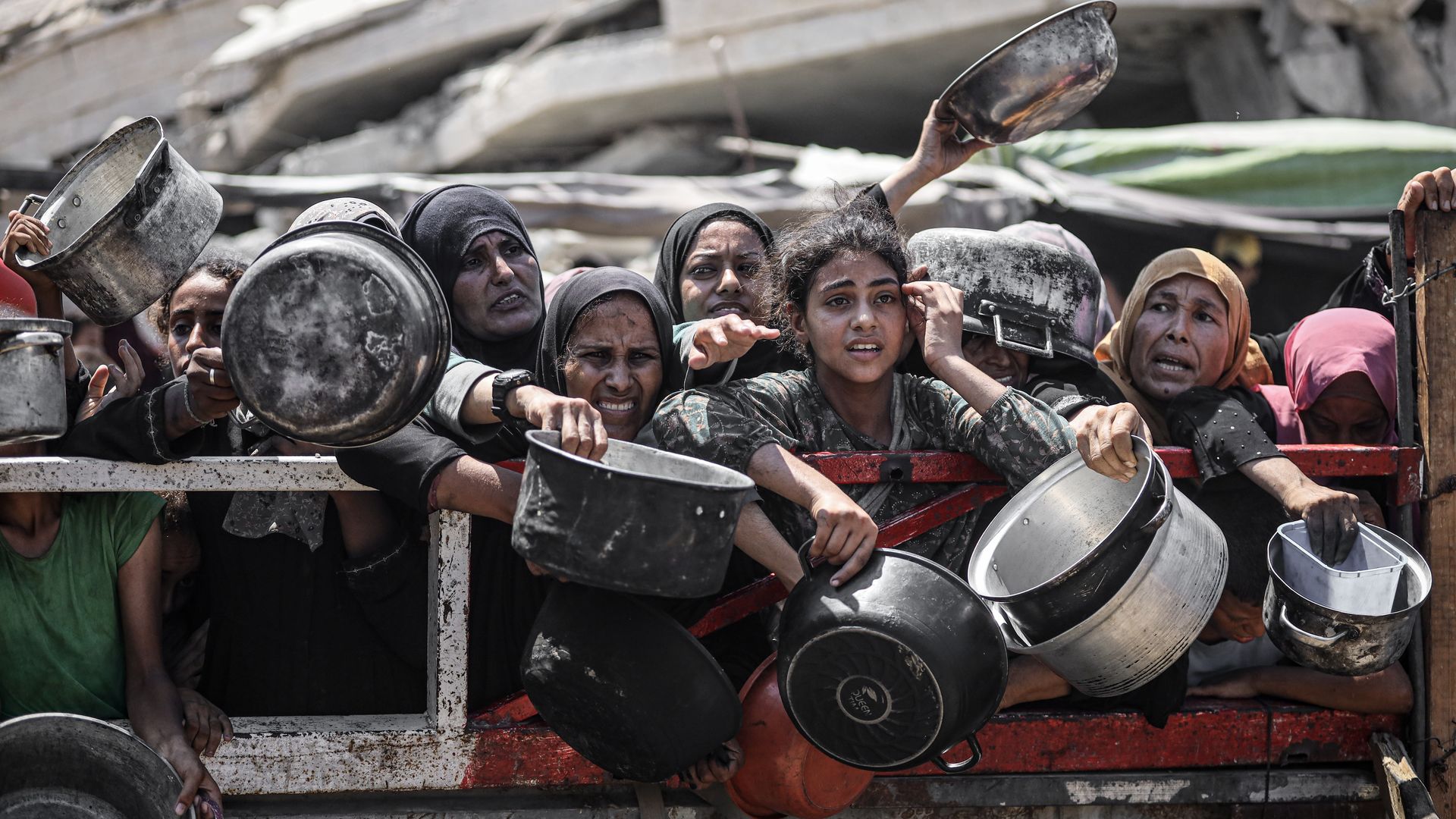
Palestinians carrying pans gather to receive hot meals, distributed by a charity organization in Gaza City. Khames Alrefi/Anadolu via Getty Images
White House envoy Steve Witkoff said Thursday that Hamas' latest response in Gaza talks "shows a lack of desire to reach a ceasefire," and warned the U.S. is now considering "alternative options" for bringing the hostages home.
Why it matters: The breakdown of negotiations came as Witkoff arrived in Italy for talks on Gaza with Qatari and Israeli officials. Witkoff hoped to then travel to Doha to seal the deal for a 60-day ceasefire this week.
- Shortly before Witkoff issued his statement, Israeli Prime Minister Benjamin Netanyahu announced he's recalling Israel's negotiators from Doha after Hamas made new demands in response to the latest Gaza proposal.
- Witkoff said the U.S. also decided to bring its team home for consultations as a result of Hamas' response. A U.S. official who represented Witkoff was in Doha over the last two weeks and engaged with the Israelis and the Qatari and Egyptian mediators.
Between the lines: An Israeli official said the decision to recall the negotiators was made to try and "shake up" the negotiations and put additional pressure on Hamas to agree to the proposal, which also calls for the release of 10 live hostages and 18 deceased hostages.
- The Israeli official stressed that the talks "did not collapse." But it's not yet clear whether the pullback will lead to a significant pause in the negotiations.
- It's also unclear what "alternative options" the U.S. might pursue if talks remain stalled, especially as the humanitarian crisis in Gaza grows increasingly catastrophic.
What they're saying: Witkoff said in a statement that the latest response from Hamas "clearly shows a lack of desire to reach a ceasefire in Gaza," suggesting that Hamas "does not appear to be coordinated or acting in good faith."
- "We will now consider alternative options to bring the hostages home and try to create a more stable environment for the people of Gaza," Witkoff added.
- It is a shame that Hamas has acted in this selfish way. We are resolute in seeking an end to this conflict and a permanent peace in Gaza."
The other side: Hamas said it was "surprised" by Witkoff's "negative statements" and claimed the Egyptian and Qatari mediators expressed "satisfaction with Hamas' constructive and positive stance, which opens the door to reaching a comprehensive agreement."
- Hamas said in its statement that it is still committed to "completing the negotiations, overcoming obstacles and reaching a permanent ceasefire agreement."
Behind the scenes: Hamas demanded that the number of Palestinian prisoners released in exchange for the hostages be increased, according to a senior Israeli official and a source familiar with the details.
- Qatari mediators had asked Hamas not to reopen that issue. When they did, Israeli officials reacted angrily.
- "In light of Hamas' response to the proposal" it's been decided to recall the negotiating team for further consultations in Israel, Netanyahu's office said in a statement.
- "We appreciate the efforts of the mediators, Qatar and Egypt, and the efforts of White House envoy Steve Witkoff to achieve a breakthrough in the talks."
Breaking it down: The Qatari and Egyptian mediators gave an updated proposal to both Israel and Hamas one week ago.
- Israel accepted the proposal. After an initial delay, Hamas gave a response on Tuesday, but the Egyptian and Qatari mediators said it was not good enough and refused to deliver it to the Israelis, three sources with direct knowledge say.
- On Thursday morning, Hamas delivered a new and more detailed response. Israeli officials say it was better than the previous one, but still created significant gaps between the parties, particularly on the prisoners issue.
Zoom in: Hamas demanded that Israel release 200 Palestinians serving life sentences for killing Israelis, rather than the 125 included in the proposal, and 2,000 Palestinians detained in Gaza after October 7, rather than the proposed 1,200, the sources say.
- In response, senior Israeli officials told White House envoy Steve Witkoff that Hamas' demand was "unacceptable," according to a source familiar with the negotiations.
- The source noted that this is Hamas' opening position in the negotiation, not a final position.
