Trump tariff letters going to a dozen countries Monday

Add Axios as your preferred source to
see more of our stories on Google.
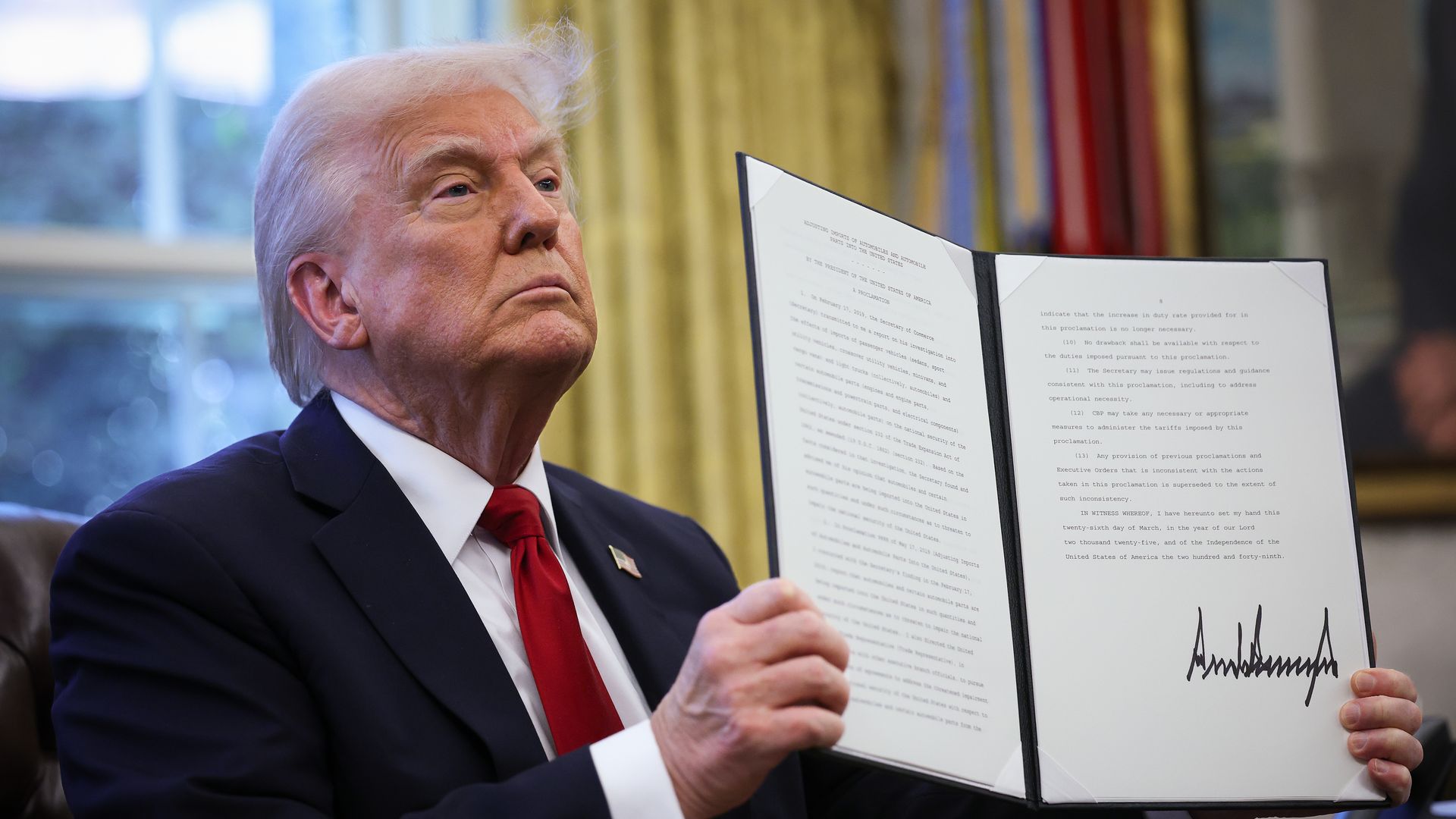
President Trump holds a signed executive order on tariffs. Photo: Win McNamee/Getty Images
President Trump said the U.S. will begin sending letters Monday to other countries setting a tariff rate on their imports.
Why it matters: After months of threats, Trump is abruptly re-escalating the trade war.
- For businesses craving certainty, who've had a period of relative calm of late, the move could once again upset that balance.
- It also injects a new risk into financial markets that have largely moved on to a post-tariff world. European stocks, and U.S. stock futures, fell Friday as Trump warned the letters were coming.
Catch up quick: Trump told reporters late Friday aboard Air Force One that about a dozen letters would go out Monday.
- He didn't say which nations would be targeted, or what rates would be set.
- On Thursday, he said the rates in the letters would go into effect August 1 — and warned some could be as high as 70%.
Yes, but: The administration has used a similar tactic before — taking an aggressive posture on coming tariffs, but with a deadline just far enough out that trading partners could still bring last-minute offers the president would be willing to accept.
- Reports in recent days suggest multiple trading partners, including South Korea and Thailand, are scrambling to do just that.
Flashback: Trump set a new regime of sweeping global tariffs on April 2, only to pause much of it a week later.
- At that time, his administration promised 90 trade days in 90 days. Through the first 85 days, it made three — with the UK, China and Vietnam.
- In mid-May, Trump began indicating deals weren't really necessary, because the U.S. would simply send letters to trading partners in subsequent days setting a rate.
- He made the same threat again in mid-June, and once more late in the month, noting he preferred the letters as a simpler solution than complex talks with dozens of countries.
Between the lines: Though the tariff pause is due to expire July 9, some countries, like China and Canada, have separate deadlines later in the month or next month.
- Treasury Secretary Scott Bessent has indicated the deadlines are fungible and the goal is to be done with trade deals by Labor Day.
What we're watching: It's not clear how aggressive Trump intends to be with these new tariff rates.
- The Vietnam deal, for example, included a 20% rate — double the global baseline Trump imposed, but less than half what the country originally faced in April.
