Trump: U.S. will set tariff rates in 2-3 weeks, walking back negotiations

Add Axios as your preferred source to
see more of our stories on Google.
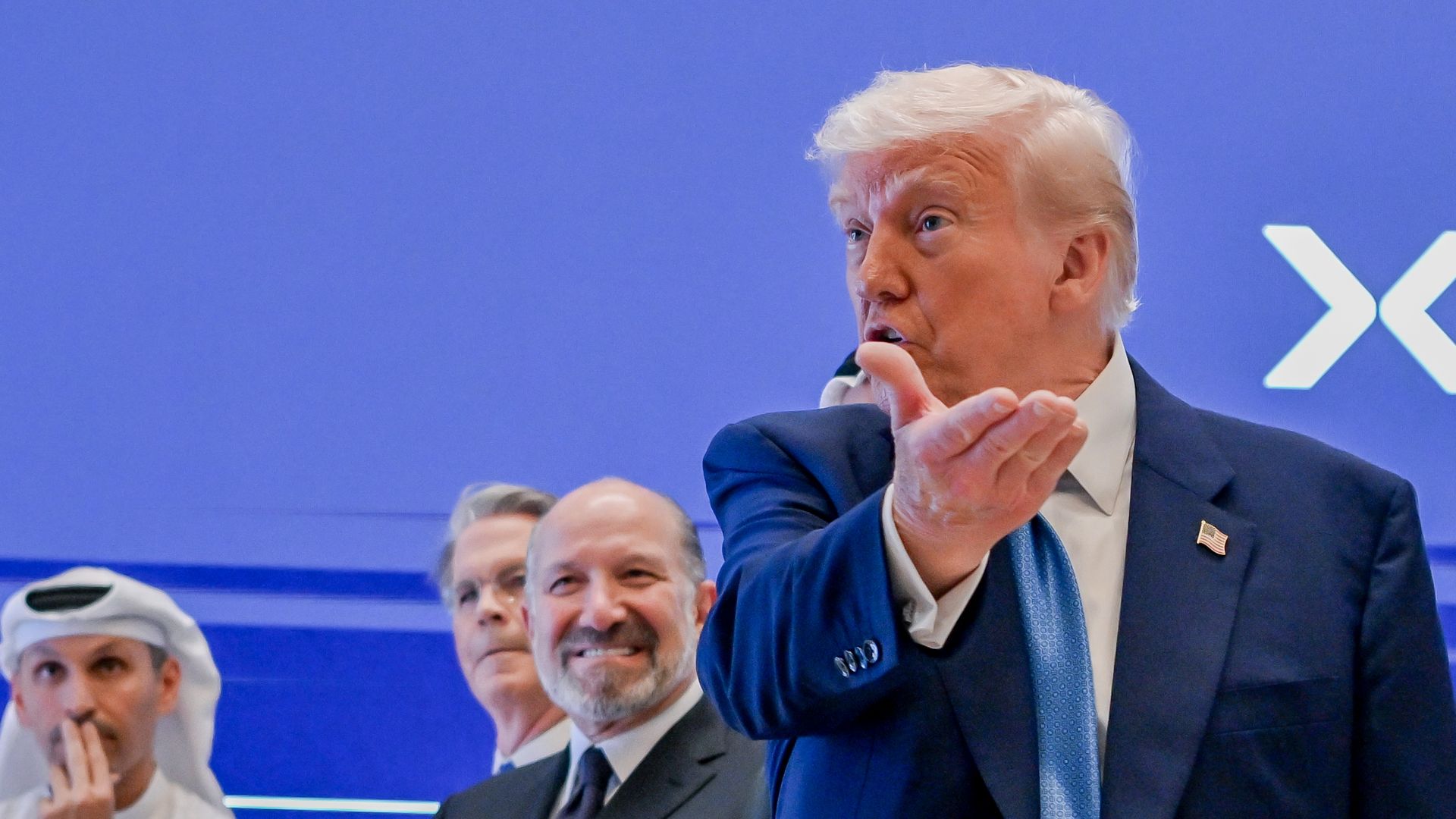
President Trump, flanked by Commerce Secretary Howard Lutnick and Treasury Secretary Scott Bessent, in Abu Dhabi. Photo: Waleed Zein/Anadolu via Getty Images)
President Trump said Friday the U.S. will unilaterally set tariff rates for many trading partners in the coming weeks, citing a lack of capacity to negotiate with so many countries simultaneously.
Why it matters: The U.S. already did that to some degree, on "Liberation Day" last month, then paused most of those rates after a global market panic sent stocks plunging and interest rates soaring.
- Trump's original goal of making 90 deals during that 90-day pause has run into the reality of trade negotiations being far more complex than putting a number on paper.
Catch up quick: Trump, during a business roundtable at the tail end of his Middle East trip, said Treasury Secretary Scott Bessent and Commerce Secretary Howard Lutnick would act on tariff rates soon.
- "At a certain point over the next two to three weeks I think Scott and Howard will be sending letters out essentially telling people ... we'll be telling people what they'll be paying to do business in the United States," Trump said.
- "I guess you could say they could appeal it, but for the most part I think we're going to be very fair. But it's not possible to meet the number of people that want to see us."
Between the lines: It was not clear from Trump's remarks who would still get a chance to negotiate and who would simply be told what to pay.
- Lutnick has already said the global baseline 10% tariff Trump imposed April 2 is here to stay, but there's a gap between that rate and the higher reciprocal tariffs on dozens of countries that Trump paused April 9.
- The U.S. has been in active negotiations with a few countries, mostly large Asian powers like Japan, South Korea, and India.
The intrigue: Hard economic data so far shows the economy holding up in the face of Trump's trade war, but there are growing signs of weakness.
- On Thursday Walmart, which had pledged to hold the line on prices, said it could no longer absorb the full impact of tariffs and would have to charge consumers more for some goods starting this month.
What to watch: Markets, already skittish about the U.S., will look for more certainty in coming weeks on when those rates will be set and how high.
- "While there's been policy backtracking, it hasn't meaningfully improved the perception of US creditworthiness. International investors remain cautious," Convera currency and macro strategist Kevin Ford wrote in a note Friday.
