Del Monte Foods files for bankruptcy, plans to pursue sale


Add Axios as your preferred source to
see more of our stories on Google.
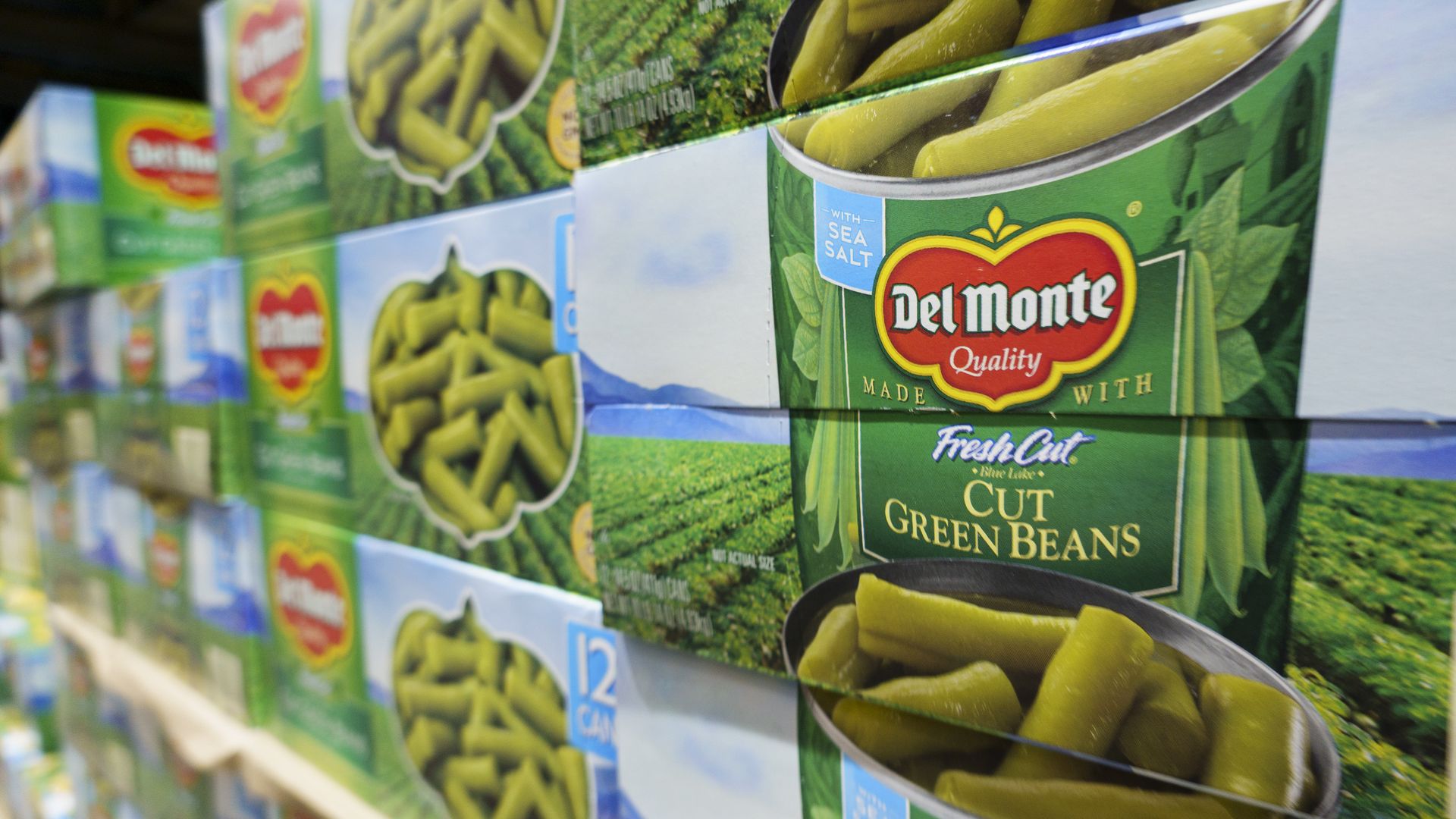
Del Monte Foods filed for Chapter 11 bankruptcy protection this week. Photo: Kevin Carter/Getty Images
Del Monte Foods has filed for Chapter 11 bankruptcy protection and announced it is pursuing a sale.
Why it matters: The nearly 140-year-old company — known for staples like canned vegetables and fruit cups — has faced mounting pressures from changing consumer habits, supply chain volatility and rising costs.
- The company said it has secured support from key creditors for a plan to sell its key assets and stay in business.
Zoom in: Del Monte has been suffering from excessive debt, a downturn in consumer demand, increased discounting, a declining private label business and higher costs from inflation, according to a court filing.
- The company, like other consumer packaged goods brands, has "experienced changing consumer purchase behavior and increased inflationary costs," chief restructuring officer Jonathan Goulding said in a court filing.
Context: Founded in 1886 in California, Del Monte eventually became one of the nation's leading packaged fruit sellers.
- Today, Del Monte has about 2,780 employees and four factories, with two in the U.S. and two in Mexico.
- The company's brands include its namesake lineup of canned fruit as well as Contadina, College Inn and Joyba. It also sells under private labels, but that business has been shrinking.
- The company, which is not affiliated with Fresh Del Monte Produce, said in a statement that non-U.S. subsidiaries are not included in the Chapter 11 proceedings.
Threat level: The company racked up extra debt in 2023 as it anticipated higher volume — but sales instead fell in the next fiscal year, leaving it with "outsized production commitments," greater costs and higher promotional spending, according to Goulding.
- The company said it recently closed certain production facilities to reduce its cost structure.
- But its annual interest expenses exceed projected earnings, leaving it with "historically low liquidity," Goulding said.
Zoom out: Retailers have been supercharging their store brands to boost sales and keep prices low in the face of rising tariff pressures.
- At the same time, there's been more pressure on canned goods after President Trump signed an order in early June that doubled tariffs to 50% on steel and aluminum imports.
More from Axios:
