Trump administration scolds reporters on Iran strike coverage

Add Axios as your preferred source to
see more of our stories on Google.
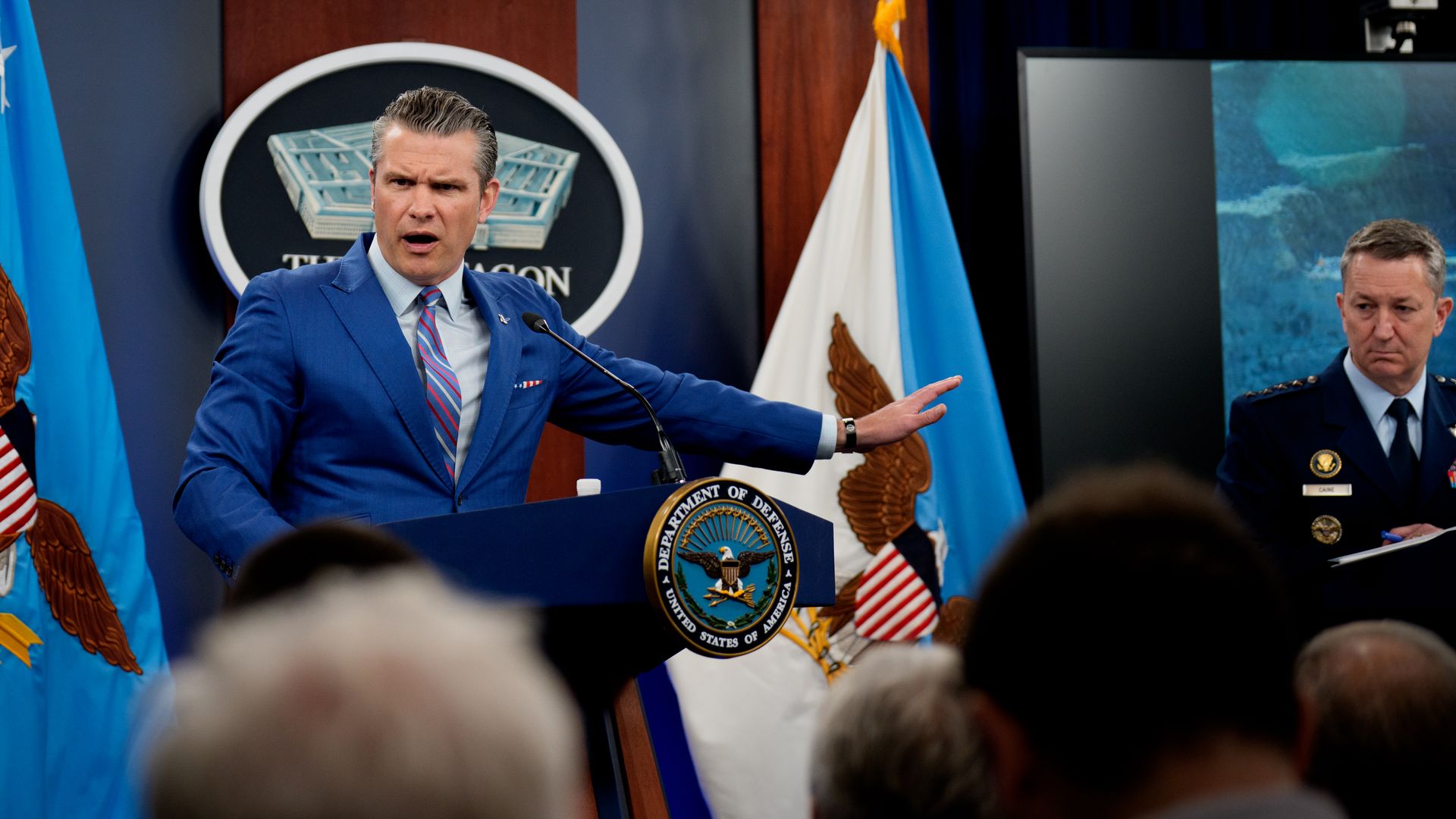
Defense Secretary Pete Hegseth speaks during a news conference at the Pentagon on June 26 in Arlington, Va. Photo: Andrew Harnik/Getty Images
The Trump administration is using the podium to assail journalists for their reporting about a leaked intelligence report that provided an initial assessment of the U.S. strike on Iranian facilities.
The big picture: From the White House to the Pentagon to the Netherlands, the administration's messaging campaign on the Iranian operation has carried with it an all-out offensive against the media, singling out reporters by name online and in briefings.
Context: President Trump's initial claims that the operation "totally obliterated" Iran's key uranium enrichment sites were scrutinized after a preliminary report from the Defense Intelligence Agency was leaked to several outlets, which reported the strikes may not have set the program back as dramatically as the president predicted.
- Defense Secretary Pete Hegseth, speaking during a Thursday briefing alongside Joint Chiefs of Staff Chair Gen. Dan Caine, emphasized that the DIA assessment was a "low confidence" report.
Zoom in: The leak infuriated Trump and top officials, who saw it as an attempt to undercut the president's claims that the sites were destroyed, Axios' Marc Caputo reported.
- Hegseth — in the conference meant to defend the "Great American Pilots" — nearly immediately launched into berating members of the press, accusing them of missing "historic moments" by "hunting for scandals all the time, in trying to find wedges and spin stories."
- Hegseth claimed it's in the press' "blood" and "DNA" to "cheer against Trump" and said the "hatred of this press corps" undermined reporting about the operation.
Zoom out: White House Press Secretary Karoline Leavitt targeted CNN during a briefing Thursday and singled out a reporter who Trump had previously said should be "thrown out 'like a dog.'"
- "Despite agenda-driven leaks by the fake news media aimed at undermining this incredible accomplishment achieved by President Trump and our brave fighter pilots, there is broad consensus emerging already that Iran's nuclear capabilities were indeed destroyed," Leavitt said.
- CNN, in a statement issued Wednesday, said it stood "100%" behind its journalists' reporting on the early intelligence assessment and that it "made clear" the initial finding could change with additional intelligence.
Trump — who on Thursday described reporters from CNN and The New York Times as "BAD PEOPLE WITH EVIL INTENTIONS" — repeatedly lambasted journalists who covered the preliminary report, saying at the NATO Summit Wednesday, "They're sick. There's something wrong with them."
- The New York Times pushed back against Trump's claims that the reporting was "fake news," noting in a Wednesday statement that the president and his national security team confirmed the DIA did produce the assessment described in the report.
Friction point: The administration has acknowledged the original assessment was real but is planning to limit sharing classified information with Congress after the leak, which the FBI is probing.
- On Wednesday, Director of National Intelligence Tulsi Gabbard wrote that "new intelligence" confirmed that Iran's nuclear facilities had been "destroyed," accusing the "propaganda media" of selectively reporting on the leaked assessment.
- And CIA Director John Ratcliffe, citing "a body of credible intelligence," shared a statement that Iran's nuclear program was "severely damaged," saying that information contradicted "illegally sourced public reporting."
- Asked what that "credible intelligence" was on Thursday, Hegseth said Ratcliffe was being "very careful" about how he discusses sensitive information but was "reflecting that the sources he's seeing are highly credible."
Go deeper: Journalism under pressure amid fear of retribution
