"Bizarre" DOJ lawsuit fuels Trump's war against judicial branch

Add Axios as your preferred source to
see more of our stories on Google.
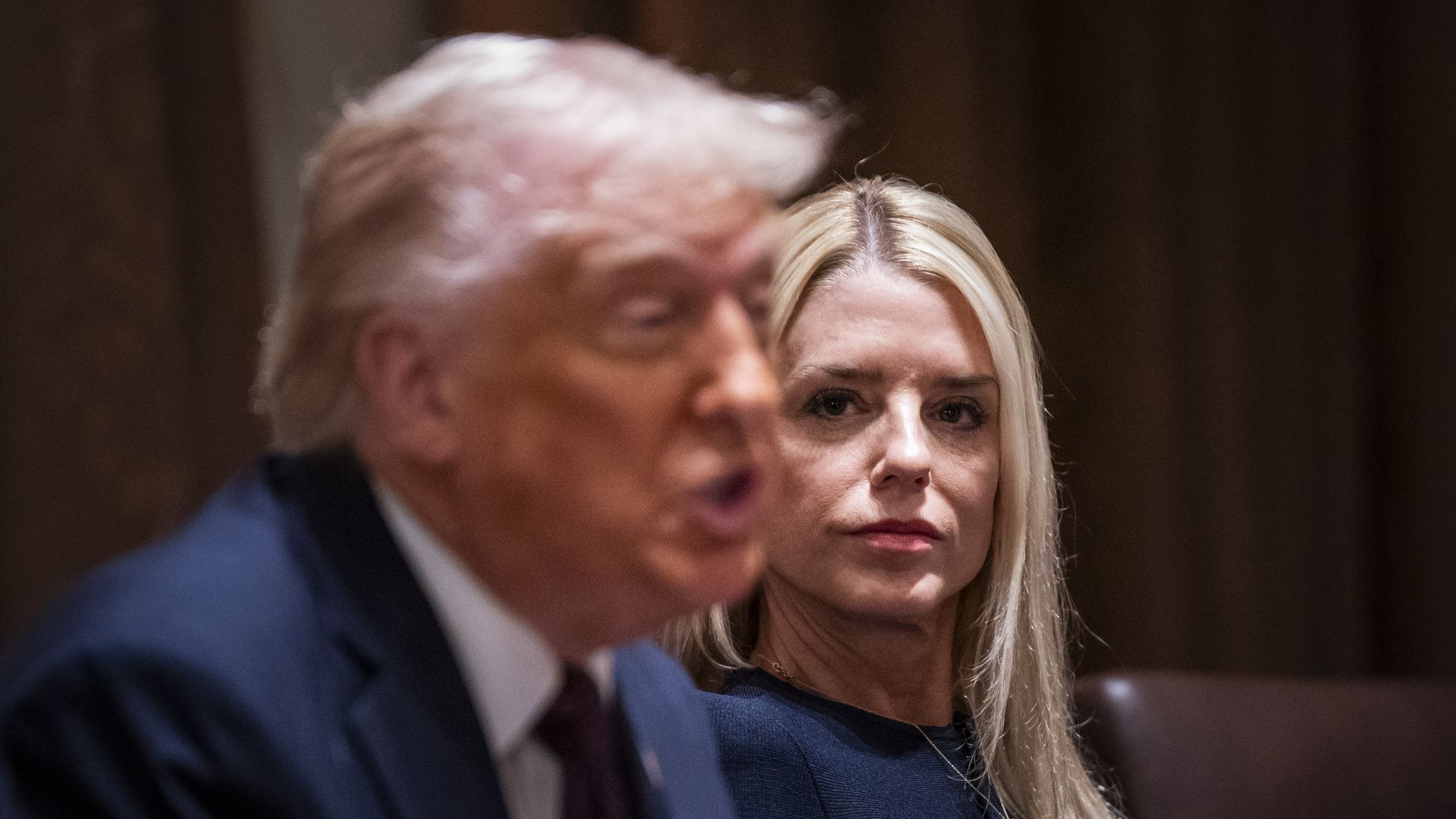
Presdient Trump, flanked by Attorney General Pam Bondi, speaks during a cabinet meeting at the White House on March 24. Photo: Jabin Botsford/The Washington Post via Getty Images
The Trump administration's unprecedented decision to sue all 15 federal judges in Maryland for slowing his deportation agenda broaches a dangerous new phase in his push to stifle the judiciary, legal experts warn.
Why it matters: Judges have been one of the few obstacles to President Trump's push to reorient the entire federal government to his agenda, and legal experts said the unorthodox lawsuit is an attempt to further challenge judges' power to check the executive branch.
- "This is ... in many ways a bizarre lawsuit that seems designed to pick a fight with the judicial branch," said Alicia Bannon, the director of the Brennan Center for Justice's judiciary program.
- "It's clearly another example of the administration trying to send a message to the judiciary that it thinks that it's crossing lines," she added.
Driving the news: The Trump administration sued Chief Judge George L. Russell III and 14 other judges on Tuesday over an order that bars the government from immediately deporting people contesting their detention.
- Their deportation is blocked until 4 p.m. on the second business day after a habeas corpus petition is filed.
- The order, filed last month, aims to maintain existing conditions and court jurisdiction, as well to ensure people facing removal get their day in court — and that the government "has a fulsome opportunity to brief and present arguments in its defense."
- In their complaint, the Justice Department attorneys bemoaned the influx of injunctions that have held up major parts of Trump's agenda and described the order as "a particularly egregious example of judicial overreach."
Zoom in: In its suit, the administration notes that each judge "has been or will be assigned cases" to which the order applies.
- Among the judges being sued is Paula Xinis, who has overseen one of the most controversial cases in the Trump 2.0 era: that of Kilmar Armando Abrego Garcia, a man erroneously deported to El Salvador despite an order barring officials from sending him there.
What they're saying: The orders, the DOJ alleges, "purport to issue a preliminary injunction or temporary restraining order automatically" without meeting the requirements and hinder immigration enforcement.
- "President Trump's executive authority has been undermined since the first hours of his presidency by an endless barrage of injunctions designed to halt his agenda," Attorney General Pam Bondi said in a statement on the case.
Yes, but: Bannon says the standing order at the center of the suit is designed to ensure due process and is a "very straightforward use of the court's power to maintain its jurisdiction in habeas cases."
Zoom out: Craig Green, a professor at Temple University Beasley School of Law who worked under the Bush DOJ, said the proper procedure would be an appeal — not for the government to sue judges.
- And in the administration's complaint, Green added, he saw "almost no effort" to justify the extraordinary action.
- "This is the kind of brief that if I were a government lawyer, I would not be happy to sign," he said. "Because I think that it really pushes the boundaries and the edge of what I think any government attorney should argue."
Friction point: The administration also requested the judges to recuse themselves from the case and for a judge from a different district to step in, according to a court filing.
- This is another example of how "unusual or outrageous" the government's procedural posture is, Green said, noting the reason for courts of appeals is to offer distance and new set of eyes on the case — again emphasizing an appeal would be the proper avenue.
The bottom line: Green says this is the improper vehicle for such a challenge — but "this Department of Justice is fundamentally challenging the rules of the road."
- "Maybe the district court went too far would be one argument ... if I worked for the government, I would probably make those arguments," he said. "But for heaven's sake, I would never make those arguments that, therefore, we shouldn't appeal the order; we should sue the judges."
