Hollywood duo wants you to own your AI self

Add Axios as your preferred source to
see more of our stories on Google.
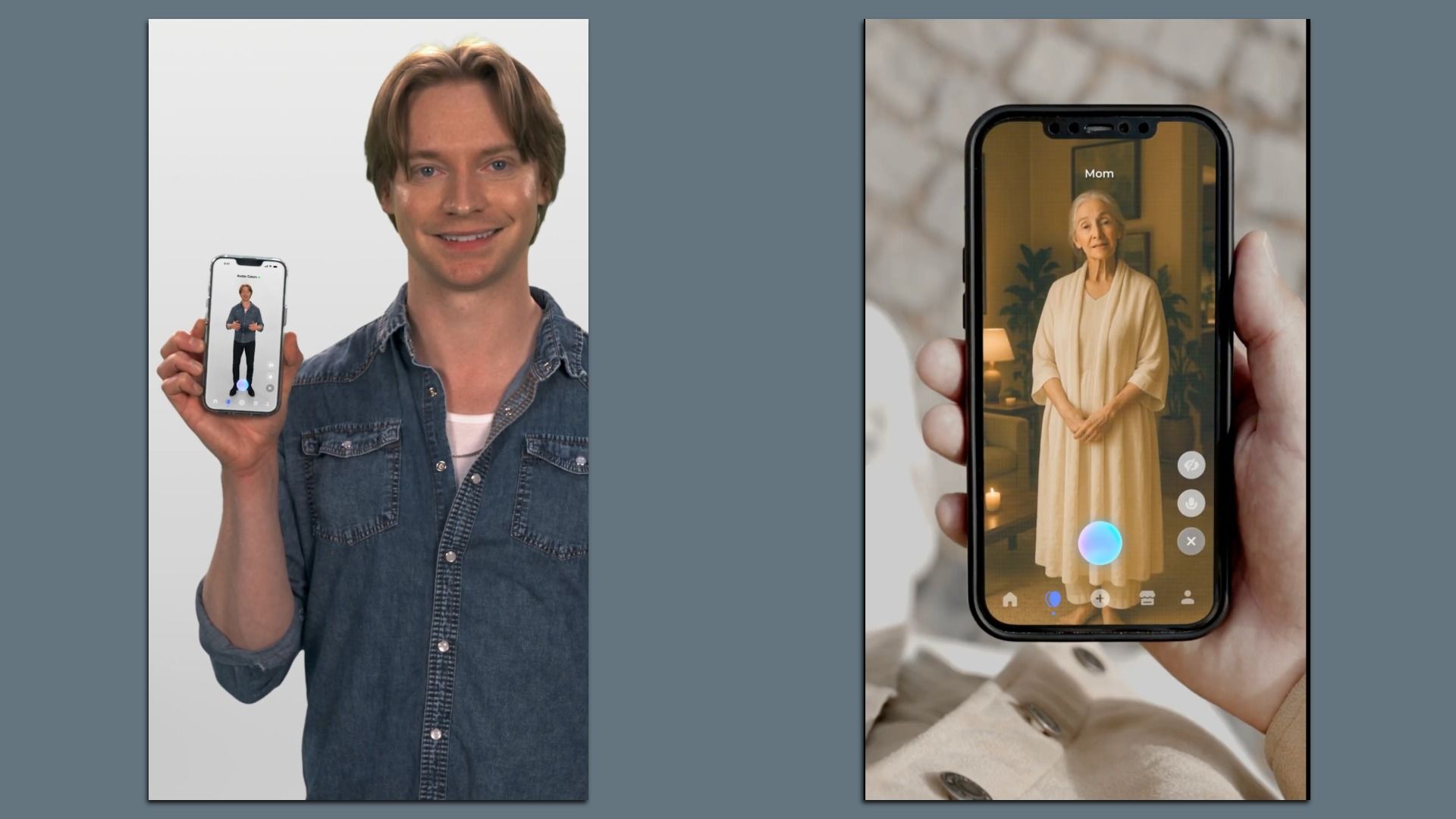
Calum Worthy and his AI avatar (left) and 2wai app with digital mom avatar. Photos: Courtesy of 2wai
A new app launching today promises to let anyone digitally clone themselves in under three minutes.
Why it matters: The startup, called 2wai (pronounced "two-way"), was co-founded by Disney Channel actor Calum Worthy and Hollywood producer Russell Geyser, and is designed to give entertainers — and everyone else — lifetime ownership over their AI avatars.
The big picture: If the bad guys can now make dangerous deepfakes of anyone, Geyser and Worthy argue, why not create and control one yourself?
How it works: 2wai calls its digital twins "HoloAvatars" and says they can have real-time "conversations" with anyone in over 40 languages.
- The startup is launching with an initial emphasis on entertainers, athletes and influencers first.
- In the next few weeks anyone will be able to use the software to create their own avatar, Geyser tells Axios.
Between the lines: Worthy is an actor and environmentalist best known for his portrayal of Dez on the Disney Channel's "Austin & Ally." Geyser is a film producer and Hollywood investor.
- The avatars are lightweight enough to run on phones, which Worthy says was important to him because of his concerns about the environmental impact of AI. This also makes the avatars cheaper and more accessible.
Reality check: This isn't the first time a startup has tried to help Hollywood stars control their own AI digital likeness.
- After Metaphysic's parody deep fakes of Tom Cruise went viral in 2021, the company officially launched an outfit dedicated to giving Hollywood professionals control over their digital twins.
- In April 2023, Metaphysic's CEO and co-founder Tom Graham filed to register a U.S. copyright for an AI version of himself.
Digital clones have become popular lately with executives, using them to save time and give more people access to their brainpower.
- Investors are starting to notice.
- "Digital Mind" platform Delphi announced this week that they'd raised $16 million from Sequoia to "capture brilliance," claiming that the "minds that moved the world" are only "one question away," according to the company's sweeping promo video.
Yes, but: Using digital avatars to scale ourselves can give people the illusion that humans are more accessible to other humans than they really are, Julie Carpenter, a human-AI interaction expert and research fellow at the Ethics and Emerging Sciences Group, told Axios.
- She also questions the accuracy of chats with AI avatars and says LLM hallucinations make this a bad use case for the tech right now.
- "It's not really speaking for that person, and at any point it could be completely misinterpreting or making up its answers," Carpenter says.
Worthy disagrees. "The information you put into your avatar's brain is completely up to you," Worthy told Axios.
- "But in terms of how you act, your personality and the way you're conversing, it's the most authentic version people will actually ever see of me."
