The American war too few talk about

Add Axios as your preferred source to
see more of our stories on Google.
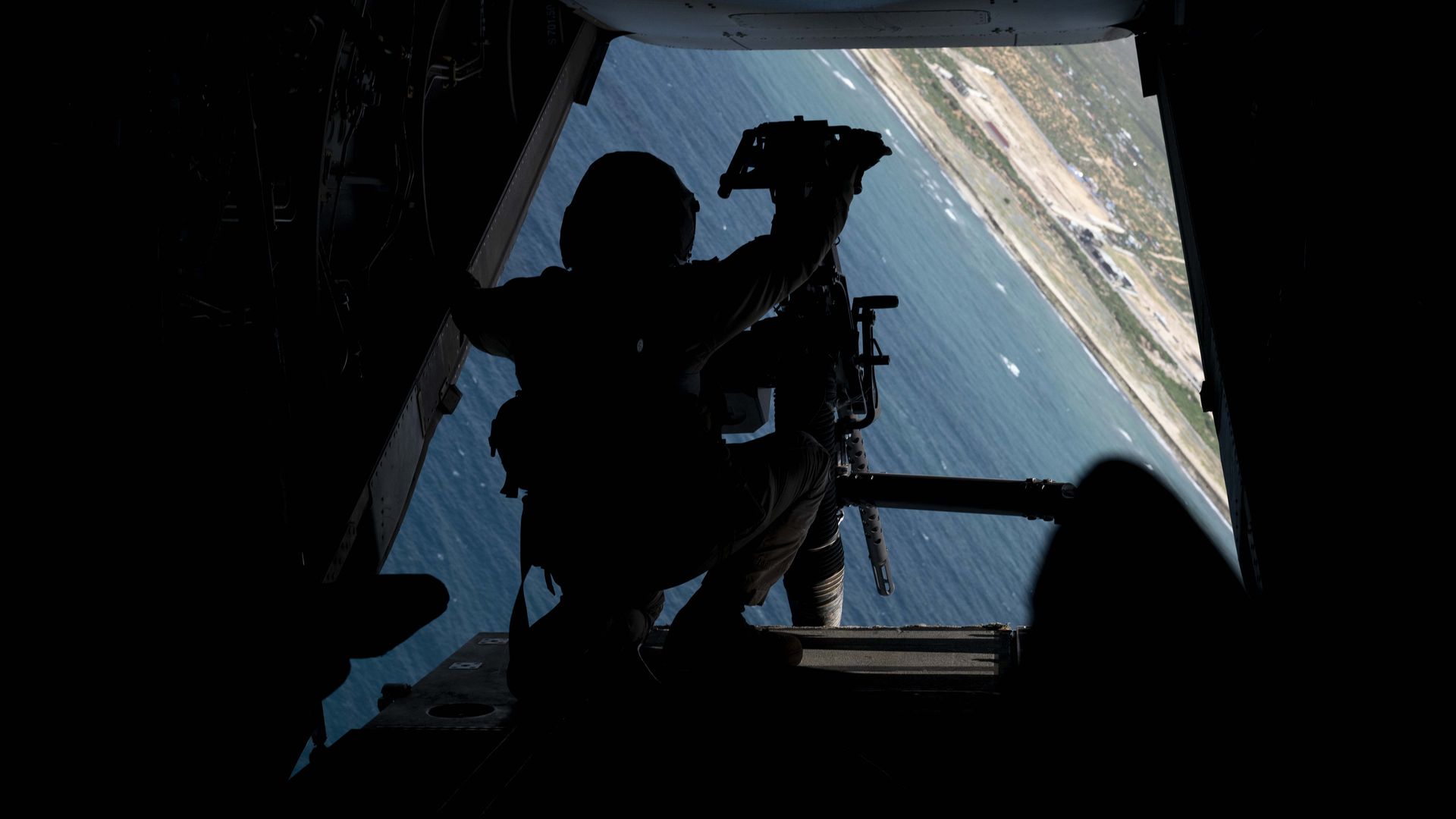
Mogadishu, Somalia, seen from the back of an MV-22 Osprey on May 14, 2025. Photo: Christopher Gross/DVIDS
The U.S. military is bombing extremist groups in the Horn of Africa, executing at least 32 strikes in Somalia this year alone.
- That's more than double the previous year's tally, according to Africa Command, and is a sign of enduring extremism concerns back in Washington.
Why it matters: This is a war too few in the U.S. are discussing — or even realize is happening.
By the numbers: American forces, in cooperation with local government, targeted ISIS-Somalia 20 times and al-Shabab 12 times between Feb. 1 and June 4.
- The strike cadence has surged in recent months, with roughly twice as many attacks in April and May (19 in total) as in the previous two months, AFRICOM announcements and posts on social media show.
- The command reported three strikes this month, all on ISIS-Somalia.
- The operations often target areas southeast of Bosaso, a coastal town on the Gulf of Aden, and areas northwest of Kismayo, a port near the Kenyan border.
The intrigue: Acting Chief of Naval Operations Adm. James Kilby at a Council on Foreign Relations event in May said the Harry S. Truman carrier strike group "launched the largest airstrike in the history of the world: 125,000 pounds from a single aircraft carrier into Somalia."
- The Trump administration loosened rules for airstrikes and other raids earlier this year.
- Washington has released few details on casualties, civilian or militant. An early February strike reportedly killed 14 ISIS-Somalia operatives, including a recruiter and financier.
The latest: AFRICOM boss Gen. Michael Langley, a Marine, on Tuesday told Congress that Africa "remains a nexus theater from which the United States cannot afford to shift its gaze."
- "It is home to terrorists who take advantage of conditions in Africa to grow and export their ideology," he added.
- "ISIS controls their global network from Somalia."
Context: Several U.S. administrations have become entangled in the region.
- Perhaps the most infamous instance — the Battle of Mogadishu, associated with "Black Hawk Down" — occurred under President Clinton.
Zoom out: While this contemporary campaign is limited to Somalia, the threat from ISIS, al-Shabab and other extremist groups is not. It's particularly acute across the Sahel, where violence and worsening weather fuels political instability.
- U.S. forces withdrew from Niger last year, following a coup. France also dramatically reduced its military presence in West Africa under pressure from local leaders.
- Russia has entrenched its own influence in several states in West and Central Africa, via its Wagner mercenaries. On Monday, the Kremlin reiterated its desire to step up cooperation with African countries in "such sensitive areas as defense and security," Reuters reported.
The bottom line: The fight "in Africa is the least understood or covered," Alex Plitsas, a counterterrorism expert at the Atlantic Council, told Axios.
- "The void left after the U.S. left Niger, et cetera, created a giant terror safe haven half the size of the continental United States with regional governments struggling to contain the threat," he added.
- "If left unchecked, it's only a matter of time before the threat becomes transnational."
