Scoop: Cruz's $10 billion pitch to Trump on school choice

Add Axios as your preferred source to
see more of our stories on Google.
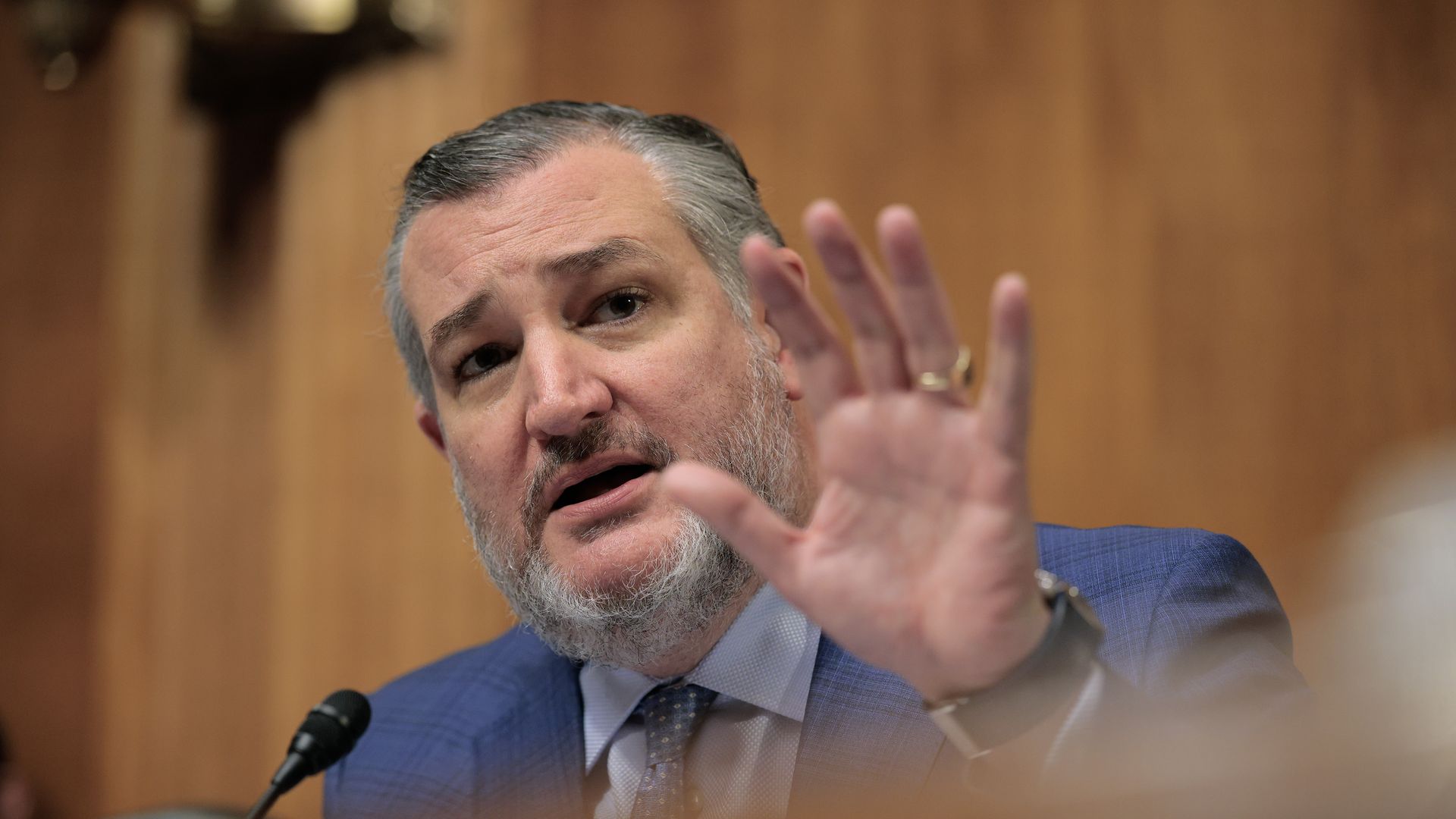
Sen. Ted Cruz (R-TX) Photo: Chip Somodevilla/Getty Images
Sen. Ted Cruz (R-Tex.) is pushing to give controversial pro-school choice measures in the "One Big, Beautiful Bill" an extra boost— taking his pitch straight to President Trump this week, Axios has learned.
Why it matters: Reconciliation presents a rare opportunity to pass GOP priorities along party lines. Hill leaders are pushing for as much as they can.
Driving the news: Cruz met with Trump at the White House on Thursday along with Reps. Burgess Owens (R-Utah) and Byron Donalds (R-Fla.) who cosponsored the House's version of Cruz's bill.
- Trump expressed support for their efforts, though did not make any explicit commitments, according to sources familiar with the meeting.
- The lawmakers were in the Oval Office as the public X feud between Trump and Elon Musk heated up.
- In the meeting, Trump expressed support for school choice efforts, though did not make any explicit commitments, according to sources familiar.
What they're saying: "The President is a supporter of school choice, and has delivered major wins on this issue across the country in states such as Texas," said White House spokesperson Taylor Rogers.
- "Every child in America deserves access to a quality education that meets their individual needs, regardless of race, ethnicity, income, or zip code," Cruz said in a statement when he introduced his bill.
Zoom in: The "One Big Beautiful Bill" already provides up to $5 billion a year in federal tax credits for people who donate to nonprofits that provide scholarships and focus on alternatives to public education.
- Cruz wants to double that number to $10 billion a year, to match his Universal School Choice Act, which he introduced late last month.
- The $10 billion a year number has been cut down twice by the House Ways and Means committee.
- Cruz also wants other adjustments, like removing a limit for families making 300% of their area's median income, ensuring religious schools can benefit and allowing corporations to count donations to groups out of state.
Between the lines: Public education advocates are adamantly opposed to such voucher programs, arguing they only benefit wealthy Americans who already can afford to send their kids to private schools, while hurting needed public school funding.
- Proponents see it as a way to help more families afford schooling options they deem best for their kids.
