Trump suggests cutting China tariffs to 80% ahead of trade talks

Add Axios as your preferred source to
see more of our stories on Google.
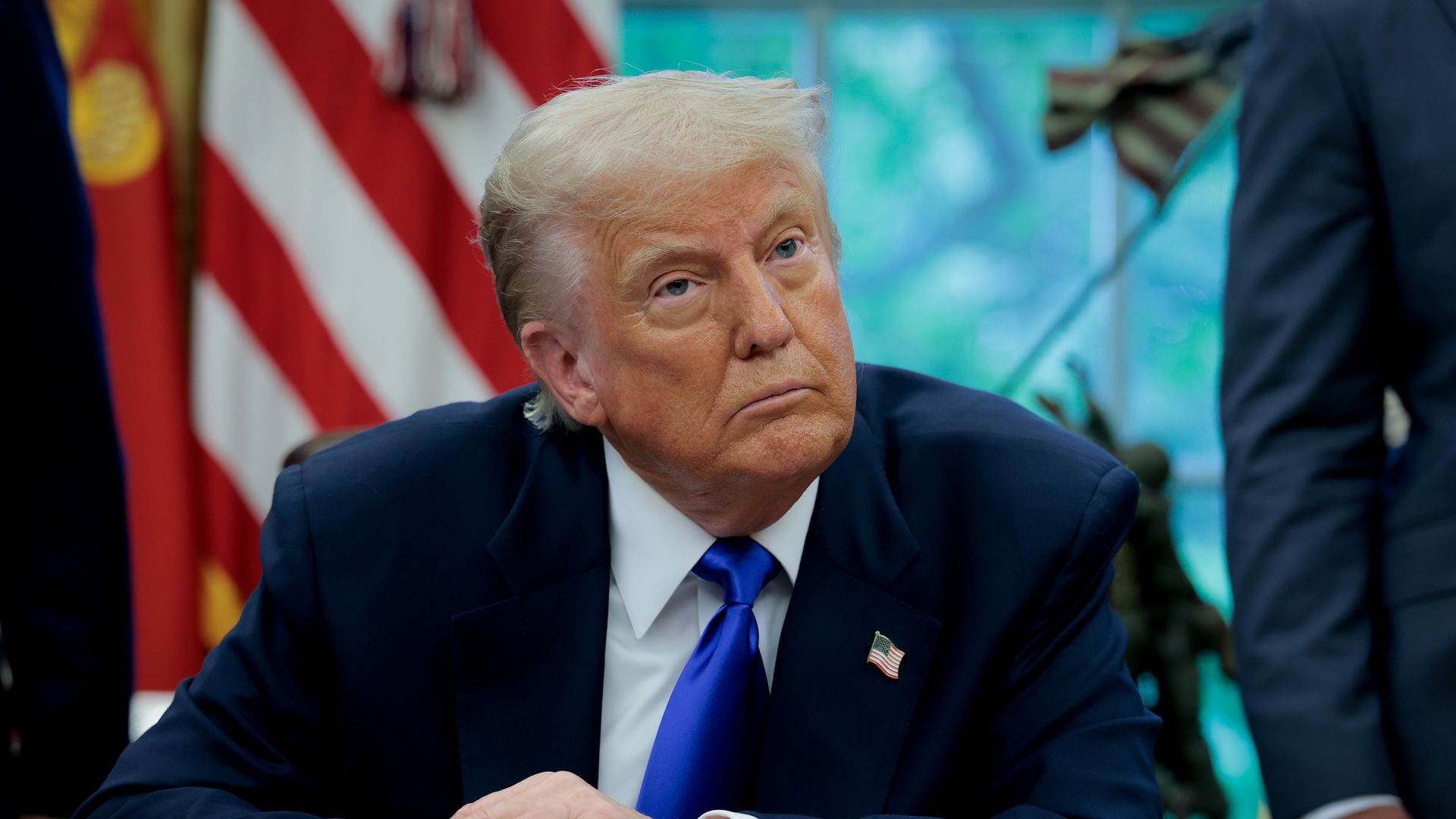
President Trump in the Oval Office. Photo: Anna Moneymaker/Getty Images)
President Trump on Friday suggested possibly cutting tariffs on China to 80%, ahead of trade talks in Switzerland scheduled for Saturday.
Why it matters: Reducing the 145% levy to 80% would still be higher than Trump's original reciprocal tariff on China, and also significantly more than early reports suggested was possible.
- "80% Tariff on China seems right! Up to Scott B.," Trump posted on Truth Social, referring to Treasury Secretary Scott Bessent, who is leading the China talks.
Yes, but: If the post was meant as an olive branch, China didn't seem moved, with its Commerce Ministry reportedly issuing a statement Friday morning condemning U.S. "abuse" of tariffs.
The big picture: Trump's trade war with China has sapped business and consumer confidence, injected deep uncertainty into the economy and raised fears of empty shelves and a recession as soon as this summer.
- Word earlier this week that top U.S. and Chinese officials would meet this weekend on neutral ground was seen as a welcome thaw.
- But Trump sticking to a historically high tariff may dampen that enthusiasm.
Between the lines: The trade war is already having an impact.
- Chinese exports to the U.S. sank by 21% in April, The Associated Press reported Friday — but total exports rose, as the country found other buyers for its goods.
By the numbers: The market has essentially recovered the steep plunge it suffered after the "Liberation Day" tariff rollout on April 2, but even so, the S&P 500 is still down for the year and underperforming international peers.
- Stocks sold off Friday after Trump floated the 80% rate, then rebounded after another Truth Social post where he said many more trade deals were "in the hopper," before flattening out after the Chinese statement.
What to watch: It's not clear what will come out of this weekend's talks: a statement, a deal — or anything at all.
- But markets will be watching closely for any sign of lower temperatures on either side.
- On Friday, Chinese social media accounts with close links to state media suggested China was willing to talk, but that negotiation did not necessarily mean concession.
Editor's note: This story was updated with additional context and developments.
