This small plane can land itself in an emergency

Add Axios as your preferred source to
see more of our stories on Google.
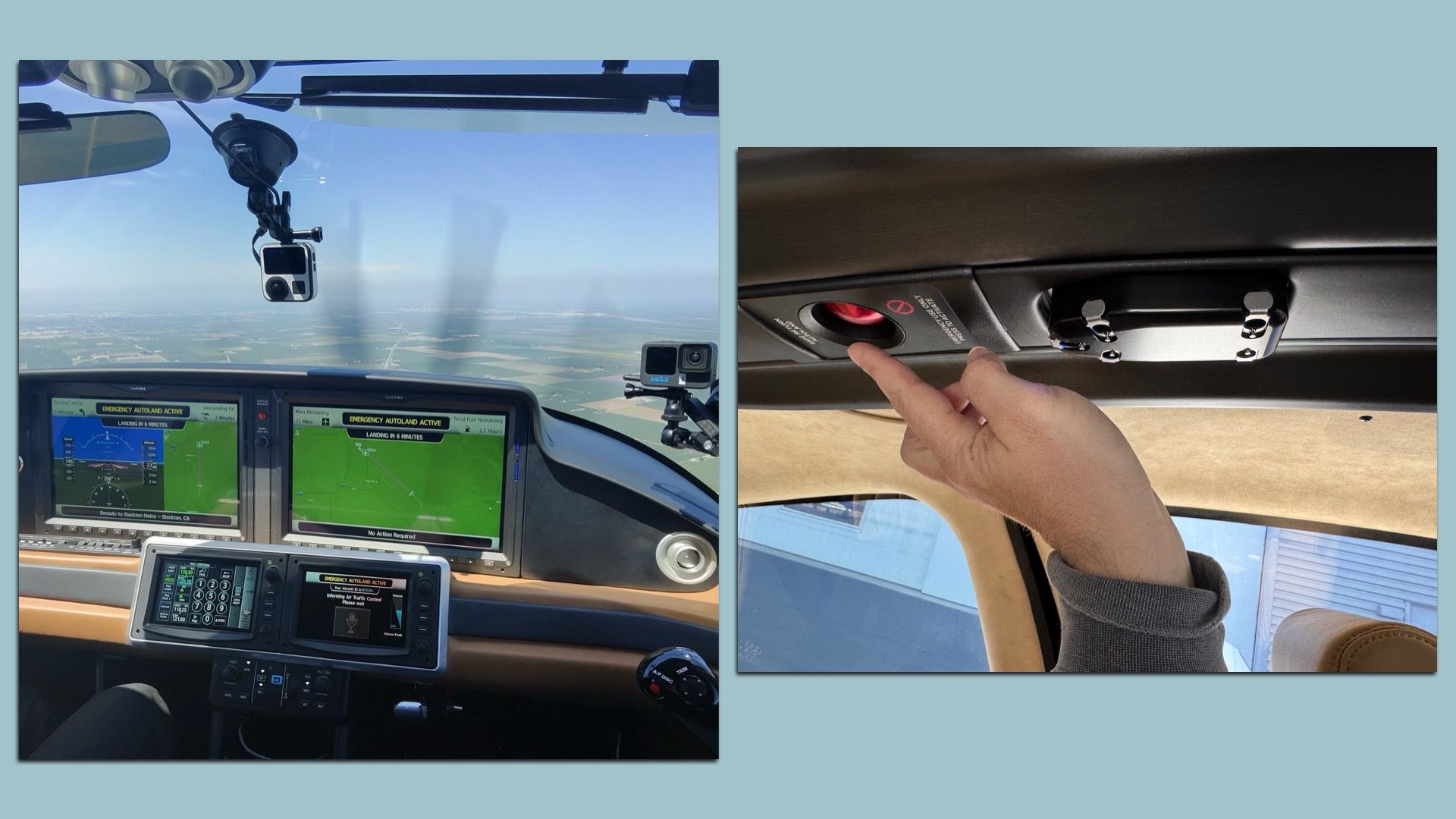
Photos: Ina Fried/Axios
Cirrus, a leading maker of small planes, is adding a feature to its G7 model that allows it to land itself in an emergency.
Why it matters: The move is a step toward autonomous passenger travel, though landing a plane in an emergency is a long way from removing pilots from the cockpit.
Between the lines: A plane that can land itself if a pilot is incapacitated eliminates a significant risk.
- The self-landing plane can find the nearest safe airport, communicate with air traffic control and complete the touchdown itself.
- The plane doesn't use generative AI, but its computer system does use various techniques that hint at a future of AI-fueled autonomy in planes, trucks, cars and elsewhere.
Catch up quick: Cirrus has for years included a parachute system that allows a malfunctioning plane to slowly and safely return to the ground.
- Many types of aircraft are already able to fly on their own in midair, but demonstrating the ability for a small plane to land itself is a major milestone.
How it works: Cirrus features a button in its latest model that can allow any passenger to initiate the self-landing procedure should the pilot become incapacitated.
- In addition to the button, self-landing can happen automatically if the plane's sensors detect a lack of pilot input or erratic behavior.
- The new G7+ model includes upgrades beyond the self-landing capability and ranges in price from around $600,000 to close to a million, depending on options — or $40,000 to $70,000 more than the prior version.
- The self-landing capability itself is built by GPS maker Garmin, which also makes the plane's digital cockpit system. It has been running in pricier jets for a while.
- No one has yet needed to use the self-landing feature in regular operation.
What they're saying: The landing might be rougher than if a pilot is in charge, but it will do the job, Cirrus senior VP Ben Kowalski told Axios.
- "The goal of the system is to return you safely to your family," he said.
Inside the cockpit: I had a chance to try it out — and push the magic red button — on a recent test flight out of San Jose airport.
- Since it wasn't a real emergency, the pilot handled communications, and air traffic control didn't know the plane was landing itself.
- If air traffic control issued instructions that required a deviation from the auto-land, the pilot would have taken back control.
- But, in the air — once I pushed the button — the plane was doing all the work, from identifying Modesto as the nearest airport to touching down a few minutes later.
- The landing was a bit bumpy, but no rougher than other flights. For me, not being in control wasn't that odd since I'm never the one landing the plane. I imagine it's more jarring to actual pilots.
Editor's note: This story and its headline have been updated to remove an incorrect reference to the plane as a jet, and to clarify its pricing.
