Senate GOP to bypass key rulemaker on California's EPA waiver


Add Axios as your preferred source to
see more of our stories on Google.
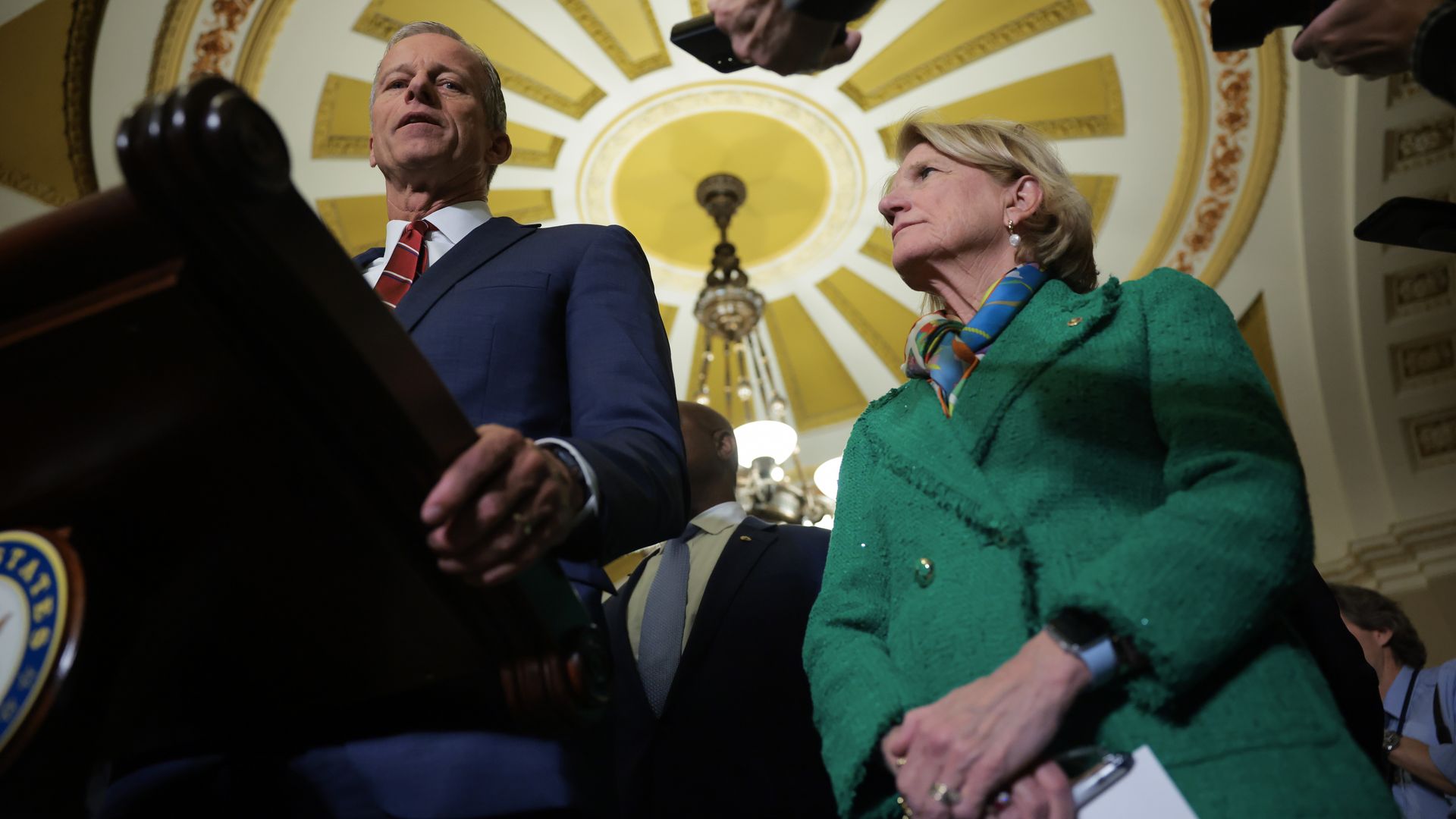
Senate Majority Leader John Thune (R-SD) speaks alongside Sen. Shelley Moore Capito (R-WV) to reporters. Photo: Kayla Bartkowski/Getty Images
Senate GOP leadership will barrel forward in the coming weeks to block California's big electric vehicle rule — despite a recent opinion from Senate Parliamentarian Elizabeth MacDonough.
Why it matters: The details are still being hashed out. But it would be the second time this year GOP leadership has worked around MacDonough, who will play a critical role in the process Republicans are using to pass President Trump's "one big, beautiful bill."
- It is a unique case, but it's a dynamic to watch carefully.
- Earlier this year, Majority Leader John Thune (R-S.D.) indicated that he's opposed to overruling her to push the limits of the budget reconciliation process.
Driving the news: The House voted Thursday with strong bipartisan support to block a California rule that would eventually ban the sale of gas-powered cars. This was done through a wonky legislative process called the Congressional Review Act (CRA).
- Majority Whip John Barrasso (R-Wyo.) told Axios the Senate would "absolutely" take up the House-passed resolution in the coming weeks.
- That's despite a GAO opinion last month — that the parliamentarian then agreed with— which said the CRA can't be used to roll back the EV mandate.
- Republicans argue that the GAO doesn't get to have a say in the CRA process.
Zoom in: Senate Environment and Public Works Chair Shelley Moore Capito (R-W.V.) told Axios she thinks leadership will move on the CRA, and that it would have to get done by June 1.
- "We're trying to figure out the best strategy there," added Capito, who introduced the CRA and is also a member of leadership.
- Capito expects the process to take more than one vote to get around procedural hurdles, but Republicans are "going to avoid" taking any votes with a 60-vote threshold.
- When pushed about whether such a move could be a slippery slope for overruling the parliamentarian on other issues, Capito said she'd rather have that conversation "in two weeks when we do it."
What they're saying: "This is a different, very exceptional type of situation, and we'll be talking about that a lot," Capito said about setting a precedent of skirting the parliamentarian.
- "I don't characterize it as overturning the parliamentarian," she said.
- "It would be a narrow precedent with regard to GAO's opinion," Sen. John Cornyn (R-Texas) told Axios about the implications of ignoring the parliamentarian in this case.
- Barrasso referred to the GAO as "unelected, unaccountable bureaucrats," and argued Democrats are hypocrites for being "now bothered by the fact that we're going to use" the CRA.
Between the lines: Republicans argued earlier this year that they did not need the parliamentarian's go-ahead in order to set a current policy baseline for the recently-passed budget resolution.
- The earlier move allows the GOP to permanently extend 2017 tax cuts without accounting for how it would add to the deficit.
- Democrats are already plotting how to push back against the CRA move with procedural hurdles, including potential votes on whether or not to ignore an opinion from the parliamentarian, as Axios Pro: Energy Policy has reported.
Catch up quick: California is allowed to write its own auto emissions standards under a waiver issued by the EPA at the end of 2024. Republicans want to undo that waiver.
- Other blue states follow California's lead, meaning that much of the nation's auto market will soon be subject to the sweeping rules.
- Automakers have been lobbying for repeal, but environmental groups say they're necessary to combat pollution from transportation, the top source of U.S. greenhouse gas emissions.
