How, when to see two simultaneous meteor showers this week

Add Axios as your preferred source to
see more of our stories on Google.
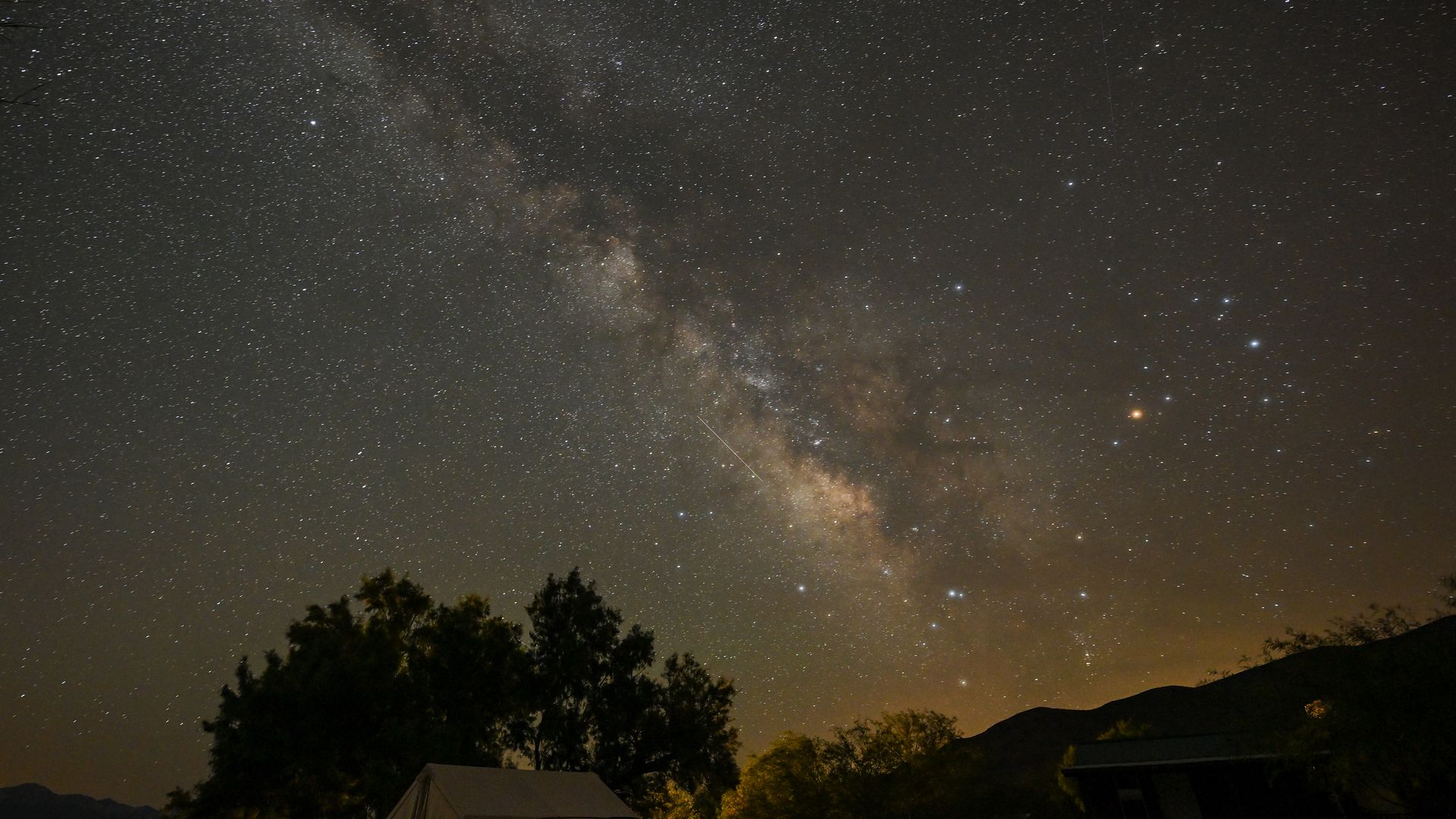
A view of the Lyrids meteor shower and Milky Way from Panamint Springs, California from April 2023. Photo: Tayfun Coskun/Anadolu Agency via Getty Images
Be on the lookout for shooting stars and fireballs when two meteor showers — the Lyrids meteor shower and Eta Aquarids shower — will overlap through April 26.
Why it matters: It's the latest astronomical event in an active few weeks of skywatching between last month's Blood Moon total lunar eclipse and April's Pink Moon.
What is the Lyrids meteor shower?
The big picture: The Lyrids meteor shower is one of the oldest known meteor showers and have been observed for 2,700 years, according to NASA.
- The first recorded sighting of a Lyrid meteor shower goes back to 687 BC by the Chinese.
- The Lyrids come from debris left behind by Comet C/1861 G1 Thatcher.
- "Lyrids don't tend to leave long, glowing dust trains behind them as they streak through the Earth's atmosphere, but they can produce the occasional bright flash called a fireball," NASA notes.
Yes, but: NASA notes the meteors are "not as fast or as plentiful as the famous Perseids in August."
When is the Lyrids meteor shower?
The Lyrids shower is active April 17 through April 26, per NASA.
- The Lyrids are best viewed in the Northern Hemisphere and the best time to watch are the dark hours after moonset and before dawn, NASA said.
What time does the Lyrids meteor shower peak?
Zoom in: NASA says April 21-22 are the peak night to see the Lyrids.
- NASA estimates that 10 to 20 meteors can be seen per hour during the peak.
The intrigue: The Lyrids are known for their fast and bright meteors and can "surprise watchers with as many as 100 meteors seen per hour," NASA said.
Where to see Lyrids meteor shower
What we're watching: The point in the sky from which the Lyrids appear to come is near the constellation Lyra, the harp, NASA explains.
- Meteors will appear to "radiate from the area near the star Vega, the brightest star in this constellation."
- NASA says to be patient and that "the show will last until dawn, so you have plenty of time to catch a glimpse."
Eta Aquarids meteor shower peak
What's next: The Eta Aquarids meteor shower is active from April 19 through May 28 and peaks on May 5-6, according to the American Meteor Society.
- The Eta Aquarids are viewable in both the Northern and Southern hemispheres during the pre-dawn hours, NASA said.
- The point in the sky from which the Eta Aquarids appear to come is the constellation Aquarius and meteors appear from one of the brightest stars within the constellation, Aquarii, per NASA.
Meteor shower tips to spot shooting stars
State of play: Here are NASA's tips for viewing meteor showers:
- Find an area well away from the city or street lights and bring a sleeping bag, blanket or lawn chair.
- Lie flat on your back with your feet facing east and look up, taking in as much of the sky as possible, NASA said.
- In less than 30 minutes in the dark, your eyes will adapt and you will begin to see meteors.
More from Axios:
