Meta's copycat strategy targeted in court

Add Axios as your preferred source to
see more of our stories on Google.
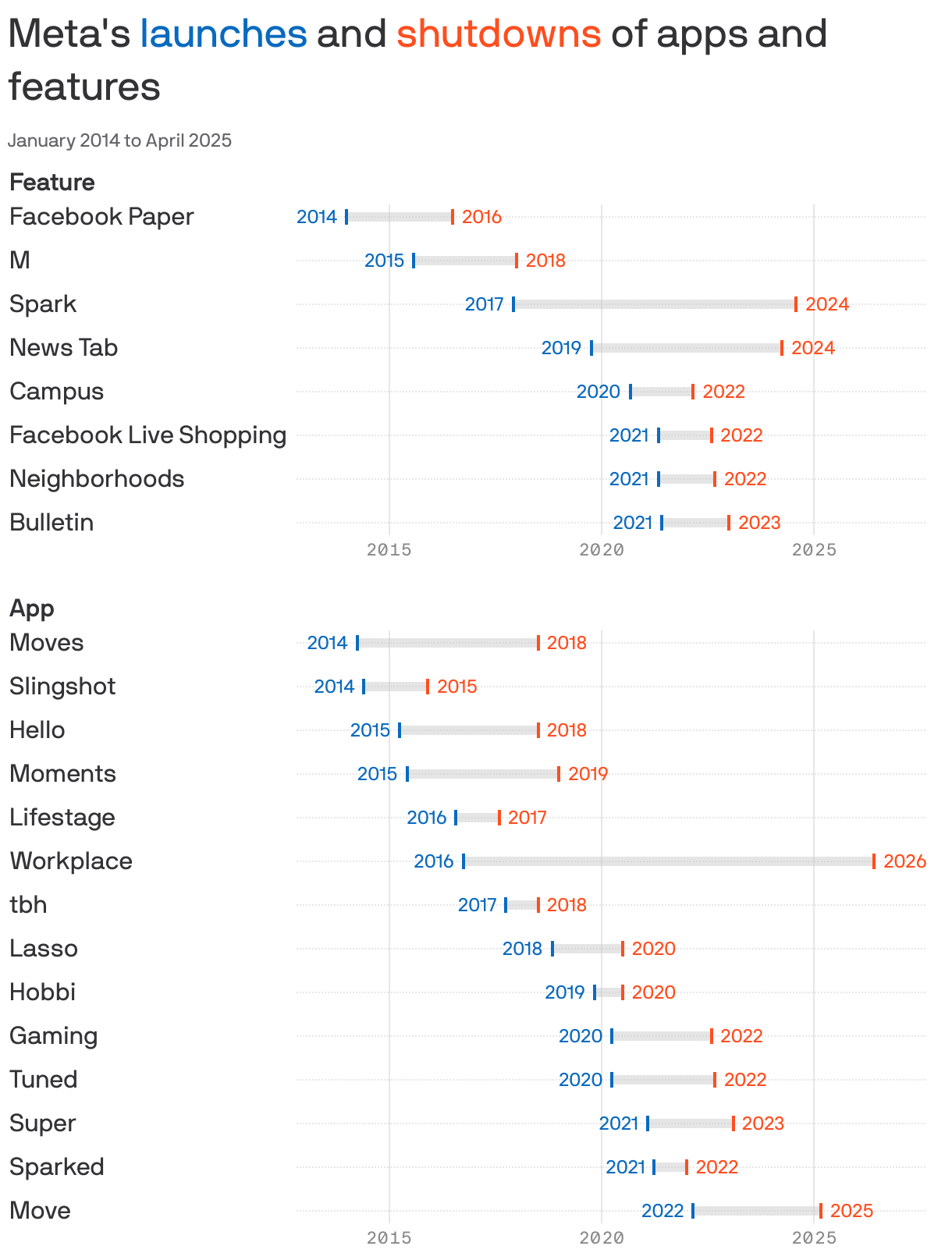
Meta has a long history of acquiring or building copycat apps and features that have ultimately failed and shuttered in less than a few years.
- But the unprecedented success of two of its biggest bets have regulators concerned its tactics are anticompetitive.
Why it matters: Faced with a historic antitrust lawsuit, Meta argues its acquisitions of Instagram and WhatsApp weren't meant to stifle smaller competitors, but help it remain relevant to users as the social media landscape evolved.
- The Federal Trade Commission disagrees, but faces an uphill battle in trying to convince a federal judge that Meta should be broken up.
State of play: In a landmark antitrust trial that began Monday in Washington D.C., the FTC called for the unwinding of Meta's 2012 acquisition of Instagram for $1 billion, and its 2014 acquisition of WhatsApp for $19 billion.
- Lawyers alleged Meta illegally used a "buy or bury" strategy to cement its social networking monopoly.
- They pointed to an email sent between CEO Mark Zuckerberg and then-Facebook executives that suggest its Instagram deal wasn't just about adopting new photo features, but stopping other apps from leapfrogging Meta while it struggled to transition from desktop to mobile.
The other side: In a surprise move, Zuckerberg showed up to testify for roughly three hours on the trial's opening day.
- His main defense was that as social networking evolved, Meta needed to adopt new features to stay competitive.
- In its opening statement, Meta pointed to TikTok and YouTube's "Shorts" feature as examples of areas where it faces stiff competition.
- "It's reached a point where the vast majority of the experience is more around exploring your interests, understanding what's going on around the world, entertainment," Zuckerberg said.
- His testimony is expected to continue Tuesday.
Zoom out: Meta is also arguing that by revisiting both deals, which were already approved by the FTC, the government is sending a broader message to corporate America that no deal is ever final.
- The FTC argues that the social landscape has evolved significantly since it approved both deals.
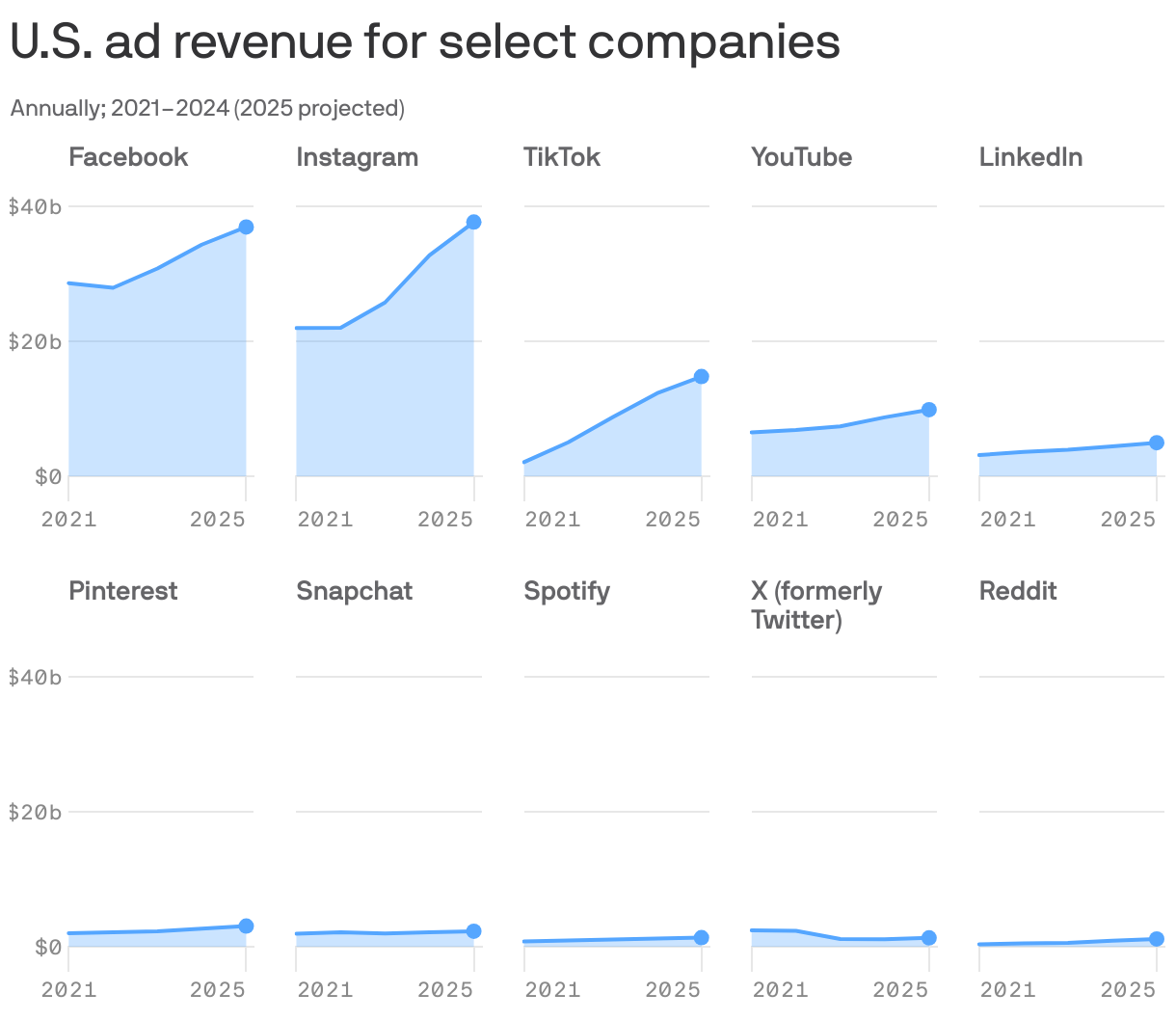
The big picture: There's no question that Meta's acquisitions of Instagram and WhatsApp have helped the tech giant remain competitive over the past decade.
- Instagram is expected to make up more than half of Meta's overall U.S. revenue this year.
- With an estimated 3 billion monthly users, WhatsApp is one of most popular messaging services in the world. While it doesn't drive as much revenue today, it is expected to play a critical role in helping Meta expand to new, lucrative areas around business messaging services.
What to watch: Recent efforts by Meta to curry favor with the Trump administration haven't swayed FTC officials, sources told Axios, but that hasn't stopped the company from trying.
- Last week, Axios reported that Meta added Dina Powell McCormick, a former Trump administration official and prominent banker, to its board.
