Trump's electronics tariff exemption is temporary, Commerce secretary says

Add Axios as your preferred source to
see more of our stories on Google.
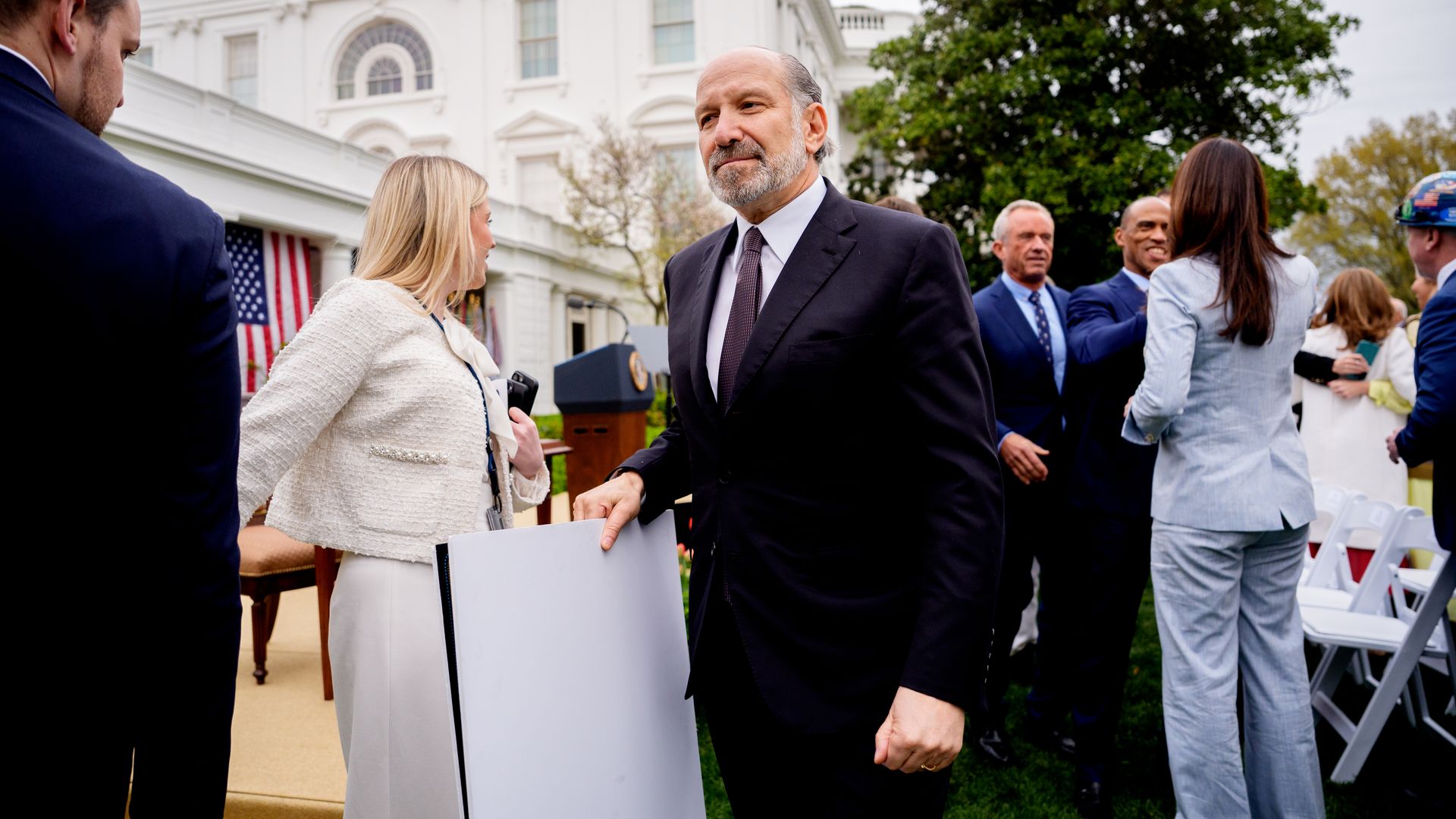
Commerce Secretary Howard Lutnick departs after President Trump signed executive orders imposing tariffs on imported goods during an event in the Rose Garden at the White House on April 2. Photo: Andrew Harnik/Getty Images
Commerce Secretary Howard Lutnick said Sunday that smartphones and other electronics will be included in future semiconductor sectoral tariffs, two days after the Trump administration said such products were exempt from China import levies.
Why it matters: The announced carveout was a win for companies like Apple, which assembles most of its iPhones in China. But the relief is only temporary, officials clarified Sunday.
The latest: President Trump noted in a Sunday Truth Social post that the goods are still subject to existing 20% tariffs imposed over the flow of fentanyl and denied that there was a tariff "exception" announced Friday.
- However, the presidential memorandum that laid out the designated products was titled, "Clarification of Exceptions Under Executive Order 14257 of April 2, 2025, as Amended."
- The products are moving to "a different Tariff bucket," Trump wrote, adding that "We are taking a look at Semiconductors and the WHOLE ELECTRONICS SUPPLY CHAIN in the upcoming National Security Tariff Investigations."
Driving the news: Lutnick said in a Sunday interview on ABC's "This Week" that semiconductor tariffs are imminent — meaning that products exempt from Trump's broad reciprocal tariffs are not free from new levies.
- "All those products will come under semiconductors, and they're going to have a special focus type of tariff to make sure that those products get re-shored," Lutnick said.
- "We need to have semiconductors, we need to have chips, and we need to have flat panels, we need to have these things made in America," he continued.
What's next: He said a notice could be expected in the Federal Registry this week and that semiconductor and pharmaceutical tariffs will arrive in "the next month or two."
- Lutnick explained that the products are exempt from reciprocal tariffs, but that the sector tariffs are a separate issue which "are not available to be negotiated away by countries."
- "These are things that are national security, that we need to be made in America," Lutnick added.
Zoom out: National Economic Council director Kevin Hassett explained on CNN's "State of the Union" that items included under section 232 of the Trade Expansion Act of 1962 were "always excluded" and were not covered by the new actions.
- The New York Times reported that the administration had previously signaled it was considering semiconductor tariffs under Section 232, which gives the president the power to adjust imports that are deemed to threaten national security.
- Trump has already used the statute to place 25% levies on imported steel, aluminum and automobiles.
Yes, but: U.S. Trade Representative Jamieson Greer noted on CBS News' "Face the Nation" Sunday that for "national security tariffs," an investigation is necessary as part of the process of imposing such levies.
- He said the administration has not determined the outcome, but he added, "we expect there will have to be some kind of tariff."
Catch up quick: The clarification comes after a U.S. Customs and Border Protection bulletin was published Friday night designating electronics that would be exempt from steep tariffs on Chinese imports and the global 10% rate Trump implemented.
- The White House on Saturday released Trump's accompanying memorandum clarifying the tariff exemptions.
Go deeper: China, EU launch massive U.S. tariff retaliation
Editor's note: This story has been updated with a Truth Social post from Trump.
