AI is already everywhere

Add Axios as your preferred source to
see more of our stories on Google.
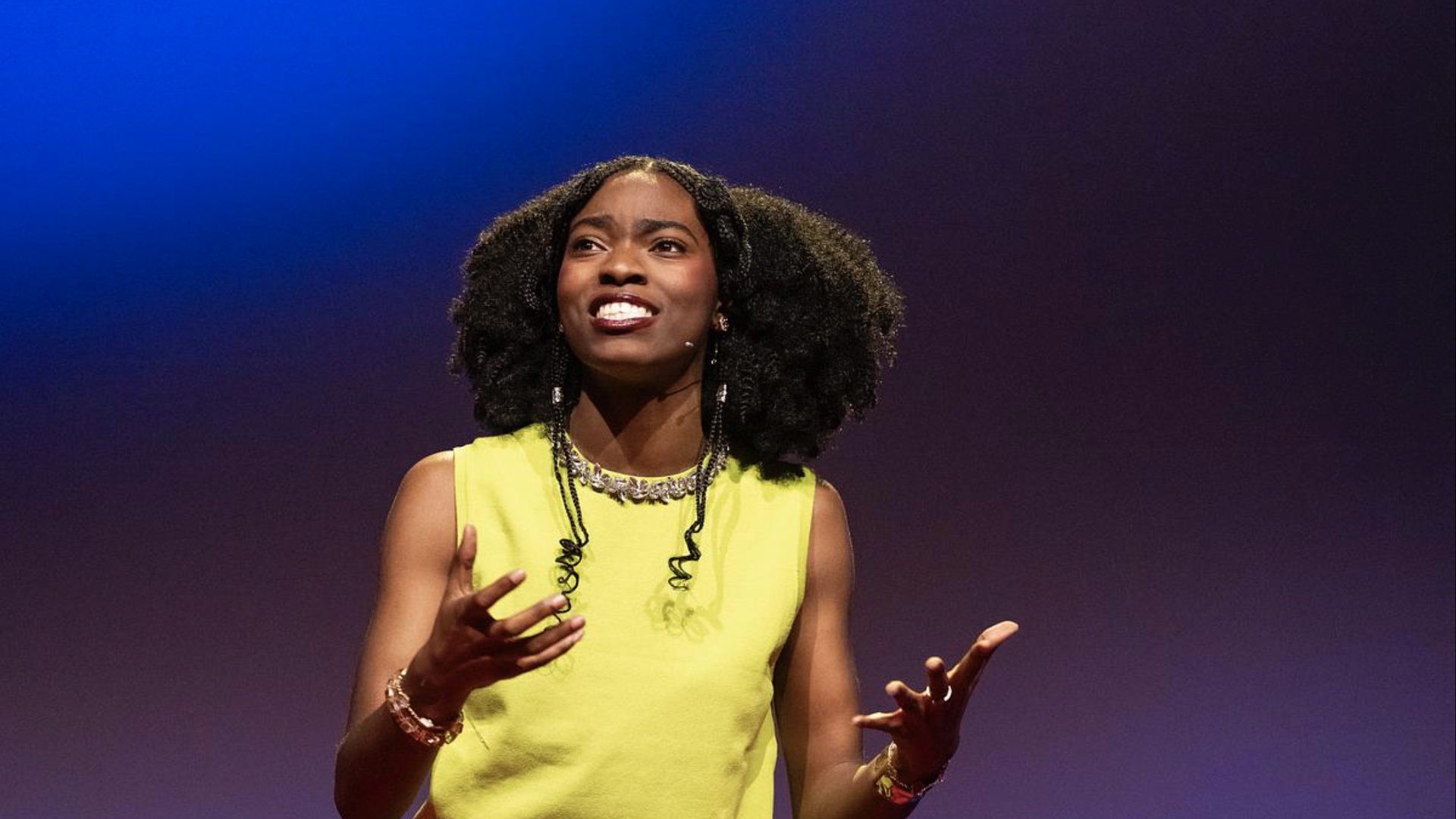
Poet Salome Agbaroji speaks at TED 2025 in Vancouver. Photo: Gilberto Tadday / TED
AI is leaping over the borders of tech and business and making waves across culture, from art and poetry to medicine and parenting, as this week's TED conference in Vancouver, B.C., highlighted.
Why it matters: The technology is already reshaping our lives, even as critics warn that the underlying systems remain dangerously unreliable.
The big picture: Every recent TED has had AI talks. But this year AI kept turning up everywhere, even in seemingly unrelated discussions around nature, family and the arts.
- AI remains a dominant topic at TED, as it has been for the past few years.
- Proponents like Anduril's Palmer Luckey touted its virtues, while critics such as Yoshua Bengio, Carole Cadwalladr and Tristan Harris warned that the technology remains unsafe.
- Now, though, even the poets and anthropologists are getting in on the action.
Case in point: Evolutionary anthropologist Sarah Blaffer Hrdy expanded on her research to imagine how AI could change the future of raising infants.
- "Like it or not, artificial intelligence will change the nature of human work, but will it change human nature?" she asked the audience. "That's going to depend on what we do with it."
- While it is tempting to tap AI to aid sleep-deprived mothers, there are also biological reasons why young children evolve the way they do, in a lengthy process highly dependent on human connection.
Zoom in: In detailing Milo, a text-message-based AI service for busy parents, Avni Patel Thompson said that initially she was seeking to use the technology to automate a larger swath of tasks.
- She then realized that while it's great to have some help keeping track of a family schedule, automating communications would lead to missing out on the chance to really connect with teachers and other parents.
- "Not all friction is bad," Thompson said. "Where people are involved, there's lots of productive friction because there is meaningful interaction."
Former U.S. Youth Poet Laureate Salome Agbaroji used her time on stage to explore the blurred lines between intelligence and systems of power.
- "I say to AI 'Don't feel too special,'" she said. "You aren't the first artificial system we humans carelessly labeled intelligent. Global capitalism was genius until it became negligent."
- "The future we fear is not the sci-fi, cyborg AI uprising that sets the world aflame," she said. "No, the true dystopia is the today we make when humans watch the world burn, still with the power to save it, and don't."
The bottom line: The talks at TED predict much broader social changes, so whatever you're interested in, you should expect AI to be part of the conversation, if it isn't already.
