Trump tariffs leave global corporations with nowhere to hide

Add Axios as your preferred source to
see more of our stories on Google.
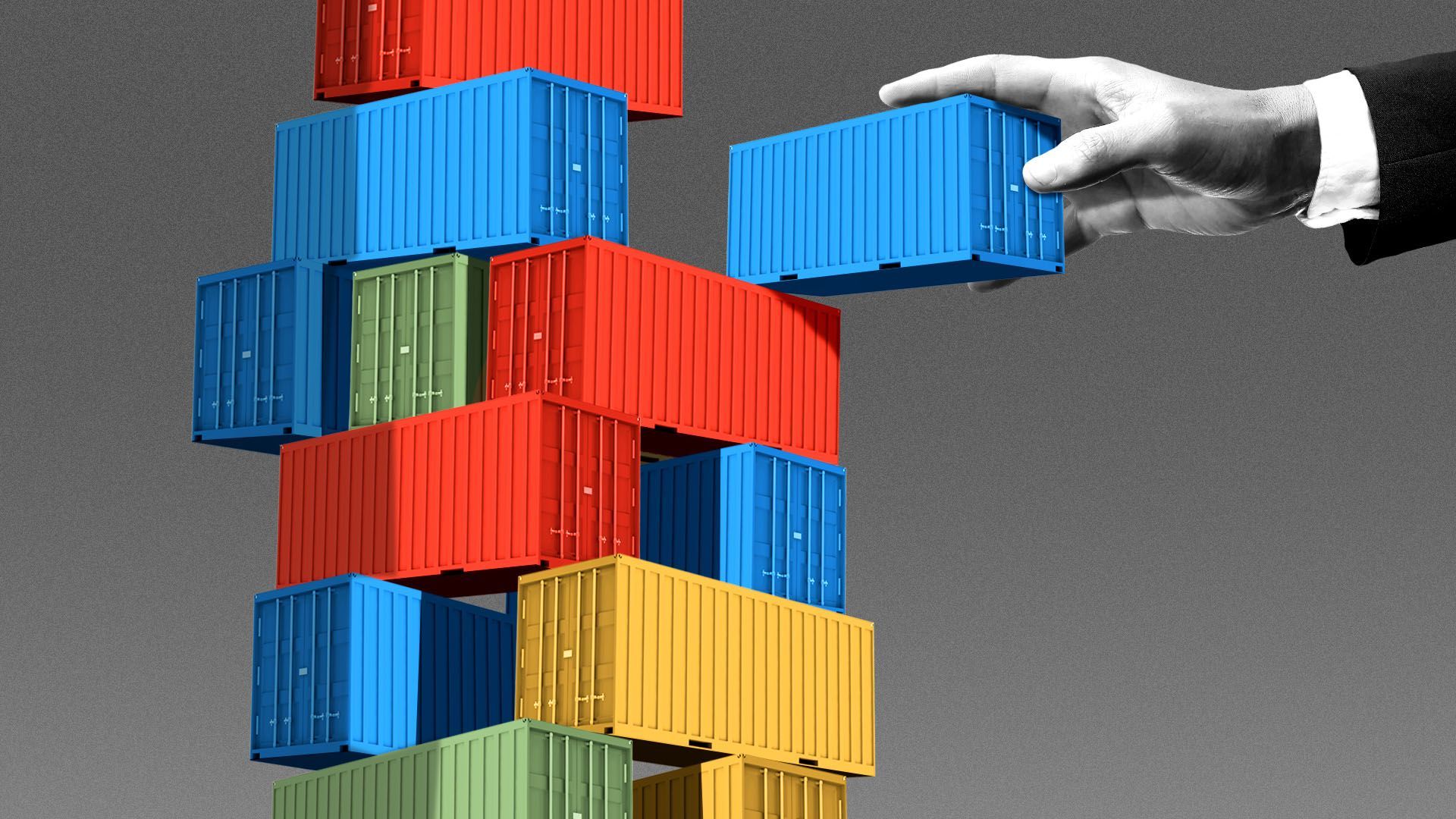
Illustration: Sarah Grillo/Axios
Global corporations rushed out of China to dodge tariffs during President Trump's first term. This time around, they have nowhere to hide — and policy is changing faster than supply chains can.
Why it matters: With high tariffs set to go into effect Wednesday in nearly every nation, there is no shield to be had (barring last-ditch negotiations or suspensions). It means multinational companies can't duck import taxes by rerouting goods.
- Companies will look to adapt their sourcing to minimize tariffs. But the trade policy landscape is shifting day by day, and complex multinational supply chains take much longer to redesign.
- That makes some hit to prices and/or corporate profits inevitable, even if over time there are opportunities to shift activity to lower-tariff countries.
What they're saying: "Once the dust settles, I think you're going to see companies looking at basically tariff arbitrage possibilities," Bill Reinsch, a senior adviser at the Center for Strategic and International Studies, told reporters at a briefing on Monday.
- "Which is: 'Can we shift our supply chains to countries that have lower tariffs? So instead of paying 46% from Vietnam, if we can pay 26% in India, that's worth looking at," said Reinsch, who previously led the National Foreign Trade Council.
Flashback: This is similar to the go-to strategy throughout the first phase of the U.S.-China trade war in 2019.
- Companies adjusted their sourcing and supply chains out of China to Southeast Asian nations like Vietnam and Cambodia, which were key beneficiaries.
- It is what gave some companies confidence they would not bear the brunt of tariffs in Trump's second term.
"What you've really seen happen is there's been a lot of suppliers who built manufacturing capabilities in Cambodia, in Vietnam, in Malaysia, Indonesia, other places so that they actually have more control over their future, should the tariff landscape change, etc.," Niraj Shah, CEO of online furniture retailer Wayfair, said on an earnings call in November.
- "I think we have kind of a couple benefits going for us: One is that the industry is definitely in a different position than it was five years ago," Shah added, noting Wayfair's network of suppliers in countries like Brazil and Europe.
The big picture: Before Trump 1.0, trade policy shifts never happened overnight. The trade backdrop that defined global manufacturing lasted for decades.
- In Trump's first term, tariffs were more targeted than they are this time around: mostly lower, and implemented through authorities that required lengthy periods of study and consideration of exemptions.
- That gave companies more time to plan ahead and argue their case for exclusions.
State of play: This time around, things are broader and faster-moving, with reciprocal tariffs on nearly all goods from nearly every country set to go into effect a mere week after they were announced.
- It raises the risk that companies will be hesitant to make the long-term, expensive investment decisions Trump officials say will reap U.S. economic benefits.
The bottom line: What executives "have to keep in mind is that no matter what they do, it's going to be more expensive and less efficient than what they've been doing now," Reinsch said.
- "They have to, I think, resign themselves to a more complicated world, but there are opportunities for relative improvement as long as there are differential tariffs."
