Trump imposes sweeping auto tariffs in latest trade crackdown

Add Axios as your preferred source to
see more of our stories on Google.
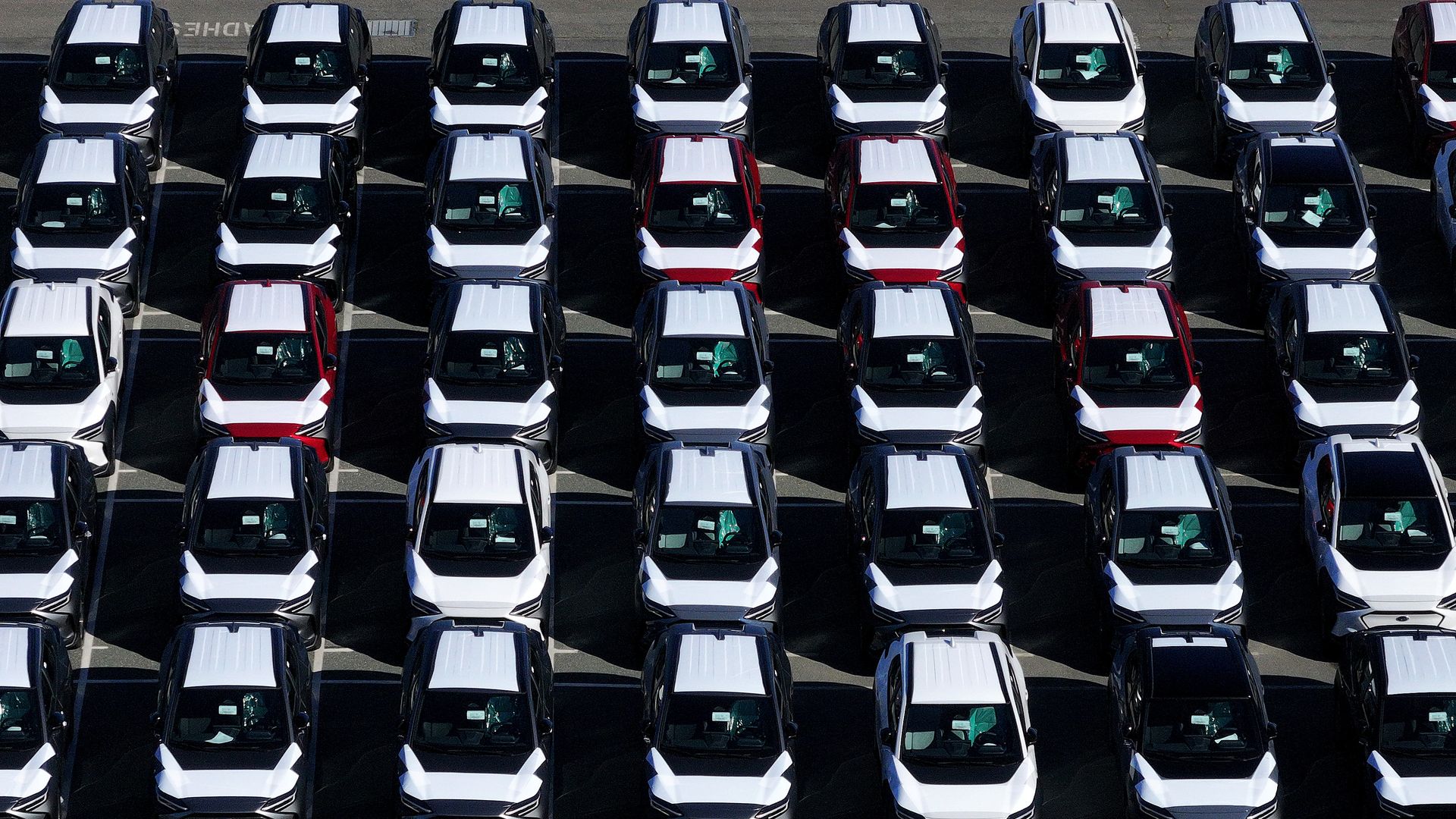
New cars sit idle in a California storage lot. Photo: Justin Sullivan/Getty Images
President Trump on Wednesday announced 25% tariffs on autos and auto parts that are not produced in the U.S., effective April 2.
Why it matters: The auto industry has always loomed as one of the biggest potential casualties of the administration's trade policies, and these levies threaten to put new pressure on consumers as prices inevitably rise.
Driving the news: Trump on Wednesday signed an executive order from the Oval Office that would impose tariffs on automakers that do not manufacture cars or car parts in the U.S.
- He said that the tariffs would be "permanent," saying there is nothing that would prompt the removal of the import taxes.
What they're saying: "We'll effectively be charging a 25% tariff, but if you build your car in the United States, there is no tariff," Trump told reporters.
- "What that means is a lot of foreign car companies are going to be in great shape because they've already built their plant" in the U.S., he added.
In a fact sheet released after Trump's Oval Office comments, the White House said auto parts compliant with the USMCA trade deal will remain "tariff-free" until Customs and Border Protection "establishes a process to apply tariffs to their non-U.S. content."
For the record: Trump said the tariffs will go into effect April 2 — the same day the administration says it will unveil reciprocal tariffs on a slew of imports.
- On Wednesday, Trump said that announcement would be "conservative," the latest sign of the White House playing down what might be unveiled in early April.
The intrigue: The U.S. International Trade Commission, in early 2024, studied what would happen if the government imposed sweeping auto tariffs.
- A 25% tariff on all U.S. auto imports would reduce them by about 74% and increase average auto prices by 5%, the paper found.
April 2 tariffs
Where it stands: About 45% of light vehicles sold in the United States are imported, per S&P Global Mobility.
- 3.6 million were built in Canada and Mexico in 2024, including popular models like the Chevrolet Silverado, Ram 1500 and Ford Mach-e.
- Another 3.7 million vehicles were imported from other countries, primarily Japan, Korea and the European Union.
Zoom out: The will-he-or-won't-he trade saga this year particularly weighed on an auto industry already struggling with competition from China and a historic technology transition.
- Trump's on-again, off-again tariffs threats on Canada and Mexico could drive a massive increase in U.S. automakers' production costs.
- His global steel and aluminum tariffs raised input prices even further.
- Ford's CEO made clear earlier this year that the tariff regime was causing "costs and chaos" for automakers.
What they're saying: "These tariffs are a major step in the right direction for autoworkers and blue-collar communities across the country, and it is now on the automakers, from the Big Three to Volkswagen and beyond, to bring back good union jobs to the U.S.," UAW President Shawn Fain said in a statement.
The other side: Canadian business interests blasted the tariffs.
- "Throwing away tens of thousands of jobs on both sides of the border will mean giving up North America's auto leadership role, instead encouraging companies to build and hire anywhere else but here. This tax hike puts plants and workers at risk for generations, if not forever," Candace Laing, CEO of the Canadian Chamber of Commerce, said in a statement.
- Political leaders condemned the levies, too. "I fully support the federal government preparing retaliatory tariffs to show that we'll never back down," Ontario premier Doug Ford said on social media, accusing Trump of causing "chaos and uncertainty."
Go deeper ... "Chaos and uncertainty": Canadian leaders blast U.S. auto tariffs
Editor's note: This story has been updated with background and reactions.
Joann Muller contributed.
