Social Security: How it works, and why it's the "third rail" of U.S. politics

Add Axios as your preferred source to
see more of our stories on Google.
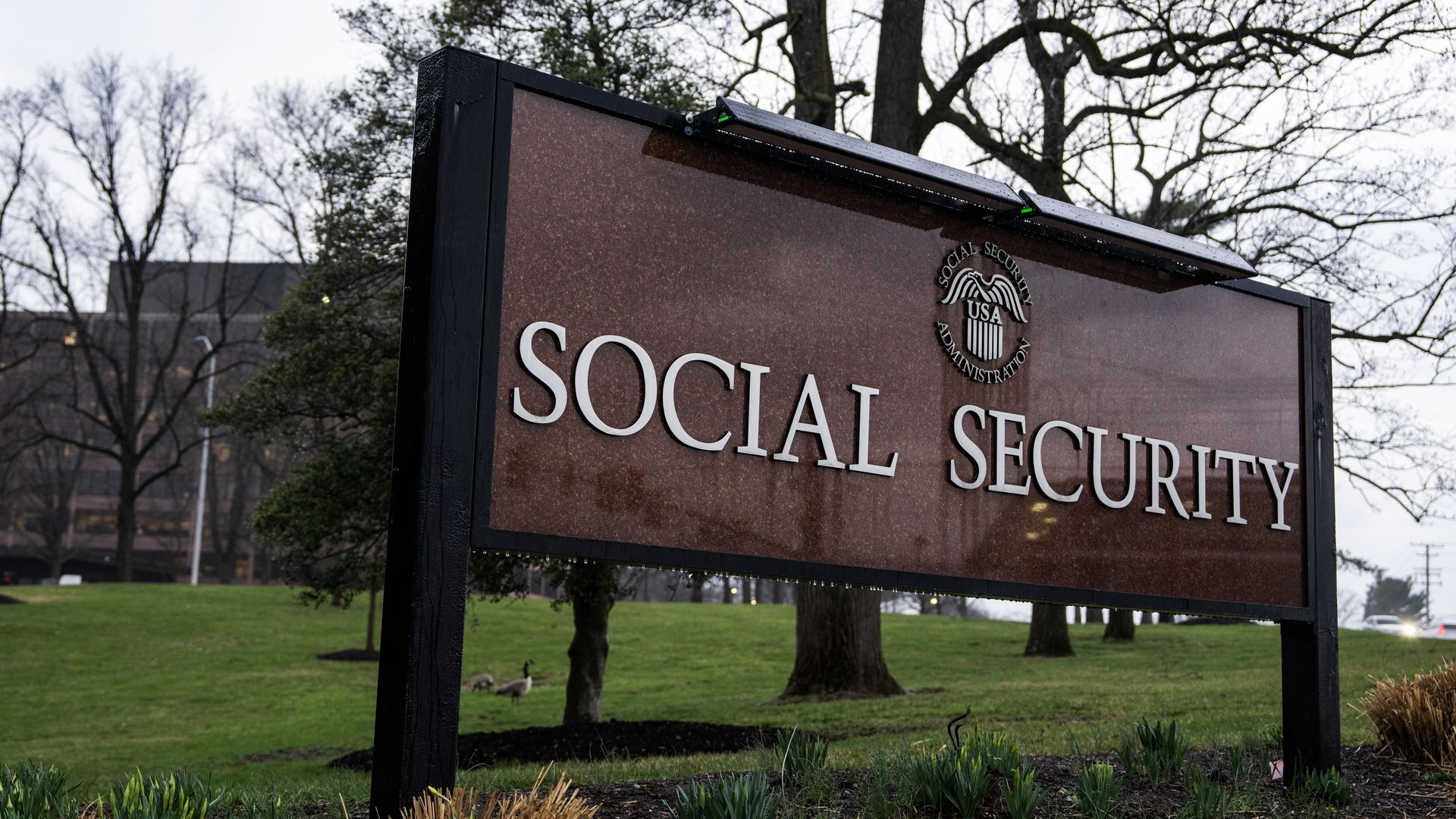
A sign for the U.S. Social Security Administration is seen outside its headquarters in Woodlawn, Maryland, on March 20. Photo: Tom Williams/CQ-Roll Call, Inc via Getty Images
The Department of Governmental Efficiency (DOGE)'s incursion into the Social Security Administration is threatening to slow or even unravel the system that provided income to about 73 million Americans last month.
Why it matters: The Elon Musk-led effort to eradicate purported fraud at the agency long known as the "third rail" of American politics could jeopardize the SSA's ability to execute its core mission — and the financial stability of elderly and disabled people across the country.
- What the richest person in the world has called the "biggest Ponzi scheme of all time" is a lifeline for some of the U.S.'s most vulnerable residents.
One stunning stat: As of December 2024, roughly nine in 10 Americans over the age of 65 and millions of people with disabilities receive benefits from the system.
- The average benefit last month was around $1,800, according to the SSA.
State of play: The Trump administration announced last month that it would cut its workforce by about 7,000 employees — or 12% of its staff of about 57,000.
- It also said it would close six of its of 10 regional offices, leaving only four. Amid rampant cuts, employees have fled, contributing to a loss of expertise.
- Cuts to phone services that would typically take two years to implement have been rushed at the White House's request, acting commissioner Leland Dudek told Social Security advocates in a Monday meeting, Axios' Emily Peck reports.
- Customer calls have surged, the Washington Post reported Tuesday, prompting long wait times for callers dialing into strained offices, where employees have few answers to give on recent changes.
- President Trump has vowed not to "touch Social Security," even as his administration has pushed more changes.
What they're saying: Former SSA commissioner Martin O'Malley cautioned in an interview with CNBC.com that DOGE's interference could put monthly benefits at risk.
- "Ultimately, you're going to see the system collapse and an interruption of benefits," he said.
- "People should start saving now," he added.
Here's what to know.
What is Social Security, and who qualifies for it?
One of the signature policy achievements of former President Franklin D. Roosevelt's New Deal, Social Security is widely considered to be "one of the most successful anti-poverty programs in our nation's history."
- It provides retired workers with a fixed monthly income.
- Disabled workers and their dependents accounted for 10.5% of the total benefits paid last year, and survivors of deceased workers accounted for 11%, according to a Social Security fact sheet.
- The SSA predicts about one in four 20-year-olds today will become disabled and will be entitled to disabled worker benefits before the age of 67.
- By the SSA's estimate, among beneficiaries 65 and older, 12% of men and 15% of women rely on Social Security for at least 90% of their income.
How is Social Security funded?
Payroll taxes under the Federal Insurance Contributions Act (FICA) from workers and their employers primarily fund Social Security benefits programs.
- Employers and employees split the obligated percent of wages, while self-employed people pay both shares under the Self-Employment Contributions Act (SECA).
- That money goes into two funds — one paying out benefits to retirees and their family and the other for workers with disabilities and their family.
- Those trust funds are Old-Age and Survivors Insurance (OASI) and Disability Insurance (DI).
Between the lines: With the U.S.'s aging population, Social Security is projected to face insolvency in the next decade without congressional reform.
- In 2021, Social Security's costs started exceeding its income, according to the Center on Budget and Policy Priorities.
- Despite this, its reserves are expected to enable the SSA to pay full benefits through 2035, according to the CBPP.
- Proposed policy changes to avert benefit reductions have included increasing maximum taxable wages, increasing retirement age or reducing program costs by adjusting eligibility, among other options.
Why is Social Security the political "third rail"?
An aide to former House Speaker Thomas "Tip" O'Neill (D-Mass.) named Social Security the "Third Rail of American Politics," meaning: touch it, and you're risking your political future.
- Periodic attempts to reform Social Security have failed for lack of public support.
- Former President George W. Bush pushed changes after winning re-election, but they ultimately flopped.
- Former President Obama tried to reach a bargain with congressional Republicans — but proposed Social Security cuts enraged progressives, leading him to instead propose expanding access to Social Security.
By the numbers: An overwhelming majority of Americans (79%) say Social Security benefits should not be reduced in any way, according to April 2024 polling from Pew Research Center.
- That sentiment is bipartisan: 77% of Republicans and 83% of Democrats don't think benefits should be reduced, though Democrats were more likely to say Social Security should be expanded.
- Former President Biden, in his waning days in office, signed the Social Security Fairness Act, expanding benefits for millions of retired Americans.
Friction point: The Trump administration seems unfazed by the risks that restructuring SSA's operations could pose.
- "Let's say Social Security didn't send out their checks this month. My mother-in-law, who's 94, she wouldn't call and complain," Commerce Secretary Howard Lutnick — a billionaire former Wall Street CEO — said in a recent podcast appearance.
- Those who would complain about not receiving their check, he suggested, were "fraudsters."
Go deeper: Musk and DOGE barred from accessing personal Social Security data by judge
