Extreme heat contributed to record global power demand in 2024

Add Axios as your preferred source to
see more of our stories on Google.
The extreme heat in large parts of the world during 2024 contributed significantly to a jump in global energy demand, an authoritative new report says.
Why it matters: The findings on extreme weather's ties to energy demand — particularly more polluting power sources such as coal — illustrate the ramifications of increased needs for cooling access.
Zoom in: The International Energy Agency's new report contains stark findings.
- It shows global energy demand grew significantly in 2024, beating the decadal average, with the power sector leading much of the growth.
- Renewables and natural gas met most of the increased demand, the IEA found.
- More than 80% of global energy demand growth took place in developing countries, but "advanced economies" also saw a switch from declining energy demand to an increase.
The intrigue: The report checks off the list of energy demand drivers in the power sector, including the electrification of transport, data centers and others.
- But it also notes that 2024 was the world's hottest year on record, and heat waves in India and China in particular boosted energy demand for cooling in those heavily populated nations.
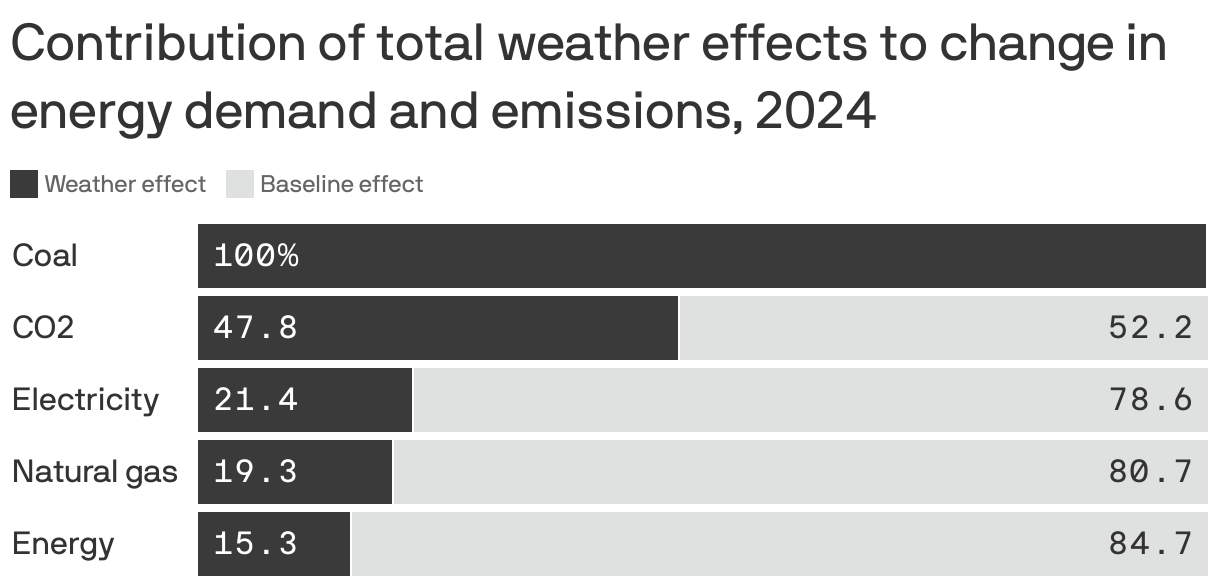
- In fact, the report indicates that "temperature effects" accounted for about 20% of the increase in electricity and natural gas demand, and drove the entire increase in coal demand.
- Also, when it comes to carbon dioxide emissions from the power sector, which hit a record high last year, unusually hot weather accounted for about half of the year's increase.
Last year was the first in which annual global average temperatures exceeded the aspirational Paris target of 1.5°C above preindustrial levels.
- The year featured numerous record heat waves around the world, especially across large swaths of Asia where extreme temperatures were relentless.
- Studies found human-caused climate change increased the odds and severity of these extreme heat events.
What they're saying: "If weather in 2024 had remained consistent with 2023, itself the second-hottest year on record, about half of the increase in global emissions would have been avoided," the report found.
