Tiera Kennedy's breakthrough in country music — before Beyoncé reached out

Add Axios as your preferred source to
see more of our stories on Google.
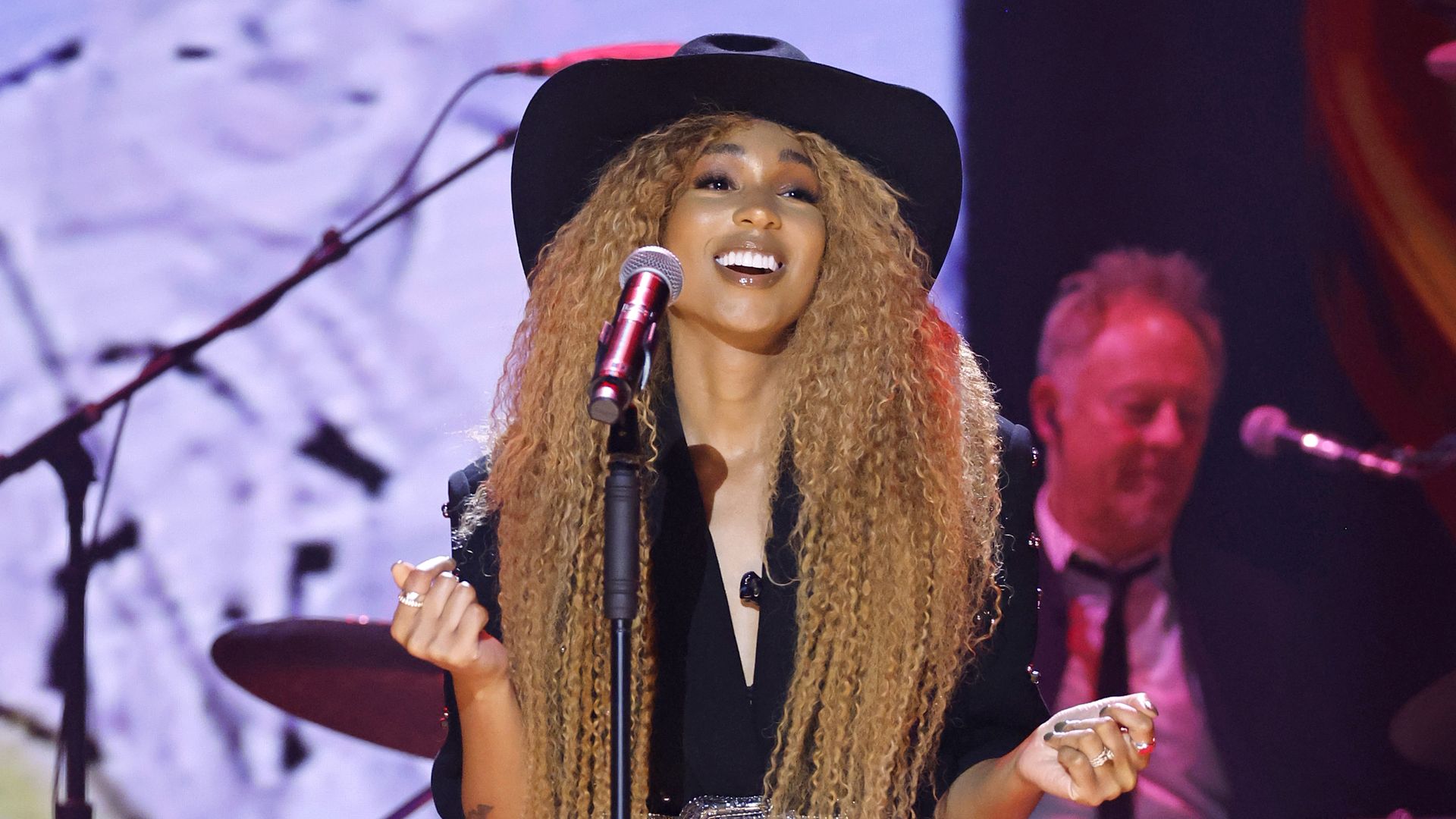
Tiera Kennedy performs onstage during Walkin' After Midnight: The Music Of Patsy Cline at Ryman Auditorium on April 22, 2024 in Nashville, Tennessee. Photo by Jason Kempin/Getty Images
Tiera Kennedy's journey in country music hasn't been easy. She faced industry pushback, refused to conform, and was dropped by her label. She questioned her future — until Beyoncé called.
Why it matters: Despite country music's deep Black roots, artists like Kennedy have fought for recognition.
- After years of challenges and unwavering self-belief, Kennedy's mission is to demonstrate that country music belongs to everyone.
What they're saying: "For the first time in my life, I questioned whether music was what I was feeling... I questioned God," Kennedy told Axios.
- "And all I heard Him say was, 'I'm not done with you yet.'"
Zoom out: Kennedy's love for country music blossomed as a teenager in Birmingham, captivated by its storytelling.
- Encouraged by family, she headed to college on a military scholarship, landing in Muscle Shoals, where she recorded at FAME Studios, standing where Aretha Franklin once did.
In 2017, she moved to Nashville — convinced she'd be discovered.
- "I thought I'd play a bar, someone would see me, and my dreams would come true," she recalls. "I soon realized that's not how it works."
- She performed for half-listening diners—learning to command a room, even when no one was listening.
Then in 2019, her single Found It In You went viral, racking up 20 million streams. Labels came calling — then tried to change her. She refused. They dropped her.
Zoom in: After losing her deal, Kennedy worked through the confusion with support from her husband, friends and faith.
That's when Beyoncé called.
- Kennedy was invited to record "Blackbiird," a Civil Rights-era anthem reimagined by Beyoncé — alongside Brittney Spencer, Tanner Adell, and Reyna Roberts.
It was a spark that spread. Kennedy released her debut album, Rooted, in October 2024 and performed during the "Beyoncé Bowl" halftime show.
- "Coming out of being told I wasn't going to work and then being put on a platform by a Black woman I've admired my entire life—Beyoncé saying, 'No, you WILL work'—that was life-changing."
State of play: Kennedy told Axios that Beyoncé has forced a reckoning in country music that few artists could lead.
- She became the first Black woman to top Billboard's Hot Country Songs chart, while Cowboy Carter won Album of the Year at the Grammys—a milestone the industry cannot overlook.
Beyoncé's undeniable influence forced the industry to pay attention, but not without pushback.
- Black country artists — including Mrs. Carter — have fought for radio play, even as they build huge audiences online.
- Last year, Shaboozey ruled the Hot 100 for 18 weeks with A Bar Song (Tipsy), but left the 2024 CMA Awards empty-handed.
- Lil Nas X's "Old Town Road" was pulled from the country charts in 2019.
Reality check: Black artists are frequently told they don't "fit" into country music—a genre they helped shape from its inception, only to be written out later.
- The banjo, a country staple, is rooted in West African traditions; enslaved Africans and Caribbeans created it.
- One in four cowboys was Black, yet their influence has been largely erased.
- DeFord Bailey was a star of the Grand Ole Opry in the 1920s—but was later pushed out.
- Charley Pride, the first Black country superstar, often had to downplay his race to find success.
That legacy of erasure is exactly what Beyoncé challenged—and what artists like Kennedy are now reclaiming.
Yes, and: Country music is slowly shifting. Latino artists are reshaping the genre, broadening its audience and challenging long-standing norms. Nashville's diversity efforts are progressing.
What's next: Kennedy isn't waiting for anyone's approval. She's back in the studio, writing on her terms.
- "Even after putting this music out, I feel even more rooted in myself. I was scared to be my true, authentic self, but now I know it's enough."
