Trump suggests sending Tesla vandals to El Salvador prisons

Add Axios as your preferred source to
see more of our stories on Google.
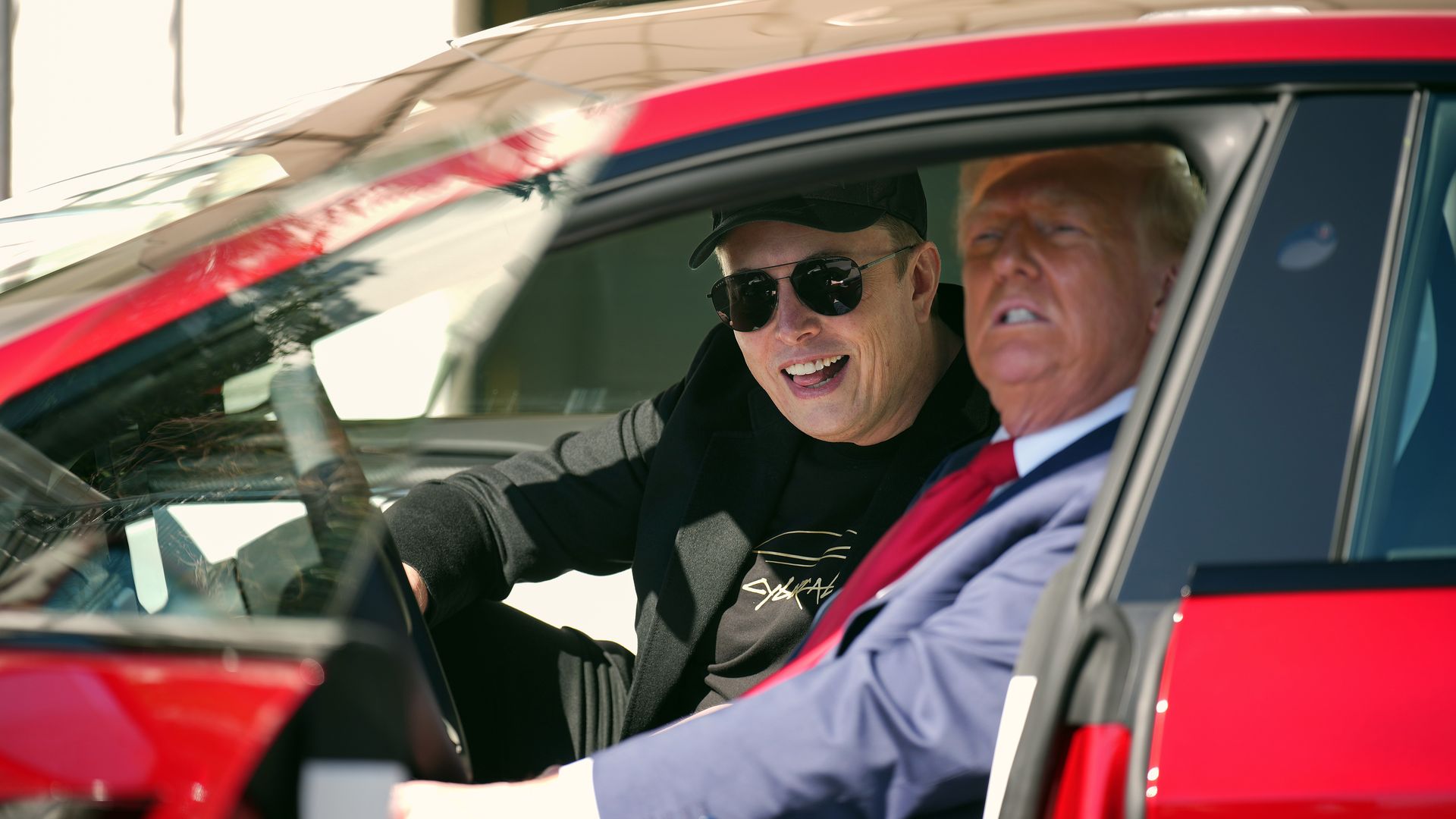
President Trump and Elon Musk sit inside a Tesla at the White House. Photo: Andrew Harnik/Getty Images)
President Trump on Friday suggested sending anti-Tesla protesters to a notorious prison in El Salvador if convicted.
Why it matters: Trump has put the full weight of the U.S. government behind defending and promoting "first buddy" Elon Musk's car company, which has seen both its sales and stock price slump.
Catch up quick: After promising to treat property crime targeting Tesla vehicles and facilities as domestic terrorism, Trump's Justice Department charged three people on Thursday with using Molotov cocktails to incinerate cars and showrooms.
- Officials have alleged the incidents were tied to the #TeslaTakedown movement, which has targeted Musk's signature company amid a backlash to his role in DOGE.
- Those charged face anywhere from five years to 20 years in prison if convicted, the DOJ said.
What they're saying: "I look forward to watching the sick terrorist thugs get 20 year jail sentences for what they are doing to Elon Musk and Tesla. Perhaps they could serve them in the prisons of El Salvador, which have become so recently famous for such lovely conditions!" Trump wrote in a Truth Social post Friday morning.
Between the lines: The U.S. recently struck a deal with the government of El Salvador to ship deported migrants to the country, where many are being confined in the controversial CECOT anti-terrorism prison.
- In court filings, Human Rights Watch has alleged widespread abuses at that facility, including a lack of access to food and health care.
What to watch: Whether the Trump administration actually pushes to send citizens convicted of crimes to foreign prisons.
- Legal advocates argue sending U.S. citizens to serve prison terms in El Salvador would violate the 8th Amendment's ban on cruel and unusual punishment.
- There could also be tensions with the First Step Act that Trump signed in 2018, which mandates that prisoners, to the extent possible, be incarcerated within 500 driving miles of where they normally live.
Editor's note: This story has been updated with additional background on the legal issues surrounding foreign incarceration.
