The second Great Disruption

Add Axios as your preferred source to
see more of our stories on Google.
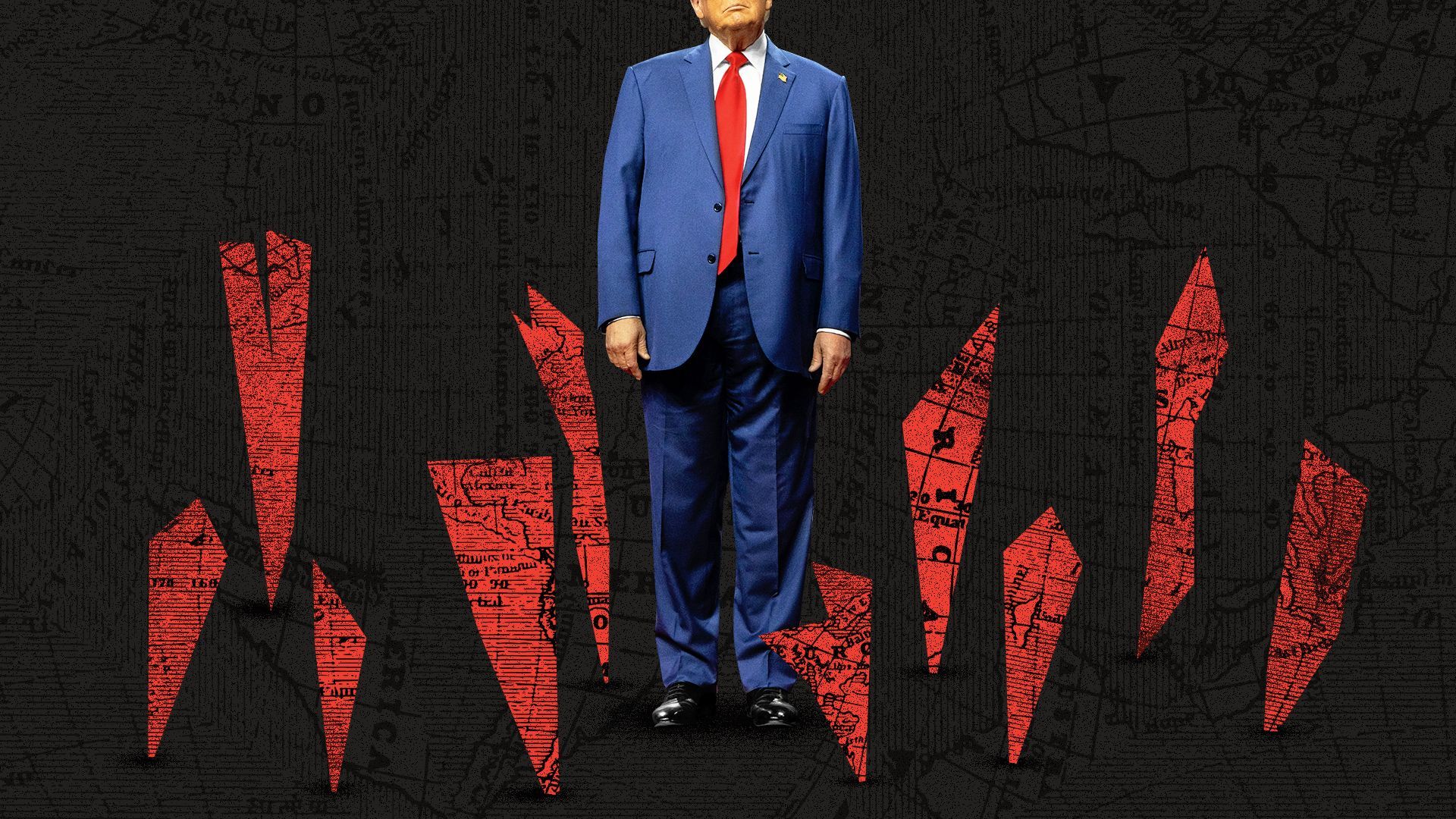
Illustration: Aïda Amer/Axios. Photo: Rebecca Noble/Getty Images
Five years after the coronavirus pandemic turned the world on its head, Donald Trump is doing the same thing.
Why it matters: This time, it's on purpose.
The big picture: The lives of thousands — possibly millions — are at stake.
- There's a massive geostrategic reconfiguration, an unprecedented flood of government spending (albeit in Germany) and, underneath it all, the hope and possibility that by burning everything down, something better will be able to grow in its place.
What they're saying: House Speaker Mike Johnson used a billiards analogy in a press conference yesterday to explain that President Trump's strategy is a bit like the break at the beginning of the game.
- "You hit it as hard as you can," he said, adding that "is what's required to start the process of repairing and restoring the American economy."
Flashback: A "shake up," to use Johnson's term, is what the pandemic provided.
- My book, "The Phoenix Economy," tells the story of how the death and disruption of the pandemic created a more uncertain and volatile world, with both bigger downsides and bigger upsides.
- For Trump supporters, it didn't go far enough.
Where it stands: It's an article of faith among the two wings of the MAGA party — the Bannonites and the Muskites — that America, under successive Democratic and Republican regimes, has become sclerotic, complacent and overly risk-averse.
- They point to spiraling entitlements, especially in Medicaid, increased corporate concentration, especially in Big Tech, and, above all, an out-of-control national debt.
- "Most federal spending is entitlements, so that's like the big one to eliminate," Elon Musk said in an interview with Larry Kudlow this week, adding the savings could be between $500 billion and $700 billion per year, orders of magnitude greater than anything DOGE has found until now.
Zoom out: The big idea is that painful cutbacks in the short term create the preconditions necessary for newly invigorated growth over the long term.
- One lesson of the pandemic was that politicians rarely (if ever) suffered negative consequences for broad-based coronavirus deaths, while they were often punished at the ballot box for lockdown-related restrictions.
The hope and/or intuition on the right is that any pain can be painted as a "period of transition" that's an inevitable part of any revolutionary change.
Zoom in: The model is private sector founder-entrepreneurs, Musk foremost among them, who are often ruthless when it comes to cost-cutting, even as they create companies worth man y billions of dollars.
- An often-retold anecdote comes from Netflix CEO Reed Hastings, who tells the story of what he learned when he was forced to lay off a third of his employees in 2001.
- One of his engineers ended up working on his own, instead of as part of a four-person team, and reportedly told Hastings "I've learned that I'd rather work by myself than with subpar performers."
- The hope is that Musk can engineer similar improvements in efficiency and output by cutting federal jobs, in much the same way as he slashed employment at Twitter.
The bottom line: One of the symptoms of trauma is memory loss, and many Americans have largely forgotten how bad the pandemic was.
- That can make them more cavalier in terms of willingness to inflict large-scale disruption all over again, just five short years later.
