Exclusive: Startup taps AI to improve TV for seniors

Add Axios as your preferred source to
see more of our stories on Google.
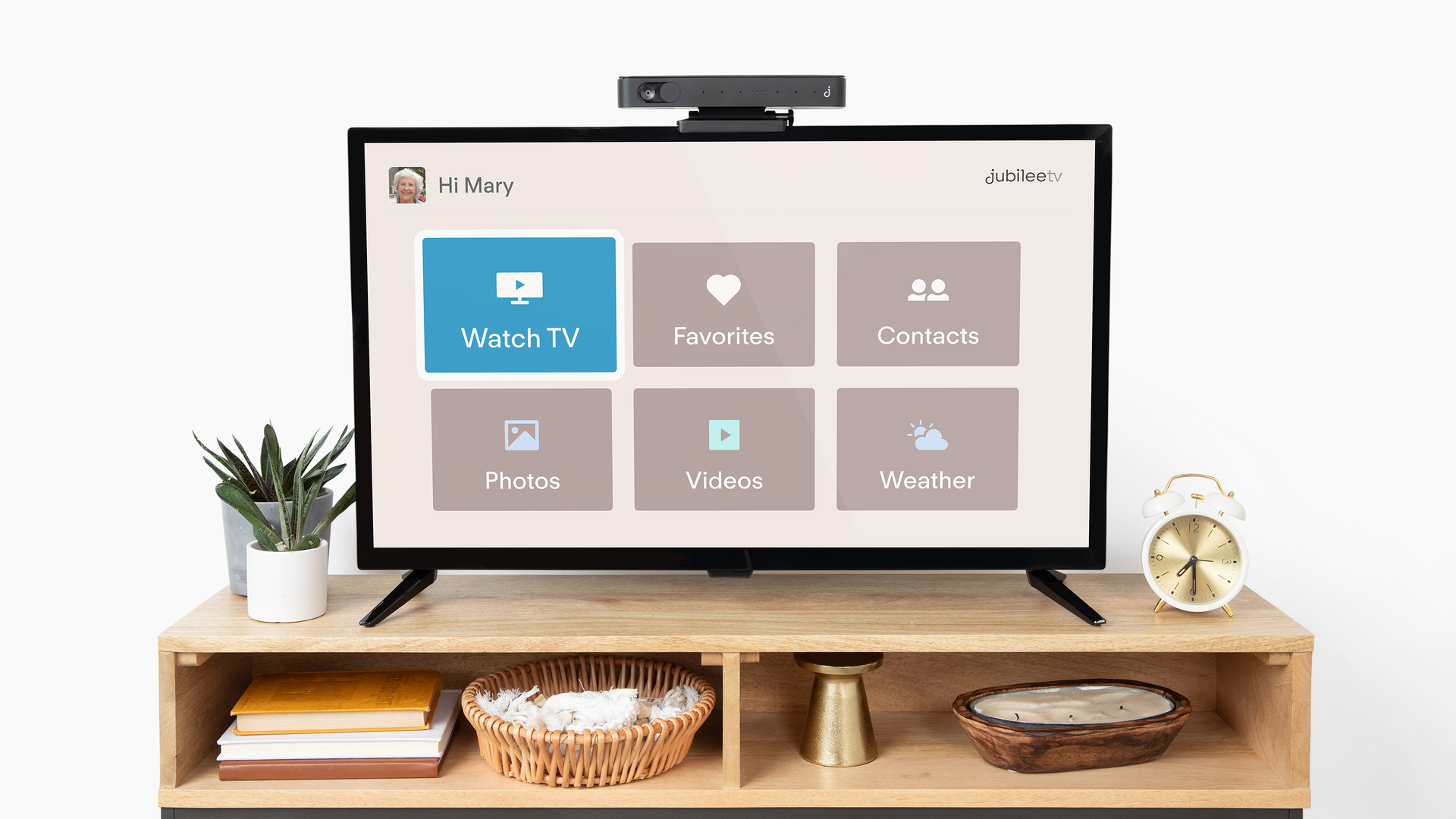
JubileeTV's simplified smart TV interface for seniors. Image: JubileeTV
A TV set-top box for seniors is adding fresh features that help caregivers whose loved ones are dealing with dementia.
Why it matters: Technology, while often a barrier for older people, can also be used to help bridge distance.
Driving the news: JubileeTV, as the San Francisco-based startup is known, is adding an even more simplified experience to allow those with memory issues to better control the TV.
- A new six-button remote lets them turn on the TV, adjust volume and switch among various favorite channels.
- Caregivers and family members, meanwhile, are able to change channels, drop in for a video chat, send messages, and monitor TV usage and other physical activity.
- In the new feature update, JubileeTV is also adding AI-powered live captions for video chats.
Catch up quick: JubileeTV's set-top box has been on the market since August and is in use by tens of thousands of families. The box itself costs $199 and service is $29 per month ($269 if purchased annually), or people can purchase the box and lifetime service for $699.
- The decade-old, 52-person company has raised $40 million from investors including Greylock, Warner Media, Hearst, Sky and Lauder Media.
Between the lines: AI plays several roles in powering JubileeTV features beyond generating captions for video calls.
- The company is relying on edge AI to help monitor activity, including whether someone has gotten up, whether a caregiver has visited and if someone is turning on the TV during the night.
What they're saying: "We see a lot of mild-to-very-advanced dementia in the population, and our sense is that we should provide tools to family caregivers to stay a little bit ahead of the race," JubileeTV CEO Ashish Aggarwal told Axios.
Zoom in: I've been testing the device with my mother-in-law, who has Alzheimer's, and it addresses a number of challenges, including allowing us to check in from afar without her having to answer a call.
- The simplified remote holds further promise for letting her decide between a Hallmark movie or live sport, without having to navigate a dizzying array of options on cable that is beyond her capabilities.
My thought bubble: I see a much broader role that generative AI could play in helping older people who struggle with technology. One of its benefits is that it can respond to a user's natural-language requests.
- There's a lot of talk about agents that can take action, and one set of actions that could be incredibly useful is letting tech-averse seniors describe what they want, from ordering goods online to summoning a ride.
What's next: The company is eyeing a number of ways to further incorporate AI, including monitoring audio to detect early signs of illness and cognitive decline, analyzing trends to predict fall risk and using computer vision to help prevent falls.
- "We are just scratching the surface of what we could do," Aggarwal said.
