Former NIH director Francis Collins retires

Add Axios as your preferred source to
see more of our stories on Google.
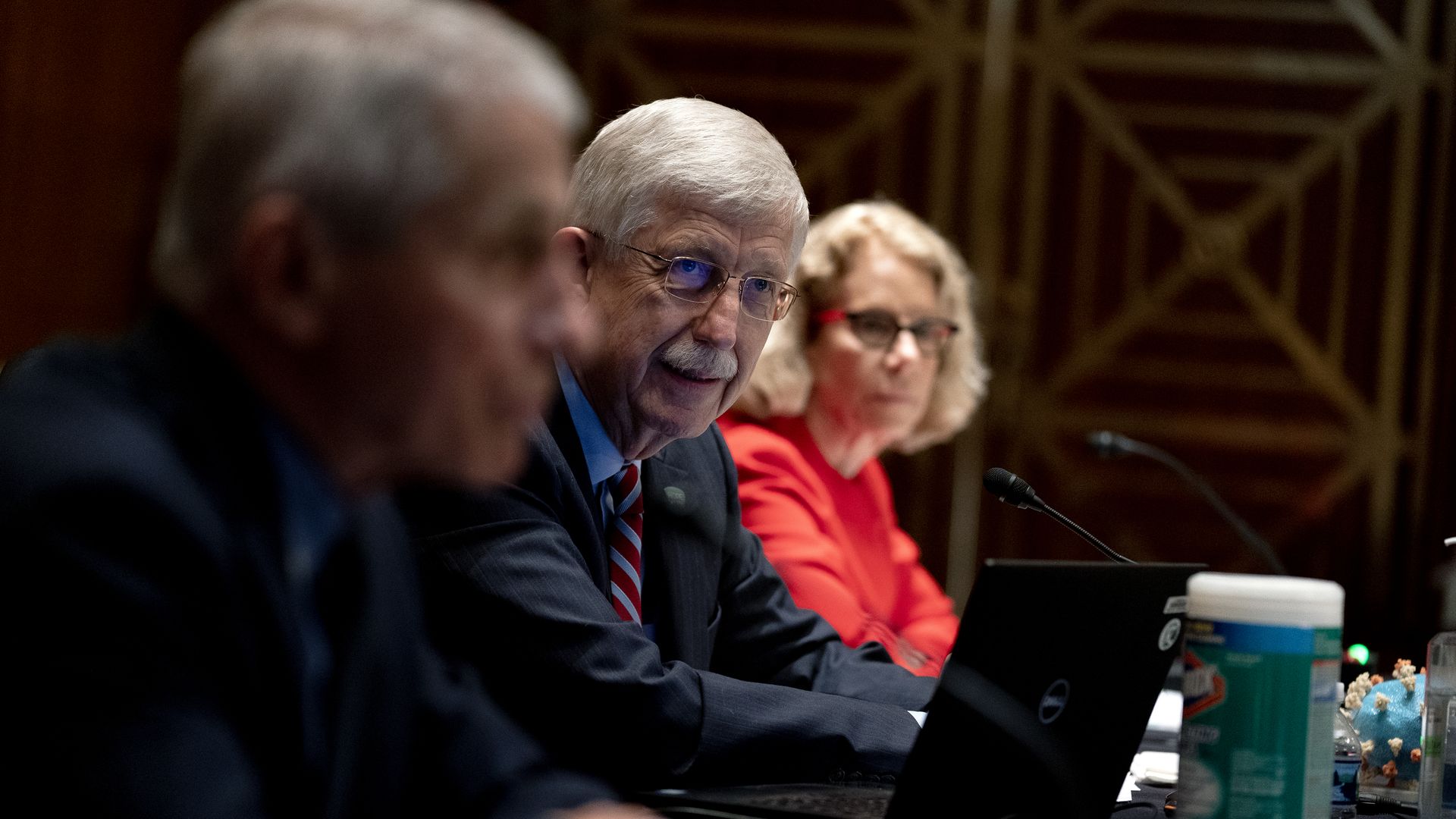
Collins during a 2021 Senate hearing on NIH's budget. Photo: Stefani Reynolds-Pool/Getty Images
Former National Institutes of Health director Francis Collins unexpectedly retired on Friday, writing in a statement that employees of the government's biomedical research institution "deserve the utmost respect and support of all Americans."
Why it matters: The noted geneticist's departure comes amid research funding cuts and terminations of probationary workers that have raised concern about an exodus of scientific and technical talent at federal agencies.
Details: Collins didn't give a reason for his retirement and has declined requests for interviews. But his statement referenced a time when "investment in medical research was seen as a high priority and a nonpolitical bipartisan effort."
- "When you hear about patients surviving stage 4 cancer because of immunotherapy, that was based on NIH research over many decades. When you hear about sickle-cell disease being cured because of CRISPR gene editing, that was built on many years of research supported by NIH," he wrote.
- Collins stepped down as NIH director at the end of 2021 after serving in the role for 12 years under three presidents and being at the forefront of the COVID-19 pandemic response.
- He returned to his lab to pursue projects that included understanding the causes and prevention of Type 2 diabetes.
Collins made landmark discoveries of disease genes and previously served as director of NIH's National Human Genome Research Institute until 2008.
- He led the international Human Genome Project, which culminated in 2003 with the completion of a finished sequence of the human DNA instruction book.
But Collins became embroiled in controversies during and after the pandemic over the agency's funding of gain-of-function research and what critics saw as a heavy handed COVID response.
- Emails showed he ordered then-NIAID Director Anthony Fauci to devise a "take down" of the so-called Great Barrington Declaration, a petition authored by a group of scientists that backed allowing COVID to spread among young, healthy people to reach herd immunity faster, per Stat.
- Collins later expressed some remorse for not considering the full effects of the government's pandemic policies, saying he and his colleagues had a "very narrow view of what the right decision is."
What they're saying: "Haters will find some email or two of his from the pandemic to smear him. But history will judge him as a legend who helped transform American medicine," Ashish Jha, dean of Brown University's School of Public Health and the Biden administration's COVID-19 response coordinator, wrote on X.
President Trump's nominee for NIH director, Jay Bhattacharya, was a co-author of the Great Barrington Declaration.
