The quieter GOP standoff over the Trump tax cuts

Add Axios as your preferred source to
see more of our stories on Google.
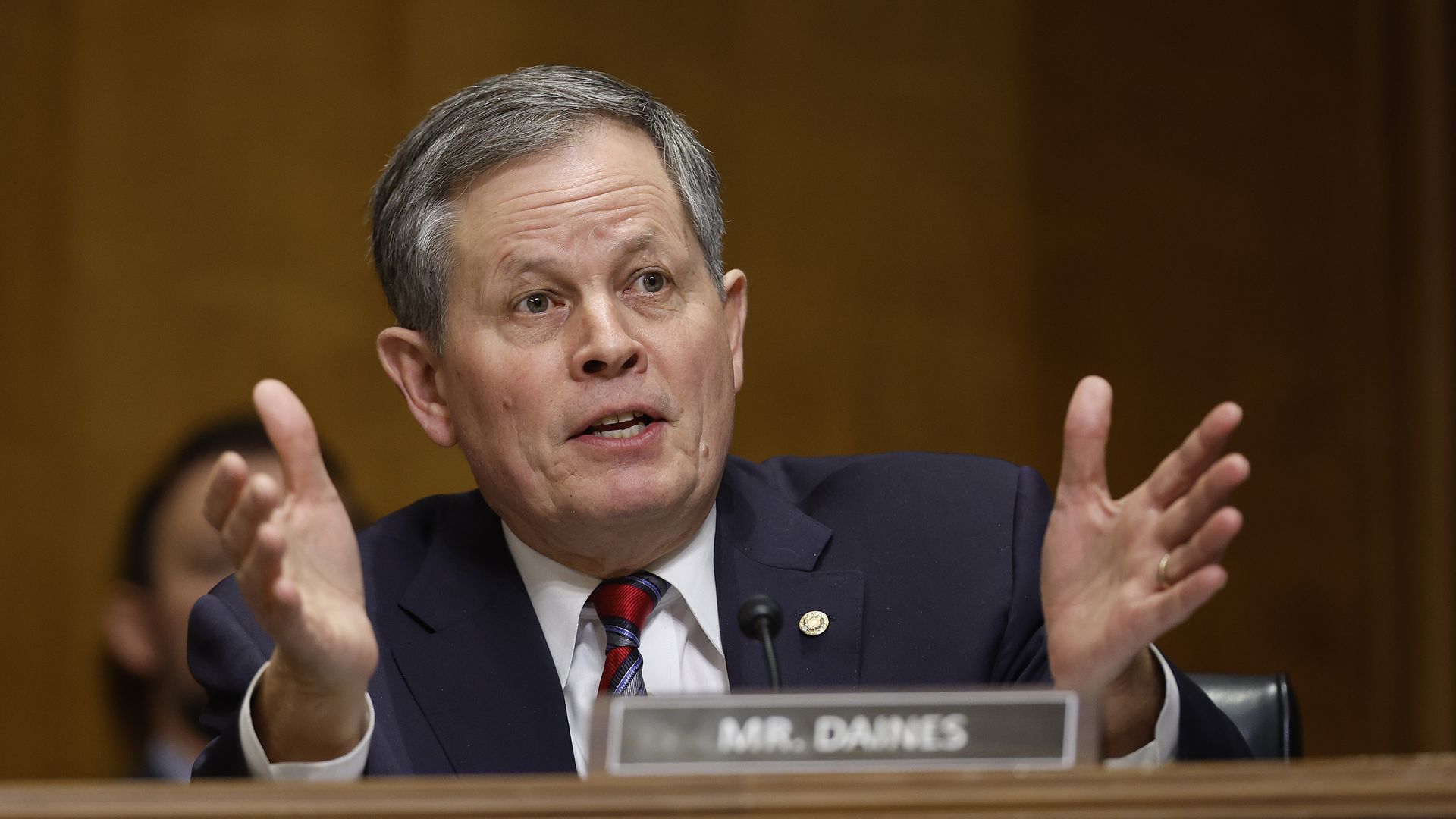
Photo: Kevin Dietsch/Getty Images
House and Senate Republicans are barreling toward a showdown on how much extending President Trump's 2017 tax cuts should cost.
- A group of senators, led by Sen. Steve Daines (R-Mont.), today threatened to vote against any tax package that doesn't make all of Trump's 2017 Tax Cut and Jobs Act "permanent."
Why it matters: That's code for using a "current policy" baseline to say extending the tax cuts should cost zero.
- "We're not going to accept a temporary tax extension, it undermines everything that tax policy is designed to do, which is generate growth and higher wages," Daines said.
- Treasury Secretary Scott Bessent is also for making the 2017 cuts permanent.
- The House reconciliation package gives House GOP tax writers the authority to add at least $4.5 trillion to the deficit, roughly the amount that extending the Trump tax cuts will cost if Congress settled on a "current law" score.
Zoom in: Republicans have long questioned why the Congressional Budget Office treats tax cuts differently than spending increases under the reconciliation process.
- They argue that spending increases are only scored when they are enacted and then are presumed to go on forever, but not at an additional cost in the next budget window.
- And they chafe that tax cuts are scheduled to expire after a certain period of time, while spending is presumed to go on in perpetuity.
- They also note CBO often gets its estimates wrong. Post-TCJA revenues were $1 trillion higher than CBO projections.
Democrats and outside groups counter that tax cuts lead to lost revenue and the CBO should continue to account for the lost revenue to the Treasury.
The other side: A recent report by the Committee for a Responsible Federal Budget estimates extending Trump's tax cuts and enacting his new ones will cost the Treasury between $5 trillion and $11 trillion over 10 years.
