Trump and Hegseth send NATO scrambling over future of Ukraine

Add Axios as your preferred source to
see more of our stories on Google.
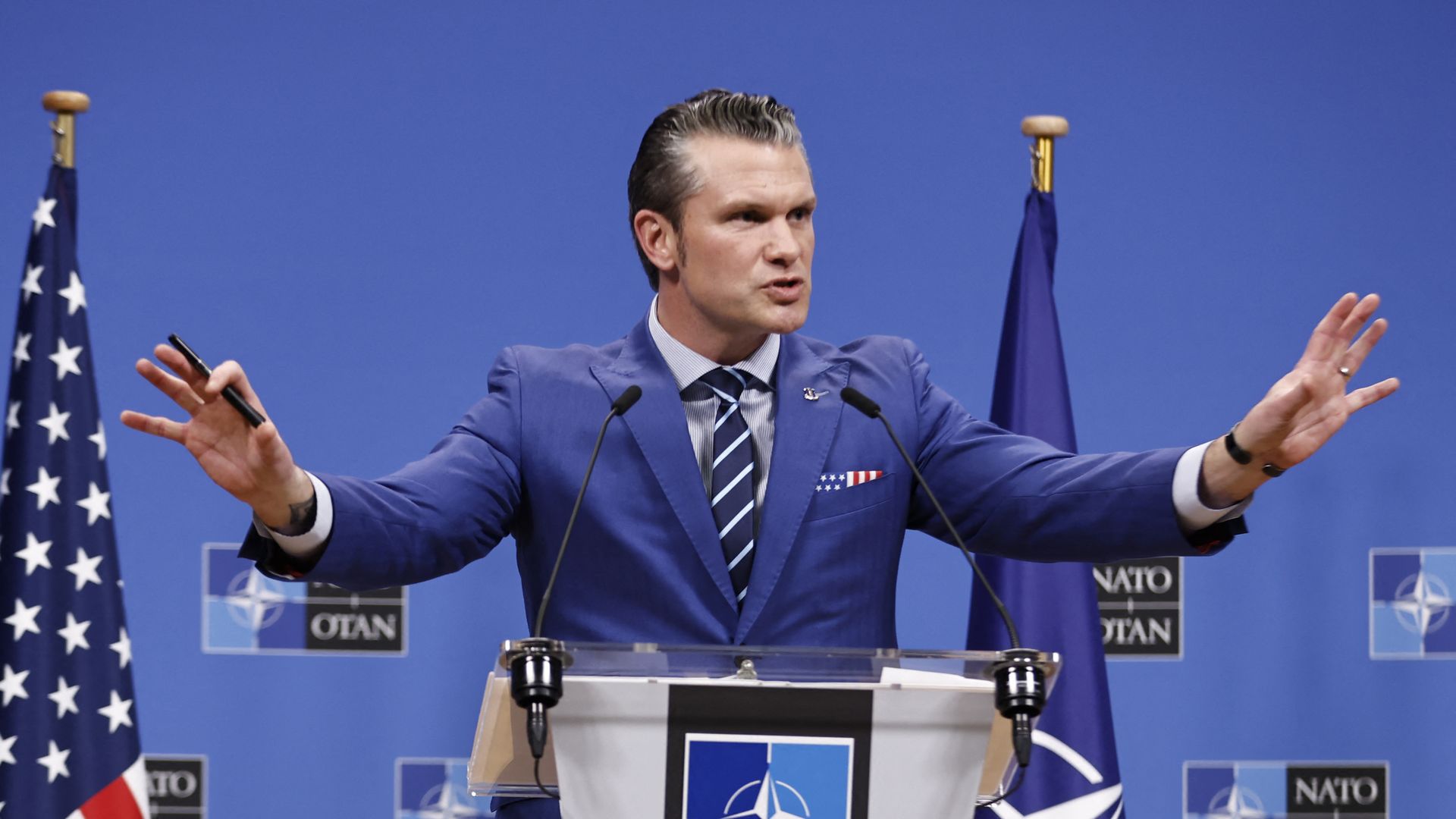
Hegseth gives a press conference at NATO HQ. Photo: Simon Wohlfhart/AFP via Getty Images
BRUSSELS -- NATO allies are in a state of anger, denial and despair after Defense Secretary Pete Hegseth effectively declared an end to America's role as the primary guarantor of European security, particularly over Ukraine.
- President Trump's surprise phone call with Vladimir Putin, just hours later, only added salt to the wound.
Why it matters: Europe has been bracing for this moment since the early days of Trump's 2024 campaign. That hasn't made it any less painful — or the future any less uncertain.
State of play: Hegseth, who visited NATO headquarters for the first time this week, made clear Wednesday that the following chips will now be "off the table" in peace talks, as a senior U.S. defense official stressed to Axios.
- NATO membership for Ukraine — a central source of tension with Russia promised by the alliance in 2008 — is not a "realistic outcome of a negotiated settlement," Hegseth said.
- U.S. troops will not be deployed to Ukraine to enforce postwar security guarantees.
- Any European peacekeepers sent to Ukraine should be deployed as part of a "non-NATO mission," meaning Article 5 — the alliance's bedrock principle of collective defense — should not protect them.
Zoom out: Less clear is what chips remain on the table, given Ukraine's deteriorating position on the battlefield, the potential curtailment of U.S. military aid, and Russia's gleeful response to the concessions.
- Trump spoke to Ukrainian President Volodymyr Zelensky on Wednesday after his call with Putin, and said he and Putin had "agreed to have our respective teams start negotiations immediately."
- Zelensky told Trump in their phone call that Putin is only pretending to want to negotiate a peace deal because he is "afraid of you," as Axios' Barak Ravid scooped.
The latest: Amid backlash from Ukrainian officials and NATO defense ministers, Hegseth defended the new U.S. position and rejected claims that Trump had handed Russia preemptive concessions.
- "Any suggestion that President Trump is doing anything other than negotiating a position from strength is, on its face, ahistorical and false," Hegseth said at a press conference after his NATO meetings Thursday.
- Asked by Axios what leverage Ukraine has left, Hegseth responded sharply: "It's just a cheap political point to say, 'Oh we've left all the negotiating cards off the table by recognizing some realities that exist on the ground.'"
"[Trump's] got all the cards he would like," Hegseth stressed.
- "And the interesting part is, while the conventional status quo mindset, or the legacy media, wants to play checkers ... President Trump, time and time again, finds a way to play chess," he said.
- "We have the perfect deal-maker at the table from a position of strength to deal with both Vladimir Putin and Zelensky. No one's going to get everything they want."
The intrigue: Despite his previous remarks about Ukraine's "unrealistic" future membership in NATO, Hegseth clarified that "everything is on the table" and that Trump is ultimately the one leading the negotiations.
- "I'm not going to stand at this podium and declare what President Trump will do or won't do, what will be in or what will be out," Hegseth said.
- "Simply pointing out realism, like the borders won't be rolled back to what everyone would like them to be in 2014, is not a concession to Vladimir Putin. It's a recognition of hard power realities on the ground," he argued.
Friction point: NATO allies and supporters of Ukraine have criticized Trump for seemingly taking Russia's side at various points during the war, including this week.
- In the Oval Office Wednesday, Trump demurred when asked whether Ukraine was "an equal member" of the peace process: "I think they have to make peace," he said after a pause. "That was not a good war to go into."
- On Thursday, he went a step further: "I don't see any way that a country in Russia's position could allow [Ukraine] to join NATO ... I believe that's the reason the war started."
What to watch: The European Union's top diplomat Kaja Kallas, who attended Thursday's meetings along with Ukrainian defense minister Rustem Umerov, said the EU would continue supporting Ukraine if Kyiv refused to accept Trump's conditions.
- "It's not good negotiation tactics if you just give away everything before the negotiations have even started," Kallas told reporters, echoing similar comments by NATO defense ministers.
- "Appeasement will always fail."
The big picture: Here in Brussels, NATO officials have largely responded to Hegseth's bombshell by pointing out that the alliance has steadily been taking a greater share of responsibility for supporting Ukraine.
- "This administration deeply believes in alliances," Hegseth said Thursday as he reiterated his call for NATO members to dramatically increase their defense spending and take ownership of European security.
- "But make no mistake, President Trump will not allow anyone to turn Uncle Sam into Uncle Sucker."
