AI can crush crime on blockchains, Lutnick says

Add Axios as your preferred source to
see more of our stories on Google.
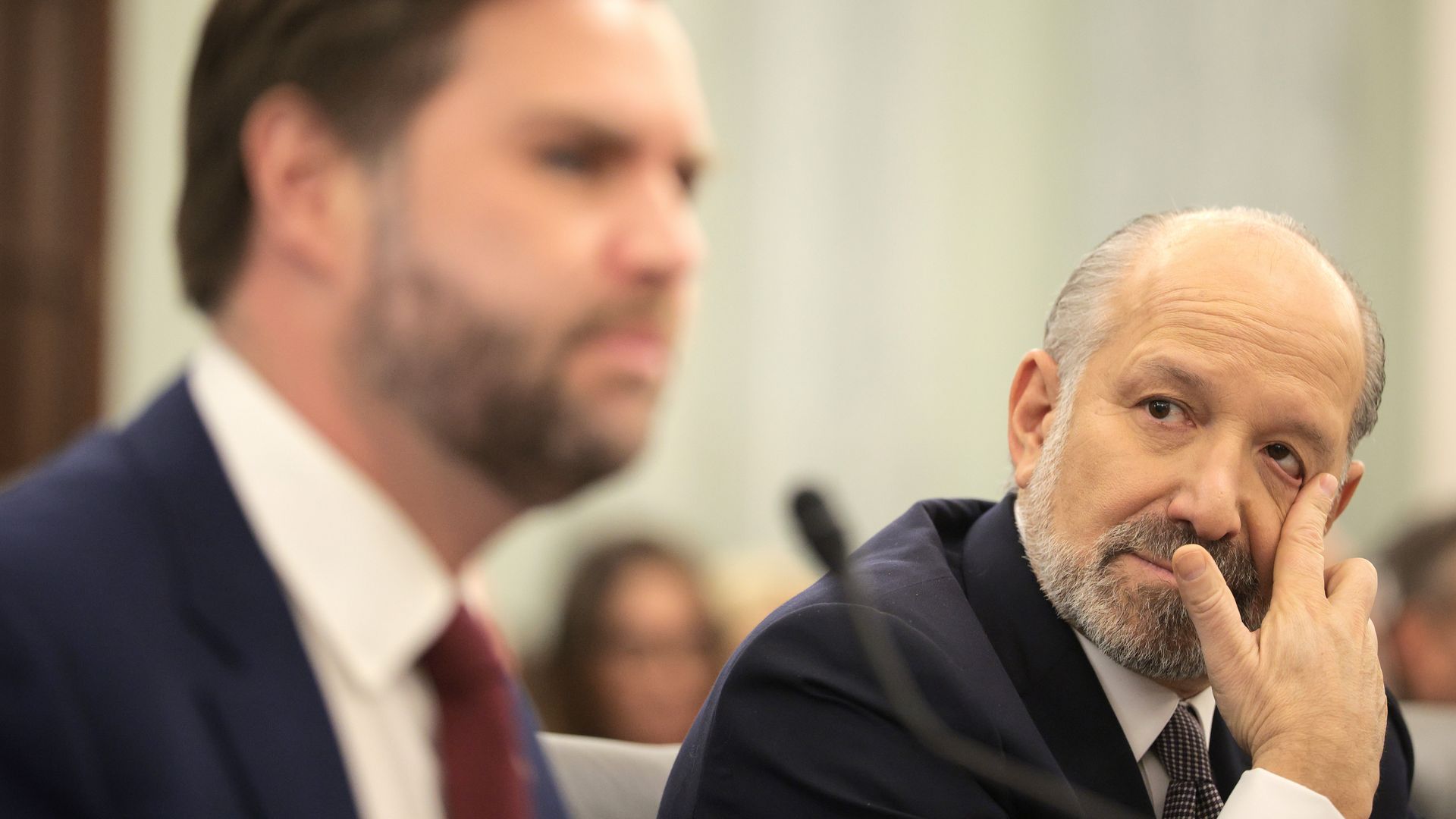
Vice President JD Vance introduces Howard Lutnick before the Commerce Committe/ Photo: Kayla Bartkowski/Getty
Crime on blockchains will be no match for artificial intelligence, Commerce secretary nominee Howard Lutnick said Wednesday.
Why it matters: Billions of dollars of crime and terrorist financing is estimated to be transmitted using digital assets each year, though that represents a tiny portion of the overall digital asset volume.
Context: Lutnick was expected to face crypto questions at the hearing due to his ties to the industry.
- Tether is a company that runs the worlds largest stablecoin. A stablecoin is a crypto token that is valued at $1, because it is backed one-for-one by highly liquid dollar-based assets, such as short term U.S. treasuries.
- The current market cap of tether stablecoins is $139.5 billion.
- Tether is the liquidity lifeblood of the whole cryptocurrency industry, but it has also been controversial. Lutnick's company, Cantor Fitzgerald, has provided custody services to Tether, which has increased the market's confidence in the asset.
Between the lines: Lutnick's close ties to a company that is probably the most profitable enterprise in the whole industry have raised concerns about conflicts of interest, should his nomination be confirmed. (He has said he will sell off all of his business interests if he secures the position.)
The latest: Senate Commerce Committee ranking member Sen. Maria Cantwell (D.-Wash.) asked Lutnick if he supports audits for companies that run dollar-backed stablecoins.
- "I believe U.S. dollar stablecoins should be audited, should be completely backed by U.S. treasuries 100%," he said.
- Tether releases quarterly attestations about its holdings, but has not yet released a full audit of the company.
Zoom in: Sen. Cantwell pressed him on criminal use of tether to finance their operations, but Lutnick pushed back, noting that such activity was on the secondary market.
- Criminals weren't sending dollars to Tether to create stablecoins, based on Cantor Fitzgerald's due diligence, Lutnick noted.
- "I think AI tools used by the U.S. government running through the market will rid the world of criminals using blockchain," he said.
Lutnick said he supported requiring that any stablecoin backed by dollars onboard law enforcement agents so they could run analysis on them and find suspicious activity.
- He predicted it would only take a year or two to get crime off blockchains.
Friction point: Lutnick pushed back on the critique of digital assets. He said that the two favorite financial instruments of the underworld are dollars and euros, but when thy are used as physical instruments, we can't track them.
- The only reason we have clarity about crime on the blockchain, he said, is because such public databases create an open and readable record that law enforcement and surveillance firms can analyze.
- "It's like blaming Apple because criminals use Apple phones," he said.
What we're watching: Legislation to create legal frameworks for issuing and operating stablecoins backed by dollars is one of the top legislative priorities for lawmakers focused on digital assets.
- Cantwell, meanwhile, reaffirmed some of the points sure to dominate negotiations among lawmakers in a subsequent statement to Axios.
- "There's no need to wait years to find AI solutions to this problem," she said. "We need better rules today, like applying some form of Know Your Customer and Anti-Money Laundering requirements to prevent the abuse of stablecoin in secondary markets."
- Cantwell argued that it should be just as easy to "trace, track, and freeze" stablecoin transactions as it is electronic transactions in legacy payment systems.
Editor's note: This article was updated with further comment from Sen. Cantwell.
Go deeper: Lutnick supports broad approach to tariffs.
