Commerce nominee Lutnick backs broad tariff approach


Add Axios as your preferred source to
see more of our stories on Google.
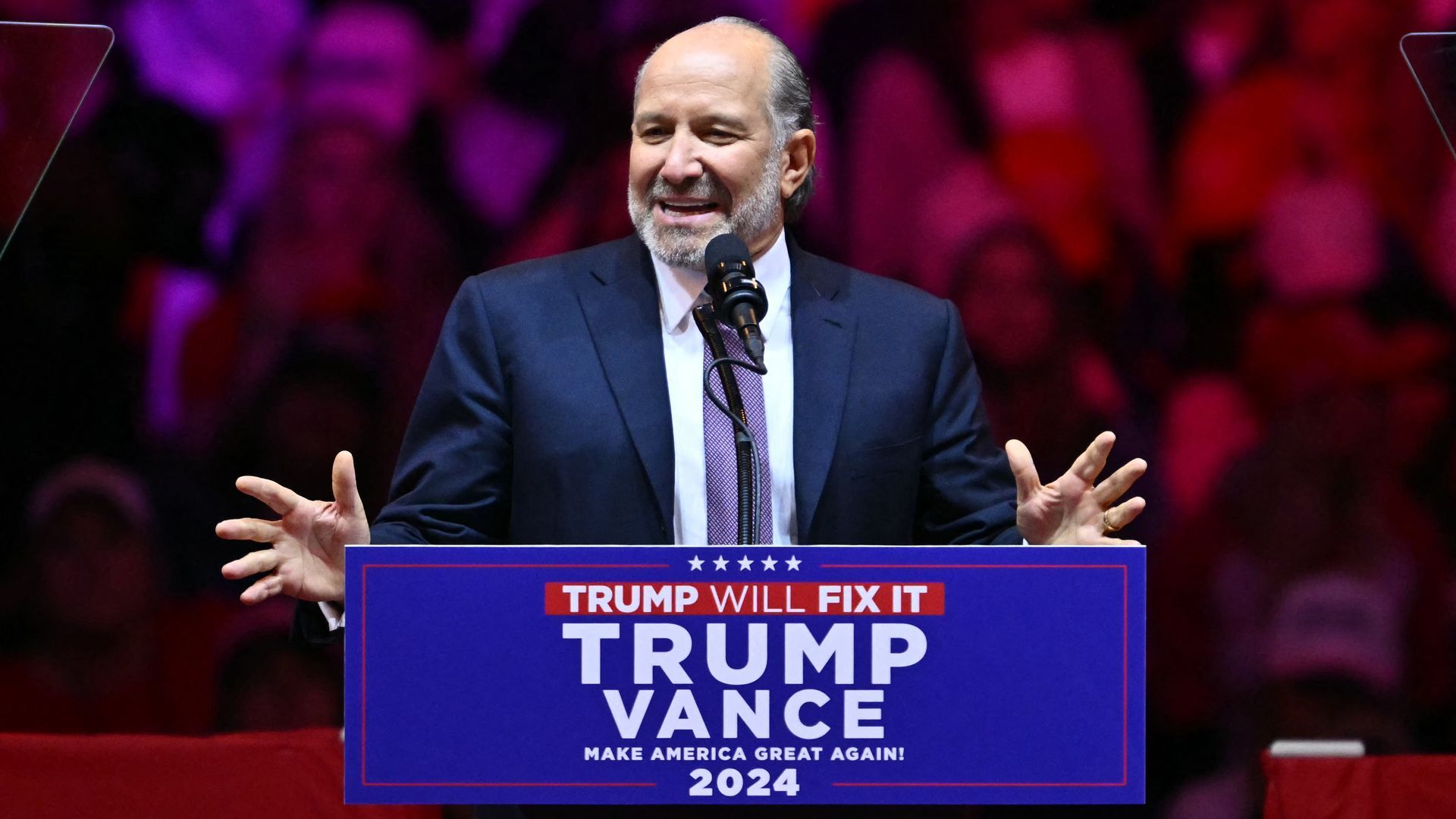
Howard Lutnick speaking at a Trump/Vance rally. Photo: Angela Weiss/AFP via Getty Images
President Trump's pick to lead the Commerce Department, Howard Lutnick, on Wednesday said he would support imposing blanket tariffs on a country-by-country basis.
Why it matters: If confirmed, Lutnick will be at the center of executing Trump's go-to geopolitical tool — but how exactly the administration should do so highlights a divide among its economic officials.
Driving the news: Speaking at a Senate Commerce Committee confirmation hearing, Lutnick said he prefers an across-the-board, country-by-country tariff approach and has discussed that approach with Trump.
- "I think if you pick one product in Mexico, they'll pick one product. You know, we pick avocados, they pick white corn. All you're doing is picking on farmers, which is just not going to happen," Lutnick said.
What they're saying: Members on both sides of the aisle, in questions to Lutnick, wanted to make sure tariffs don't harm farmers in their states.
- "Our farmers, our ranchers and our fisherman are treated with disrespect," Lutnick said, arguing that tariffs in fact support the U.S. agricultural industry.
- "We need that disrespect to end. And I think tariffs are a way to create reciprocity."
The intrigue: Lutnick said he believed widespread tariffs would not be inflationary — a claim that some economists have disputed.
- In an exchange with Sen. Tammy Baldwin, Lutnick admitted that "a particular product's price may go up," before adding that the policy would not put upward pressure on inflation.
- "It is just nonsense that tariffs cause inflation," Lutnick said.
What to watch: Trump has suggested a targeted approach to imposing tariffs in recent days on everything from chips and metals to medical supplies — a different approach than Lutnick.
- A broad approach to tariffs would make it more legally viable for the Trump administration to take action under the International Emergency Economic Powers Act.
- Targeted approaches would likely require so-called Section 232 national security or Section 301 economic burden investigations that could take up to a year.
Brady Dale contributed reporting.
