What the L.A. wildfires could mean for the 2028 Olympics

Add Axios as your preferred source to
see more of our stories on Google.
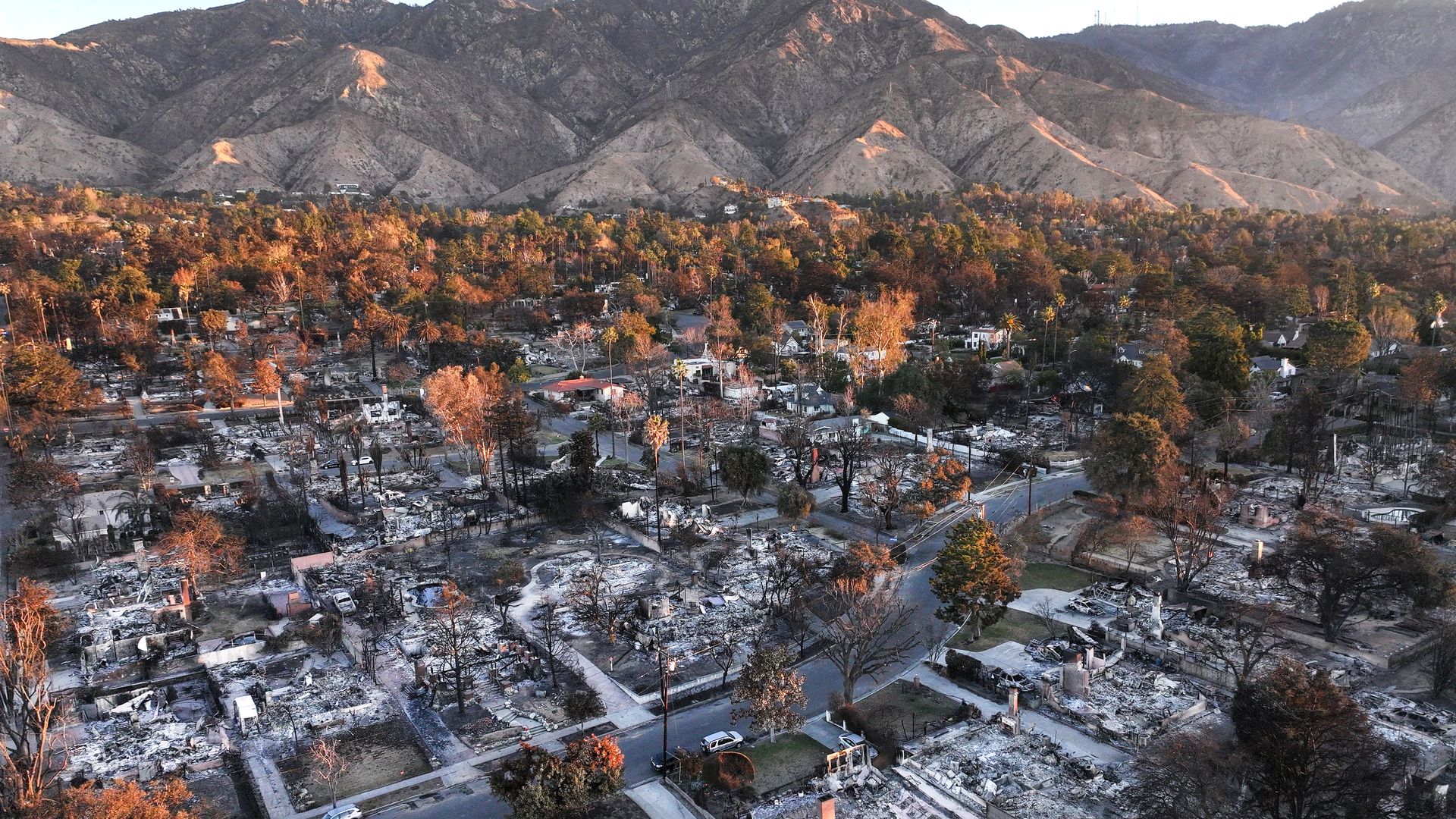
An aerial view of Altadena, California, which burned in the Eaton Fire, on Jan. 21. Photo: Mario Tama/Getty Images
Southern California continues to reel from the devastating wildfires that ripped through Los Angeles County earlier this month, prompting questions about whether it will be ready to host the 2028 Olympics as planned.
Why it matters: It could take several years for the Los Angeles area to recover from the blazes, creating a potential clash of timing and resources needed to prepare for the Games.
State of play: Organizers of the L.A. Games have pitched the Games as a "no build" feat, instead taking advantage of existing venues across the city, and some temporary builds.
- While none of the recent wildfires damaged the existing venues, some were in areas where the flames drew near.
Zoom in: The Palisades Fire, the largest blaze, ripped through much of the Pacific Palisades area between Malibu and Santa Monica, where the 2028 Games are slated to host golfing. The Riviera Country Club where golf events will be held was evacuated due to the fire.
- The UCLA campus, set to become the Olympic Village, was just outside the Palisades Fire's evacuation and warning zones.
- The Rose Bowl in Pasadena, near the site of the Eaton Fire and within the fire's evacuation zone, is set to receive an up to $85 million renovation ahead of hosting soccer events at the 2028 Games.
- The fires also damaged L.A. County's sewer, power and transportation systems throughout the city, as well as public infrastructure like streetlights, all of which will need to be repaired before millions of visitors descend on the city.
Between the lines: Rebuilding entire neighborhoods while preparing to host a 17-day global sporting event that could draw 15 million people to the city and its surrounding area is a tall order.
- But it's still possible for L.A. County to prepare for the Games and simultaneously rebuild, Jadrian Wooten, an associate professor at Virginia Tech who focuses on the economics of sports, told Axios.
- "Most of the heavy organizational work for the Games doesn't kick in until about a year before the event," he added.
However, construction for some of the temporary venues could end up "competing for resources with other folks as you're trying to rebuild damaged area of the cities," Victor Matheson, a College of the Holy Cross professor who specializes in sports economics, told Axios.
- This might not stop the Games from happening, but it could increase the costs of building temporary facilities, Matheson added.
Caveat: The recent wildfires highlighted the intense risk of large-scale urban wildfires, which are becoming all the more frequent due to climate change.
- So even as L.A. rushes to rebuild, if it doesn't take measures to make itself more resilient in the future — like developing urban water systems equipped to fight massive fires and creating buffer zones — it could remain just as vulnerable to future conflagrations.
- While the fires had "a relatively minor impact on the Games" this time around, "that may not necessarily be true in the coming years," Wooten told Axios.
The big picture: The region's officials remain adamant that Los Angeles will be able to accomplish everything in time.
- California Gov. Gavin Newsom told NBC's "Meet the Press" this month that the region would be able to rebuild and prepare to host the Olympics — as well as the 2026 World Cup and the 2027 Super Bowl.
- "There is no reason to believe that the fires will adversely impact or delay preparations for the 2028 Olympic and Paralympic Games, which are already well underway," Paul Krekorian, executive director of L.A.'s Office of Major Events, said in a statement.
- LA28 did not immediately respond to Axios' request for comment.
Go deeper:
