The paradox of Trump's economic inheritance

Add Axios as your preferred source to
see more of our stories on Google.
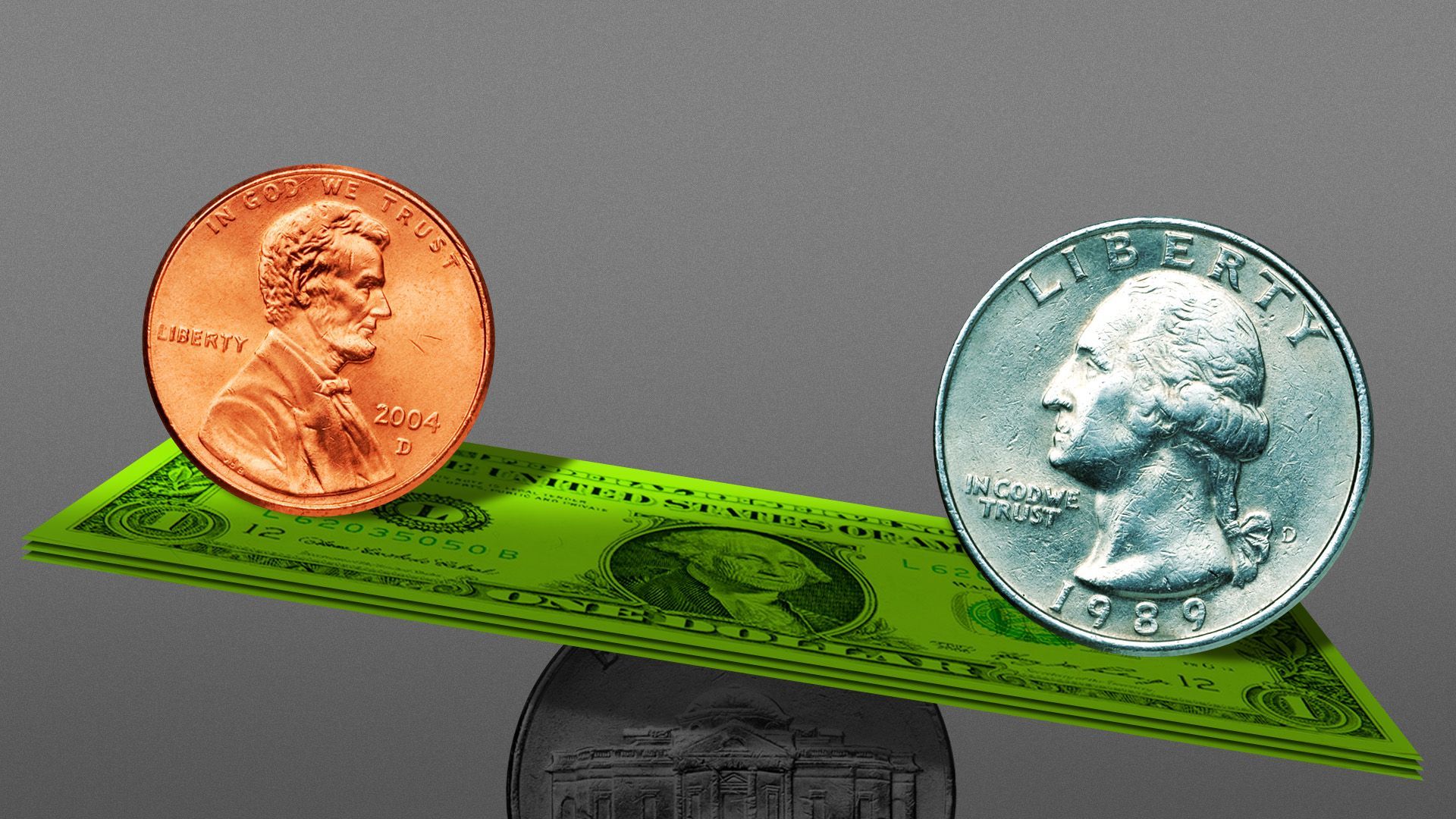
Illustration: Sarah Grillo/Axios
President Trump is inheriting an economy that is simultaneously robust and fragile. It's evident in his economic advisers' increasingly vivid warnings of fiscal unsustainability.
Why it matters: The unemployment rate is low, GDP growth is strong and inflation is falling. But those results have been achieved amid high fiscal deficits, the likes of which have only been seen in times of war, pandemic or economic crisis.
- Good current conditions would argue for a "first, do no harm" approach to economic policy.
- But incoming administration officials and allies warn that the dismal fiscal outlook leaves the nation vulnerable and warrants aggressive spending cuts, even though that may entail economic pain.
- "The Trump administration is inheriting a fiscal and monetary mess," Kevin Warsh, a likely candidate to be Trump's next Fed chair, wrote in the Wall Street Journal last week.
What they're saying: In his confirmation hearing last week, Treasury secretary nominee Scott Bessent noted that deficits are on track to be around 7% of GDP in the years ahead, and said (accurately) that "we have never seen this before when it is not a recession or not war."
- "I am concerned because several times the Treasury of the United States has been called upon to save the nation," Bessent said, "whether it's the Civil War, the Great Depression, World War II, or the recent COVID epidemic."
- "Treasury, along with the whole government and Congress, has used its borrowing capacity to save the union, to save the world and to save the American people and what we currently have now, we would be hard-pressed to do same," he said.
By the numbers: The Congressional Budget Office on Friday projected a $1.9 trillion budget deficit in 2025, 6.2% of projected GDP.
- It projected the national debt rising from about 100% of GDP this year to 119% in 2035 — in the absence of recessions, wars or other crises.
- Those projections assume that Trump's 2017 tax cuts will be allowed to expire at the end of this year. If they are extended, as is a top priority of the administration and Congressional Republicans, those numbers would be larger.
State of play: Bessent was clear in his testimony that he believes tax revenues are adequate and that it would be an "economic calamity" to fail to extend the Trump tax cuts. The problem, in his telling, is entirely on the spending side of the ledger.
- Congressional Republicans are targeting large-scale spending reductions to be paired with extending the tax cuts, and Elon Musk's Department of Government Efficiency is targeting large-scale cost reductions.
- Trump sees tariffs as a tool to increase revenue.
Between the lines: Serious spending cuts would likely drag inflation lower, so the Federal Reserve could attempt to offset the economic pain with lower interest rates.
- That would be trickier with tariffs, which tend to be inflationary.
