CEOs can say whatever they want now

Add Axios as your preferred source to
see more of our stories on Google.
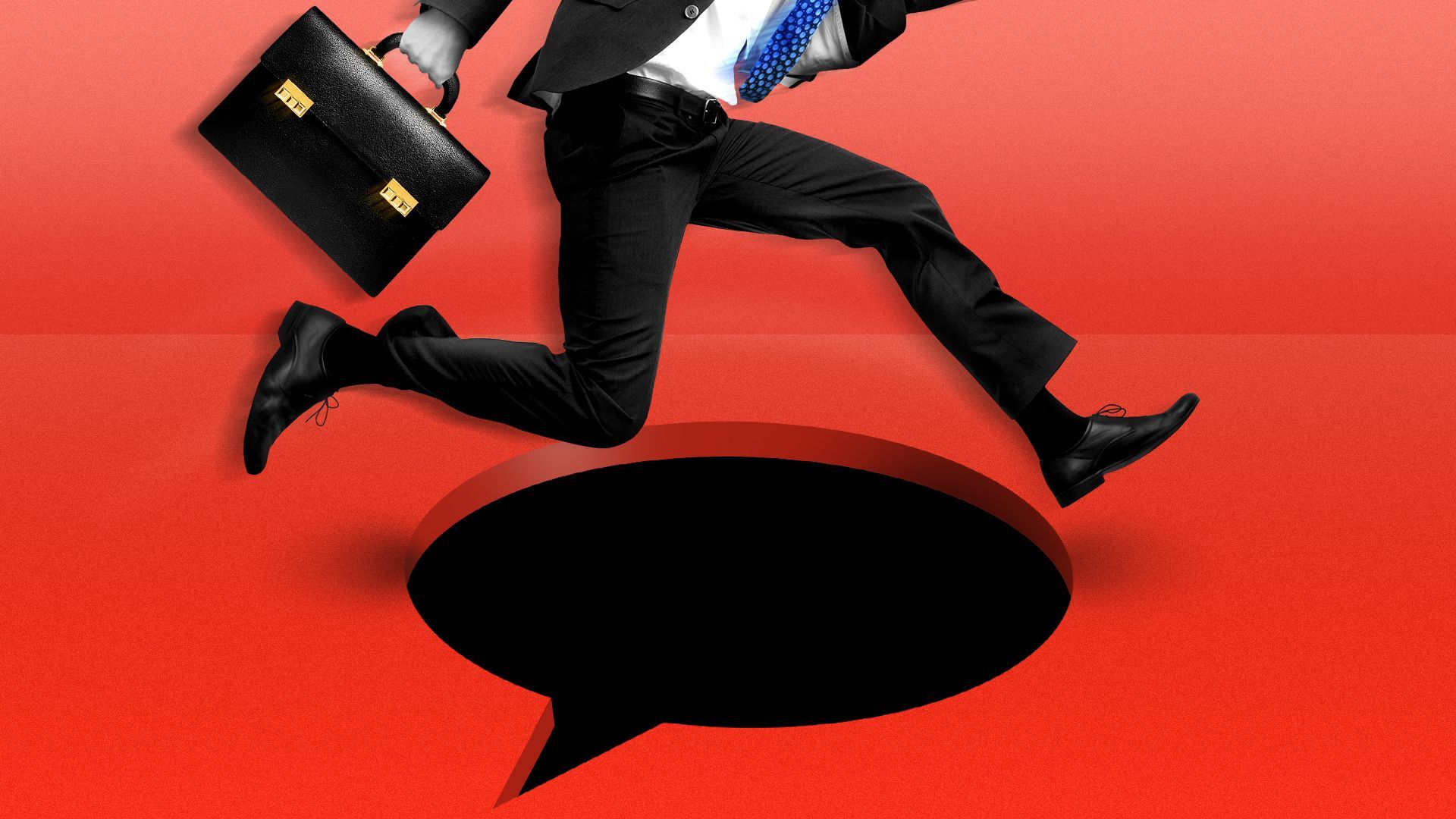
Illustration: Sarah Grillo/Axios
CEOs are enjoying a hot speech winter, one where speaking out in outrageous ways carries no cost.
Why it matters: While CEOs of old would generally wield their power and authority with judiciousness and restraint, a new breed appears to be reveling in the fact that Donald Trump has ripped off those fetters.
The big picture: Trump's superpower, since at least the release of the Access Hollywood tape if not earlier, has always been that he is able to say truly outrageous things and suffer no real repercussions for doing so.
- Elon Musk has followed in his footsteps — and now others are jumping on the bandwagon, most prominently Meta CEO Mark Zuckerberg.
Between the lines: The new "cultural elites," Zuckerberg said on Joe Rogan's podcast recently, are the "voices that are being authentic" and are viewed by the public as "the people who give it to me straight."
- The "cultural elite class needs to get repopulated with people who people actually trust," Zuckerberg said, referring to the media and adopting the kind of anti-press language familiar to observers of dictatorial regimes.
- Zuckerberg himself seems to aspire to being part of that new uninhibited elite, with his musings on "masculine energy."
Zoom out: Zuckerberg is far from alone of late.
- Cleveland-Cliffs CEO Lourenco Goncalves gave a press conference earlier this week where he said not only that "China is evil" but also that "Japan is evil."
- A "top banker" told the Financial Times this week (on condition of his anonymity) that he feels "liberated" because he can now say shockingly vulgar things (which we won't repeat here) without fear of cancellation.
- It's a long way from the end of 2017, when Papa John's founder John Schnatter stepped down as CEO after talking about the national anthem protests in the NFL on one of his earnings calls.
- His fatal words — "the controversy is polarizing the customer, polarizing the country" — are positively anodyne by the standards of today's speech.
Zoom in: While some CEOs pride themselves on being collegial consensus-builders, many more like to think of themselves as daring iconoclasts, leading from the front into uncharted opportunity.
- It's natural for such men (they're overwhelmingly men) to chafe at what they perceive to be bothersome constraints imposed by meddlesome pettifoggers.
- Breaking free of those constraints can create a feeling of freedom and opportunity for them.
What they're saying: In a Financial Times op-ed last week, Peter Thiel inveighed against "the media organisations, bureaucracies, universities and government-funded NGOs that traditionally delimited public conversation," describing them as the "Distributed Idea Suppression Complex (DISC)" and celebrating "our liberation from the DISC prison."
- He approvingly quoted 14th century writer Giovanni Boccaccio saying "nothing is so indecent that it cannot be said to another person."
- "The future demands fresh and strange ideas," he added.
The bottom line: The Overton window of speech — the range of views the mainstream population considers acceptable from corporate leaders — has been smashed to smithereens.
- If you were formerly in doubt about what they really think, expect a lot of clarification in the coming months.
